Does a Calorie Burning EMS Workout Really Burn More Calories?
A calorie burning ems workout does increase energy use, but there is no reliable calorie count for every 20-minute session. Claims of 300 to 500 calories in that time are not a sound expectation. In a small study of muscle stimulation at rest, the highest comfortable setting added about 10 calories per hour above resting levels. An active, full-body workout is different, so that figure cannot tell you exactly what you will burn.
For a busy schedule, EMS may be a useful, low-impact way to work your muscles. For weight loss, pair it with regular movement and eating habits you can sustain. The guide below looks at what the calorie research shows, what affects your results, and where the big claims fall short.
Key calorie burning ems workout vocabulary:
The Science of the Calorie Burning EMS Workout: How Many Calories Do You Really Burn?
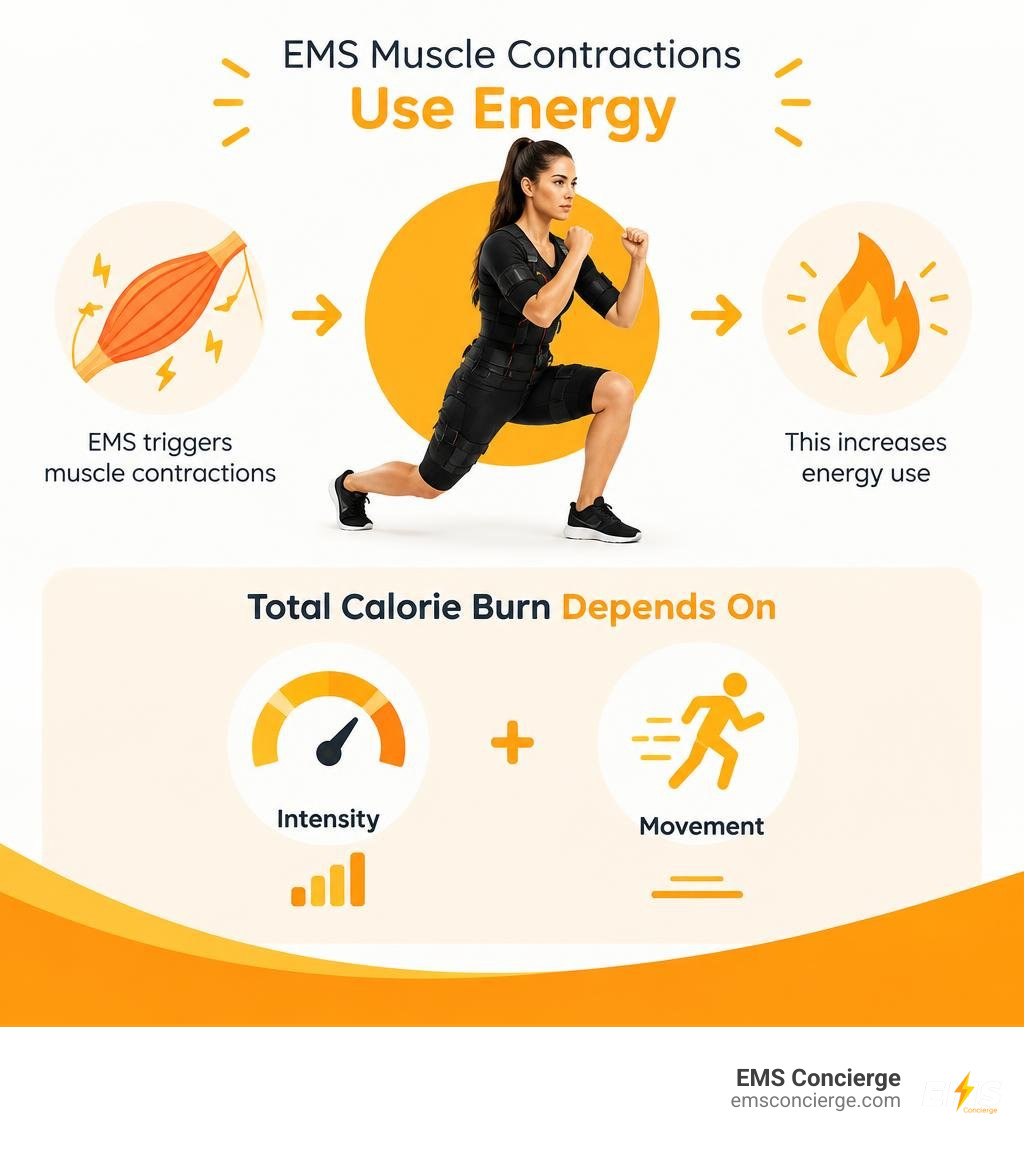
To separate marketing hype from physiological reality, we have to look closely at active energy expenditure and oxygen consumption. When you engage in whole-body electrical muscle stimulation, external electrical impulses trigger involuntary motor unit recruitment across major muscle groups simultaneously.
By analyzing the real energy expenditure and calorie math behind EMS workouts, we find that combining voluntary physical exercises with neuromuscular stimulation increases total energy output by roughly 10% to 20% compared to traditional bodyweight training alone.
A landmark study examining neuromuscular electrical stimulation on energy expenditure tracked sedentary adults across varying intensity thresholds:
- Sensory Level (E1): Produced a minor increase of 2.96 calories per hour over resting baseline.
- Motor Threshold (E2): Visible muscle contractions increased expenditure by 6.80 calories per hour.
- Maximal Comfortable Intensity (E3): Raised energy burn by 10.37 calories per hour above baseline, alongside an 11% surge in oxygen consumption.
While passive stimulation yields modest hourly additions, active whole-body protocols recruit up to 90% of muscle fibers simultaneously. Some research studies record dynamic 16-to-20-minute sessions burning between 300 and 500 calories when performed at high intensities alongside dynamic movement patterns.
Calorie Burn and EMS Workout Variables
Calorie expenditure is never a static number. The exact output depends on your movement velocity, current intensity, and individual conditioning.
| Workout Modality (20 Minutes) | Estimated Calorie Burn | Primary Energy System | Joint Impact Level |
|---|---|---|---|
| Active Whole-Body EMS (High Intensity) | 300 - 500 kcal | Phosphagen / Glycolytic | Very Low |
| Passive EMS (Resting) | 25 - 40 kcal | Aerobic Baseline | None |
| Running (7 mph) | 280 - 320 kcal | Aerobic / Cardiovascular | High |
| Moderate Cycling | 130 - 160 kcal | Aerobic | Low |
| Traditional Strength Training | 120 - 150 kcal | Glycolytic / Anaerobic | Moderate to High |
The EPOC Afterburn Effect: Maximizing Every Calorie-Burning EMS Workout
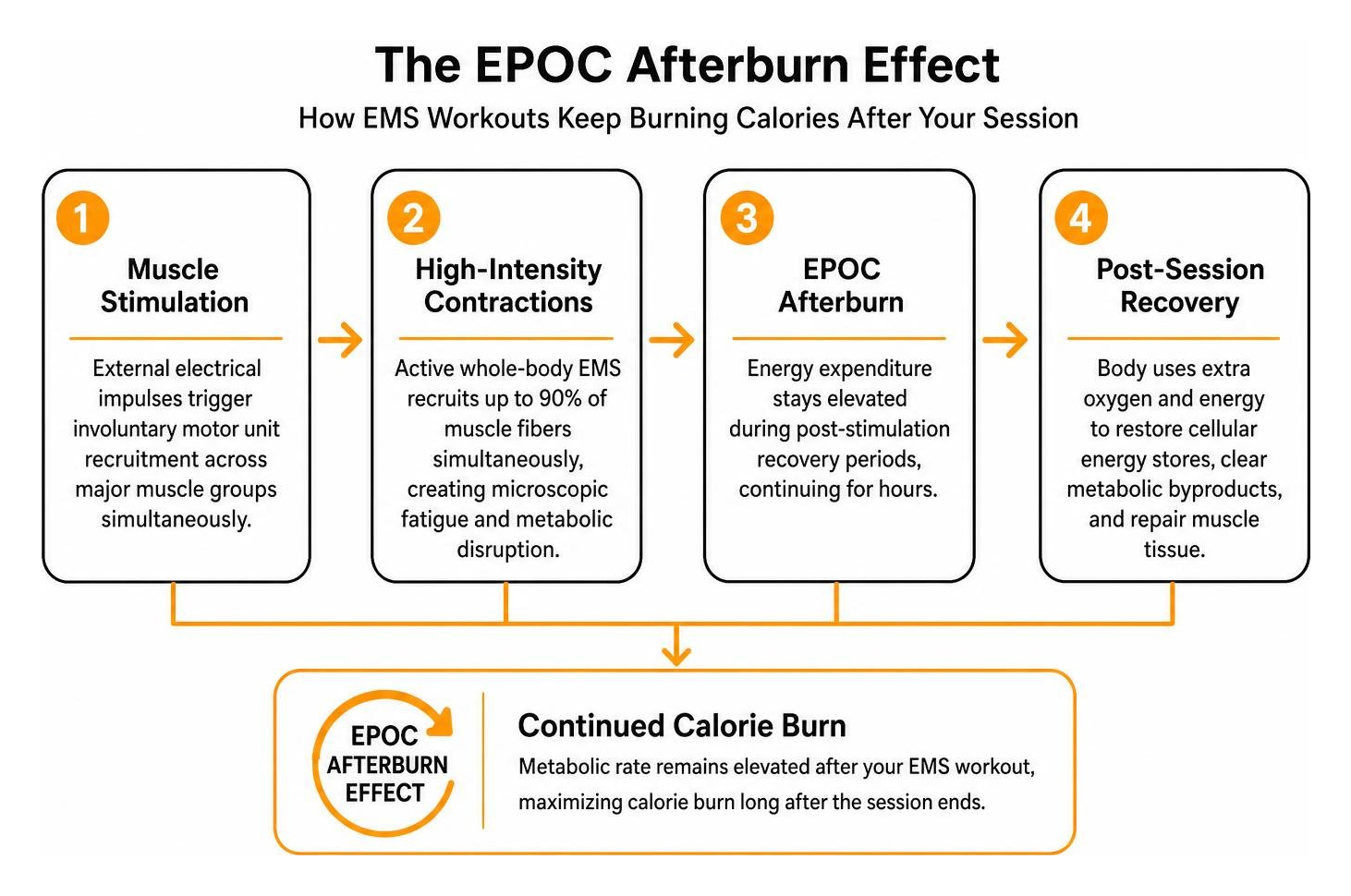
The calorie burn of an EMS session does not end when the device shuts off. High-intensity muscular contractions create microscopic fatigue and metabolic disruption that demand recovery energy. This process is known as Excess Post-Exercise Oxygen Consumption (EPOC), or the "afterburn effect."
Understanding how muscle contractions drive energy expenditure explains why metabolic rate remains elevated after training. In clinical settings, energy expenditure stays elevated during post-stimulation recovery periods, continuing for hours as your body restores cellular energy stores, clears metabolic byproducts, and repairs muscle tissue.
Key Variables Influencing Energy Expenditure in EMS Training

Caloric expenditure varies widely from person to person. Exploring what whole body EMS results demonstrate shows that several core variables dictate how much energy you expend during a session.
Factors That Dictate Your Calorie Burning EMS Workout Results
- Current Intensity and Tolerance: Caloric output rises in direct proportion to stimulation depth. Higher tolerable settings recruit deep-lying muscle fibers that traditional workouts often miss.
- Lean Muscle Mass: Muscle is metabolically active tissue. Individuals with greater lean mass burn more calories both during contraction cycles and at rest.
- Electrode Placement and Surface Area: Full-body suits activating the glutes, quadriceps, hamstrings, core, and upper body simultaneously create far higher metabolic demand than small, targeted units.
- Body Weight and Composition: Moving a larger body through dynamic exercises under stimulation requires greater total energy output.
Reviewing the scientific proof of before and after EMS results highlights that consistency and progressive overload remain essential for lasting body composition shifts.
Long-Term Metabolic Adaptations and Resting Metabolic Rate
A single workout burns immediate calories, but long-term body composition changes are driven by resting metabolic rate (RMR). Each pound of lean muscle burns approximately 6 to 7 calories per day at rest.
Consistent EMS training triggers structural muscular adaptations that support fat loss over time:
- Myofibrillar Hypertrophy: Increases overall muscle density and functional capacity.
- Enhanced Insulin Sensitivity: Improves nutrient partitioning, directing carbohydrates into muscle cells rather than adipose storage.
- Elevated Basal Caloric Demand: Greater overall lean tissue increases 24-hour baseline energy expenditure.
- Neuromuscular Efficiency: Strengthens motor unit recruitment patterns across daily physical activities.
Weight Loss Realities: Spot Reduction, Fat Loss, and Training Frequency

Many fitness fads claim you can melt fat directly from your midsection simply by placing electrodes on your abs. Trying to spot-reduce fat from your stomach with an electrical impulse is like trying to remove water from only the shallow end of a swimming pool—the body draws on systemic energy stores as a whole.
Can EMS Spot-Reduce Stubborn Belly Fat?
While localized electrical stimulation cannot spot-reduce subcutaneous fat, full-body EMS does support overall fat loss by creating a systemic energy deficit. In a 12-week clinical study on adults with abdominal obesity, subjects utilizing EMS experienced an average reduction of 5.2 cm in waist circumference compared to 2.9 cm in the control group. This reduction stems from a combination of deep core muscle tightening (the transverse abdominis acting as an internal corset) and total-body caloric expenditure.
For those balancing demanding routines, leveraging 20-minute EMS efficiency for packed schedules provides high-density muscle activation without requiring hours in a gym.
Optimal Weekly Session Frequency and Recovery
Because whole-body EMS stimulates deep motor units across multiple muscle groups, it creates significant central nervous system and muscular fatigue. More is not always better.
- Ideal Frequency: 1 to 2 sessions per week for general fitness; a maximum of 2 to 3 sessions per week for advanced trainees.
- Recovery Window: Allow 48 to 72 hours between sessions to ensure complete muscular restoration and avoid overtraining.
Safety, Contraindications, and Practical Integration for Maximum Results
Professional whole-body EMS is an exceptionally safe, low-impact exercise method when guided by certified professionals. Understanding who EMS training is best suited for ensures you use the technology safely and effectively.
Key Contraindications:
- Cardiac pacemakers or implanted electronic medical devices
- Pregnancy
- Severe circulatory disorders or active thrombosis
- Epilepsy or acute seizure disorders
Combining EMS with Nutrition and Daily Activity
To maximize fat loss and muscle tone, pair your EMS sessions with healthy daily lifestyle habits:
- Protein Intake: Consume 0.8 to 1.2 grams of protein per pound of target body weight daily to repair muscle fibers.
- Hydration: Drink plenty of water before and after sessions, as electrical currents travel more efficiently through well-hydrated muscle tissue.
- Daily Movement: Complement EMS with daily walking or light cardio to support cardiovascular health and steady energy expenditure.
If you are looking to elevate your cardiovascular conditioning alongside muscle activation, explore our specialized cardio program for a complete fitness approach.
Frequently Asked Questions About Calorie Burning EMS Workouts
Can an EMS workout support an overall fitness routine?
Yes. EMS works well alongside traditional fitness routines, offering deep muscle activation without joint impact. It serves as an efficient strength stimulus that complements outdoor activities, running, or sports.
How many calories are burned during a standard 20-minute EMS session?
An active 20-minute whole-body EMS workout generally burns between 300 and 500 calories, depending on current intensity, movement patterns, and your individual body composition.
Who benefits the most from using EMS for calorie expenditure?
EMS is ideal for busy professionals seeking time-efficient workouts, individuals managing joint pain or recovering from injuries, postpartum women strengthening their core, and anyone looking to increase muscular activation without heavy weights.
Conclusion
A calorie-burning EMS workout provides an efficient, scientifically validated method to build strength, activate deep muscle fibers, and elevate metabolic rate. While it will not override poor nutrition or bypass the laws of thermodynamics, it offers an effective fitness solution for modern lifestyles.
At EMS Concierge, we deliver personalized in-home fitness sessions using professional-grade Miha Bodytec equipment across Beverly Hills, Santa Monica, Malibu, Newport Beach, Aspen, and our other service areas. Schedule your personalized in-home EMS training session with our certified trainers today to experience high-efficiency strength training tailored entirely to your goals.