Recovery After Running Hard Intervals Starts With the Basics
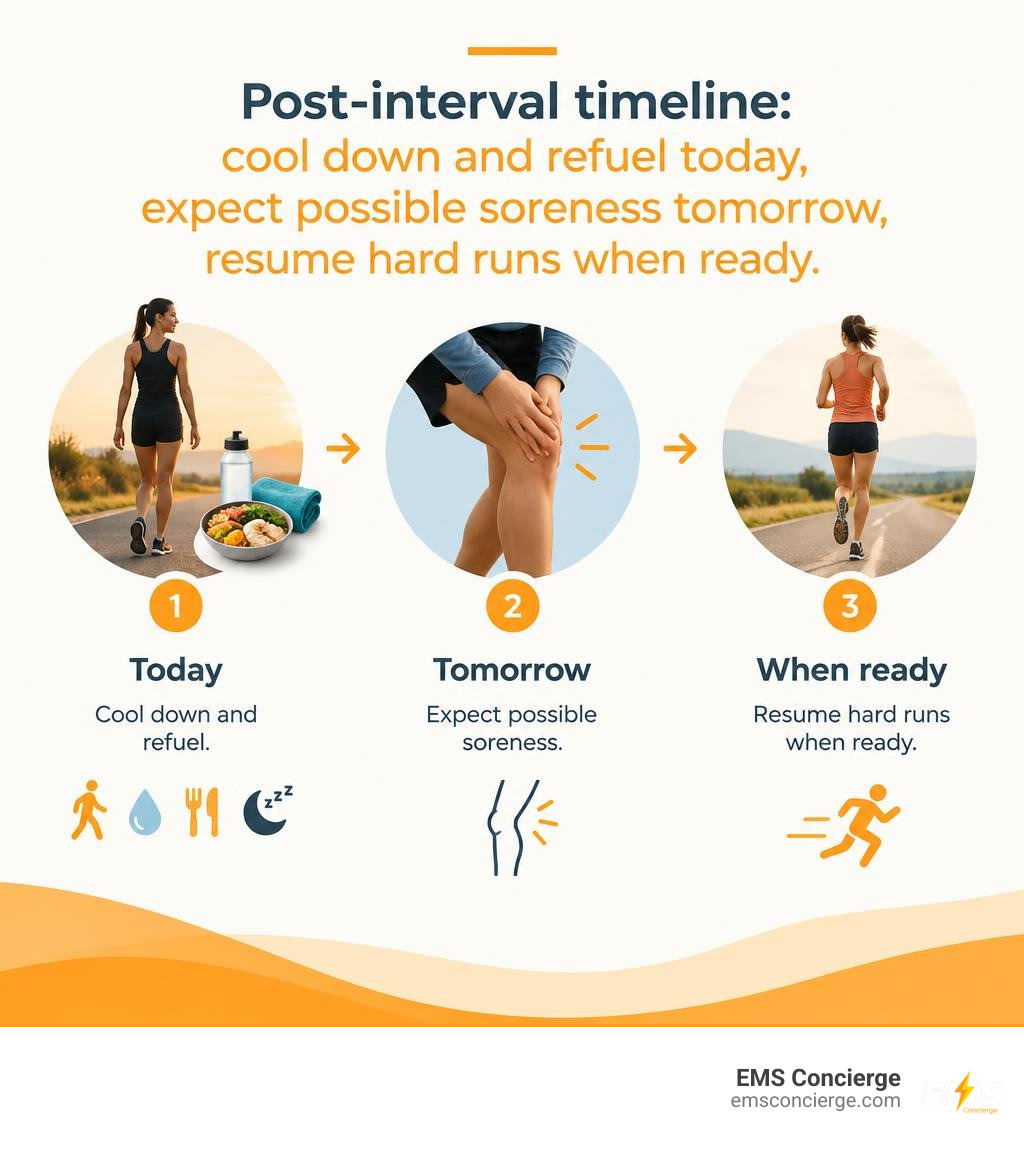
For recovery after running hard intervals, walk for 5 to 10 minutes to cool down, then drink to replace the fluid you lost. Eat a meal or snack with carbs and protein within a couple of hours, and protect your sleep that night. Keep your next workout easy until your legs feel ready for more.
Intervals can leave you tired right away, while muscle soreness may show up a day or two later. Use how you feel, not just your training calendar, to decide when to run hard again. Sharp or worsening pain is a reason to stop and get it checked.
Recovery after running terms explained:
The Science of Recovery After Running: What Happens Post-Intervals
High-intensity track repeats, hill sprints, and tempo intervals place immense mechanical and metabolic stress on your entire physiology. When you sprint, your fast-twitch motor units contract rapidly and forcefully. This eccentric contraction cycle causes microscopic tears in the muscle fibers, particularly within the quadriceps, hamstrings, and calves. While these micro-tears serve as the necessary stimulus for muscle remodeling and hypertrophy, they trigger an immediate acute inflammatory cascade.
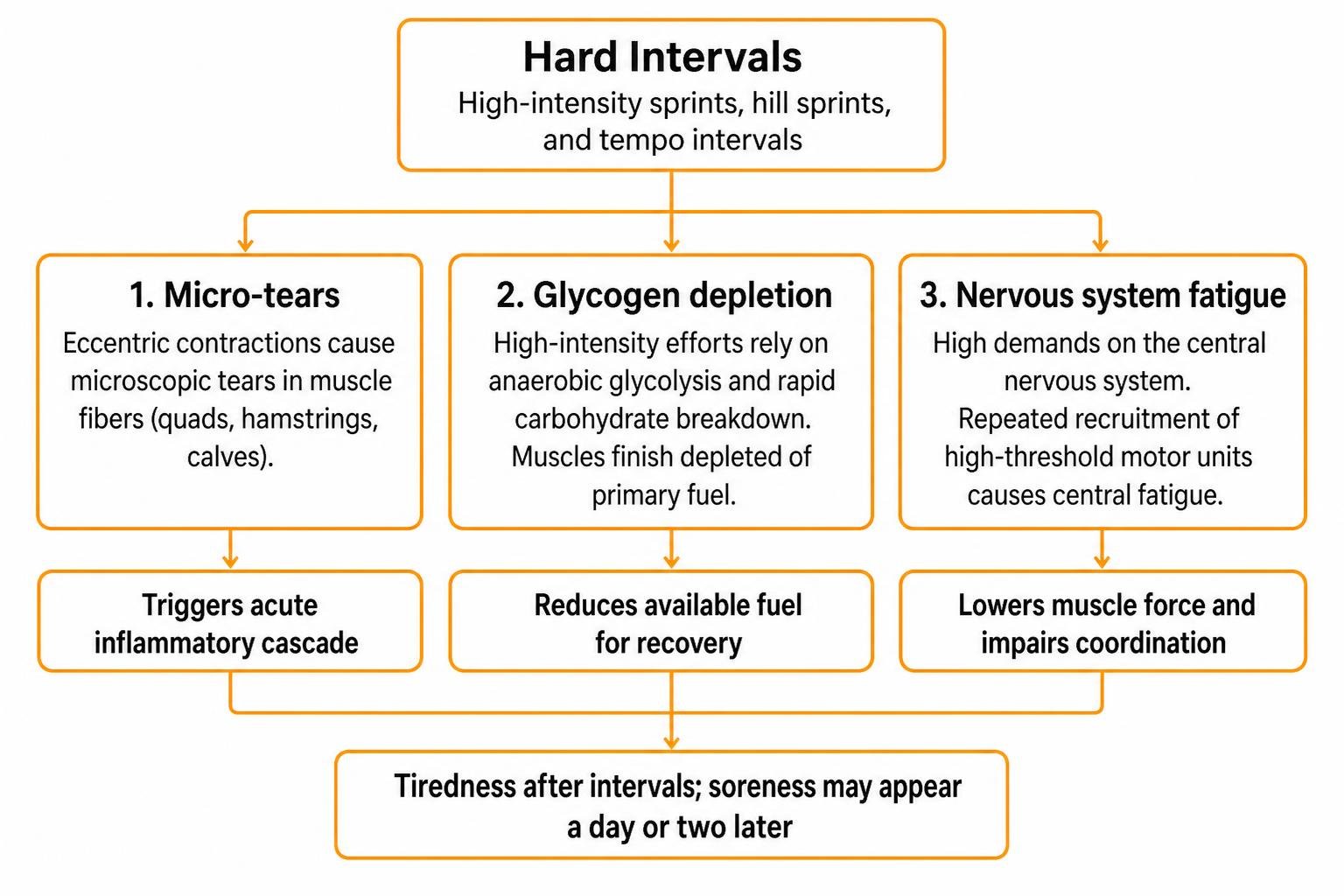
Simultaneously, hard intervals rapidly drain intramuscular glycogen stores. Because high-intensity efforts rely almost exclusively on anaerobic glycolysis and rapid carbohydrate breakdown, your muscles end the workout depleted of their primary fuel source.
Beyond muscular damage, high-intensity intervals place heavy demands on your central nervous system (CNS). The brain and spinal cord must repeatedly fire rapid electrical impulses to recruit high-threshold motor units. This causes central neuromuscular fatigue, which lowers muscle contractile force and impairs coordination long after your breathing settles.
According to a systematic review of recovery techniques and biomarkers, inflammatory markers like creatine kinase (CK) and C-reactive protein (CRP) rise steadily following high-impact running, frequently peaking around 24 to 72 hours post-session. Managing this acute inflammation and clearing metabolic byproducts without blunting natural training adaptations is the primary objective of post-interval recovery.
Differentiating Soreness From Overuse Injuries
It is vital to distinguish between normal delayed onset muscle soreness (DOMS) and early markers of an overuse injury. Running-related injuries affect between 18.2% and 92.4% of runners depending on training volume and competitive level. Knowing what your body is experiencing prevents a minor issue from turning into a season-ending injury.
| Characteristic | Normal Delayed Onset Muscle Soreness (DOMS) | Potential Overuse Injury |
|---|---|---|
| Sensation | Dull, diffuse ache, general muscular stiffness | Sharp, localized, stabbing, or radiating pain |
| Symmetry | Usually bilateral (both legs feel equally sore) | Often unilateral (isolated to one tendon, joint, or bone) |
| Onset | Peaks 24 to 48 hours post-workout | Can occur acutely during running or progressively worsen |
| Duration | Resolves gradually within 3 to 5 days | Persists longer than 5 to 7 days or worsens over time |
| Impact on Gait | May cause initial stiffness that loosens with walking | Causes limping or altered running biomechanics |
| Palpation | Generalized muscle belly tenderness | Point-specific bone or tendon tenderness to the touch |
If you notice sharp pain localized around the tibia, Achilles tendon, or plantar fascia that worsens with impact, seek guidance from professionals specialized in running rehab and injury evaluation.
Immediate 0 to 6-Hour Protocol to Accelerate Recovery
The initial six hours following an intense interval session dictate how quickly your body transitions from a catabolic (breakdown) state to an anabolic (rebuilding) state.

- Active Cooldown (First 10–15 Minutes): Never finish an interval at top speed and immediately sit down on the bench or collapse onto the grass. Abruptly stopping causes blood to pool in the lower extremities, impairing venous return and delaying the clearance of metabolic waste. Walk for 5 to 10 minutes at an easy pace to keep your muscle pumps working while your heart rate, blood pressure, and core temperature steadily normalize.
- Ditch Wet Clothes & Regulate Temperature: Sweaty clothing causes rapid surface cooling, which constricts peripheral blood vessels and stiffens recovering muscles. Change into dry, comfortable clothing immediately.
- Rehydrate by Weight Loss: Weighing yourself before and after sweaty summer workouts helps determine exact fluid loss. Aim to consume 16 to 24 ounces of fluid for every pound lost during hard training. If you do not have a scale, monitor your urine color over the subsequent 4 to 6 hours—aiming for a light straw hue.
Here is how recovery timelines and physical demands scale across various running distances and intensities:
| Run Distance / Workout Type | Primary Physiological Stressor | Average Muscle Recovery Window | Recommended Active Recovery Window |
|---|---|---|---|
| Hard Interval Session (Track/Hills) | Neuromuscular fatigue, high muscle micro-tearing | 24 to 48 hours | 24 hours (light walking or swimming) |
| 5K to 10K Race Effort | High glycolytic depletion, moderate muscle damage | 48 to 72 hours | 1 to 3 days easy movement |
| Half Marathon | Glycogen depletion, joint impact, moderate DOMS | 3 to 7 days | 3 to 5 days low-impact cross-training |
| Full Marathon | Severe muscle damage, systemic inflammation, CNS strain | 2 to 4 weeks | 7 to 14 days before intense speedwork |
Optimizing Nutrition and Hydration for Recovery After Running
To kickstart glycogen resynthesis and cellular repair, consume a post-run meal or recovery drink within 30 to 60 minutes after finishing.
- The Ideal Ratio: Aim for a 3:1 or 4:1 ratio of complex carbohydrates to lean protein. Carbohydrates spike insulin sufficiently to drive amino acids into damaged muscle tissues while rapidly replenishing liver and muscle glycogen.
- Macronutrient Targets: Target 20 to 30 grams of high-quality protein combined with 60 to 90 grams of easily digestible carbohydrates. A smoothie containing whey or plant protein, banana, berries, and oat milk works well when solid food feels hard to stomach immediately after hard efforts.
- Electrolyte Balance: Water alone is insufficient after heavy sweating. Sodium, potassium, and magnesium are critical for cellular rehydration and neuromuscular firing. Adding electrolyte tablets or incorporating mineral-rich foods helps restore electrolyte equilibrium. Following science-backed steps for muscle recovery after exercise ensures your nutrition works synergistically with your training schedule.
Active Movement vs. Passive Rest
While collapsing onto the couch for the rest of the day might feel tempting, passive rest can leave you feeling stiffer the following morning. Light active movement increases systemic circulation, bringing fresh oxygenated blood to recovering tissues and assisting the lymphatic system in clearing cellular debris.
Research on neuromuscular recovery following post-run exercise highlights that low-intensity active movement does not exacerbate muscle damage markers like creatine kinase and can speed up neuromuscular recovery compared to complete inactivity.
Good active recovery options include:
- A flat 20-minute walk
- Low-resistance stationary spinning (keeping cadence smooth and easy)
- Easy pool walking or gentle swimming laps
- Gentle mobility drills focusing on ankle, hip, and thoracic spine range of motion
EMS-Based Support for Muscle Recovery
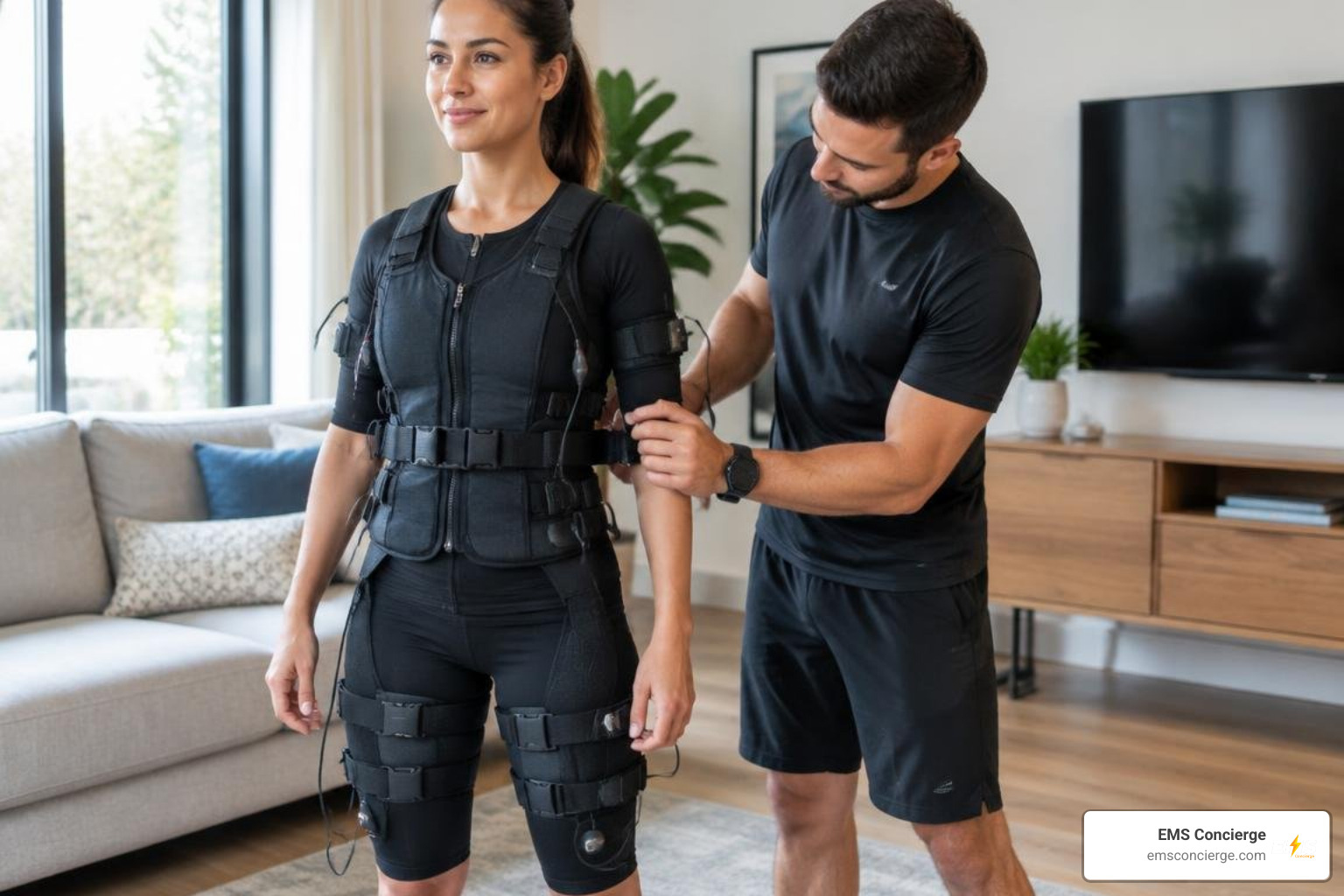
For runners training through dense workout blocks, technology-assisted recovery can support natural repair mechanisms. In-home whole-body electro-muscle stimulation (EMS) provides a passive method to stimulate blood flow without adding mechanical joint impact or loading fatigued tendons.
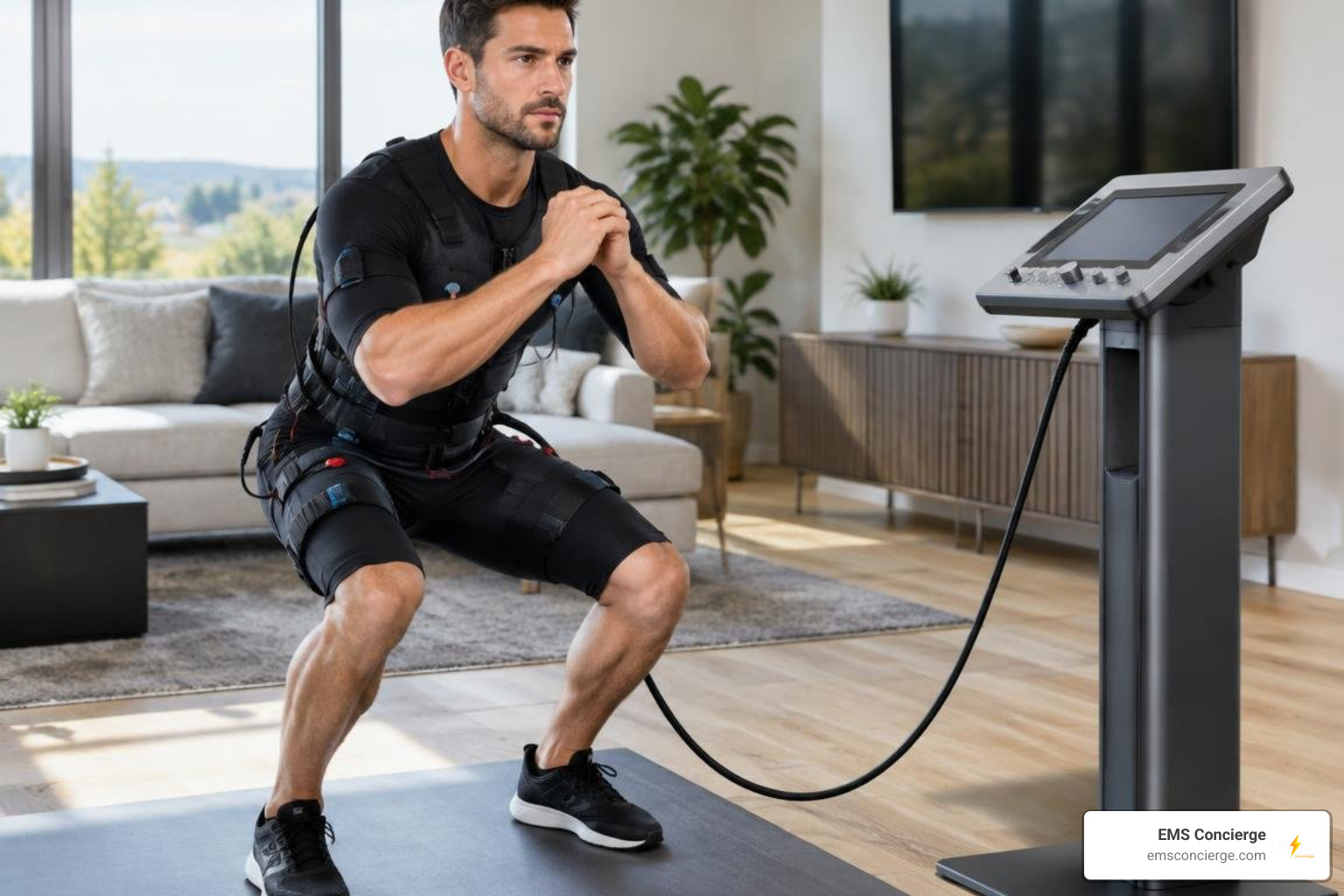
At EMS Concierge, our mobile service delivers personalized sessions directly to your home using professional-grade Miha Bodytec equipment. Under the guidance of certified trainers across our Southern California locations—including Malibu, Beverly Hills, Santa Monica, Newport Beach, Manhattan Beach, and Pasadena—as well as Aspen, Colorado, we tailor recovery programs to flush exhausted legs without stressing tired joints.
Evidence-Based EMS to Support Recovery After Running
Low-frequency electrical stimulation produces gentle, non-fatiguing muscle twitches. These rhythmic contractions act as a secondary muscle pump:
- Targeted Microcirculation: EMS increases local capillary blood flow, delivering restorative nutrients and oxygen directly to deep muscle fibers that are difficult to target with basic stretching.
- Enhanced Lymphatic Drainage: The pulsing action moves interstitial fluid, helping reduce lower-leg swelling and heavy sensations after intense track or hill repeats.
- Zero Joint Loading: Unlike an easy recovery jog—which still subjects your feet, knees, and hips to ground reaction forces—EMS enhances circulation while your joints remain completely unloaded.
Many athletes explore how top runners use EMS to supercharge recovery and stride power, using these targeted sessions between high-mileage blocks to stay fresh and consistent.
Sleep Optimization and Hormonal Repair
No supplement, massage gun, or recovery beverage can replace deep sleep. During slow-wave (deep) sleep, your pituitary gland releases the majority of its daily human growth hormone (HGH). This hormone stimulates tissue repair, activates protein synthesis, and rebuilds damaged muscle fibers.
To optimize your sleep quality following intense running:
- Maintain a Cool Room: Keep your sleeping space between 65°F and 68°F (18°C to 20°C) to support your body's post-workout thermoregulation.
- Limit Late Caffeine and Alcohol: While a celebratory post-race drink is popular, alcohol disrupts REM sleep and impairs nocturnal muscle protein synthesis.
- Power Down Screens: Turn off blue-light devices at least 45 minutes before bed to allow natural melatonin production.
- Aim for 7 to 9 Hours: If your training schedule demands early morning track intervals, consider a 20-minute afternoon nap to support nervous system recovery.
Common Post-Run Mistakes That Delay Healing
Even dedicated runners often fall into habits that prolong fatigue and elevate injury risks:
- Racing Your Recovery Runs: The most frequent training error is running your easy and recovery days too fast. If your interval pace is 6:00 per mile, your recovery runs should often be 8:30 to 9:00 per mile or slower. Running in the "gray zone" (too fast for recovery, too slow for adaptation) prolongs muscle damage.
- Skipping Post-Workout Refueling: Delaying your meal for several hours because you aren't hungry blunts the body's peak window for glycogen resynthesis.
- Aggressive Foam Rolling on Injured Tissues: Digging a hard foam roller or massage ball directly into an acutely inflamed tendon (like the IT band or Achilles) can increase local irritation. Use soft tissue tools gently on muscle bellies rather than directly on bony attachments or inflamed tendons.
- Ignoring Central Nervous System Fatigue: If your resting heart rate is elevated 5 to 10 beats per minute above baseline, or your heart rate variability (HRV) drops significantly, your nervous system is still recovering. Forcing a hard workout on an exhausted CNS leads toward overtraining syndrome.
Frequently Asked Questions About Running Recovery
How long does muscle repair take after interval workouts?
For standard interval training sessions, structural muscle repair generally requires 24 to 72 hours. The exact timeline depends on the intensity of the workout, your training age, fueling, and sleep quality. While metabolic byproducts clear within a few hours, the remodeling of damaged contractile proteins takes several days.
What supports post-run muscle soreness?
Managing acute DOMS is best achieved through a combination of gentle active movement (such as walking or light spinning), adequate hydration with electrolytes, balanced protein-carbohydrate nutrition, and gentle soft-tissue stimulation. Low-frequency EMS can help ease perceived soreness during the first 48 hours without causing extra muscle fatigue.
When is it safe to return to hard interval training?
You can safely perform another high-intensity session when your resting vitals have returned to baseline, normal joint range of motion is restored without pain, and an easy warm-up jog feels light and natural. A standard rule of thumb for race efforts is allowing one easy or active recovery day per mile raced before jumping back into demanding speed sessions.
Conclusion: Building Your Ideal Post-Run Protocol
Speed and endurance are not built during hard intervals—they are built during the recovery that follows. By establishing a structured routine that combines immediate cool-downs, rapid nutritional replenishment, active circulation, and quality sleep, you allow your body to rebuild stronger after every challenging track or road session.
When you want to take your recovery to the next level without adding joint stress, we can help. Book a tailored session with EMS Concierge to experience our mobile in-home recovery stimulation. Our certified trainers bring professional Miha Bodytec technology right to your doorstep, helping you bounce back faster for your next starting line.