The Science and Mechanics of At Home EMS Training
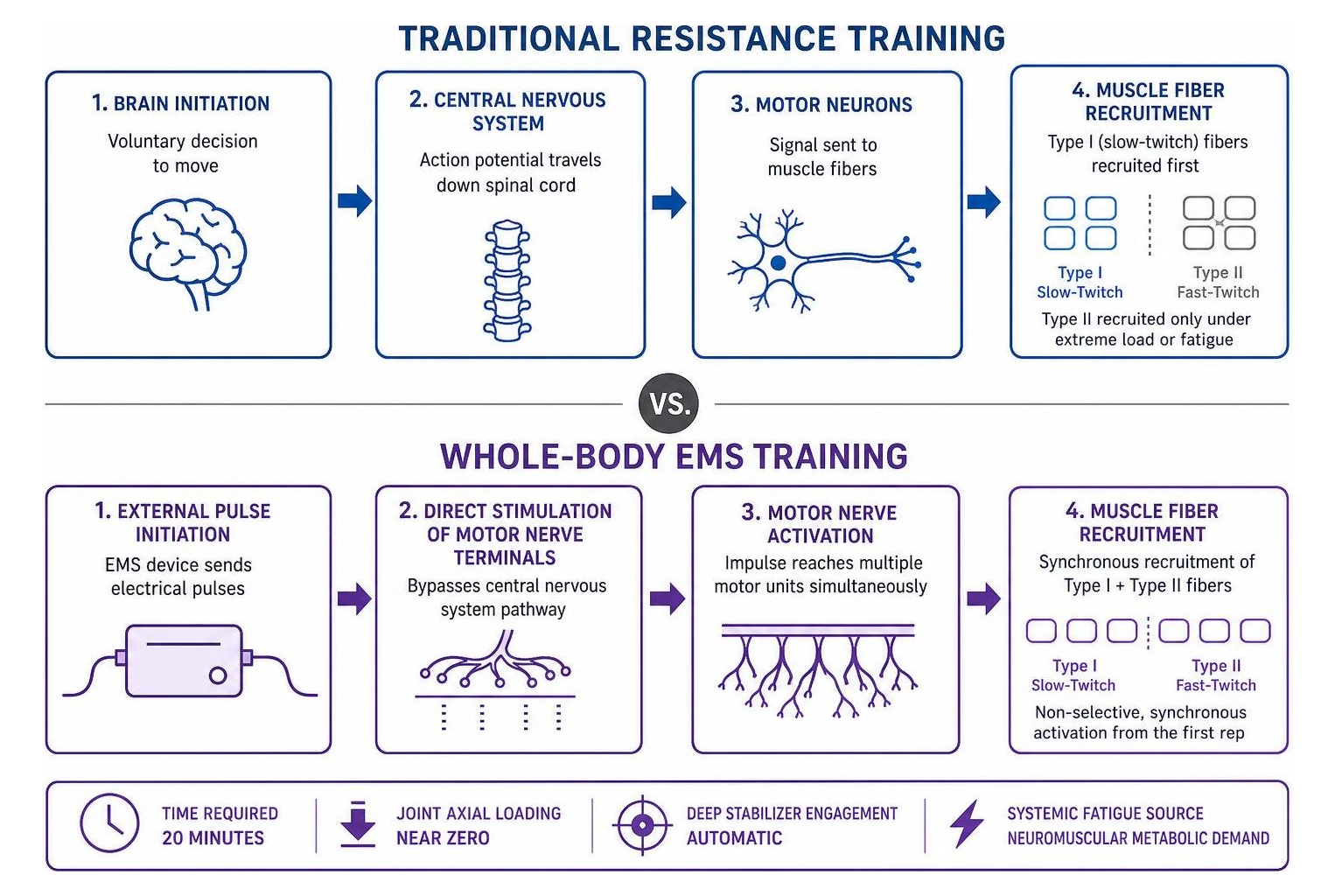
At-home EMS training delivers a complete full-body strength workout in just 20 minutes by activating up to 90% of muscle fibers simultaneously while you exercise at home. To understand why a 20-minute session feels like a grueling hour under heavy iron, we have to look beneath the surface of the skin. In a standard gym environment, voluntary muscle contractions begin in the central nervous system. Your brain fires an action potential down the spinal cord through motor neurons to reach muscle fibers.
Whole-body electrical muscle stimulation bypasses this central pathway. An external device sends low-to-medium frequency electrical currents directly into major muscle groups through strategically placed electrodes. These impulses mimic physiological action potentials, prompting involuntary contractions across prime movers, synergists, and deep stabilizing muscles simultaneously.
| Parameter | Traditional Resistance Training | Whole-Body EMS Training |
|---|---|---|
| Primary Recruitment Pattern | Henneman’s size principle (slow-twitch Type I first) | Non-selective, synchronous (Type I and Type II together) |
| Fiber Activation Depth | 30%–60% of available motor units per voluntary set | Up to 90%+ synchronous motor unit recruitment |
| Joint Axial Loading | High (compression from barbells, dumbbells, machines) | Near Zero (contractions elicited via external impulse) |
| Time Required | 60–90 minutes | 20 minutes |
| Deep Stabilizer Engagement | Dependent on complex movement mastery | Automatically targeted via targeted electrode pads |
| Systemic Fatigue Source | High mechanical stress on connective tissues | Neuromuscular metabolic demand |
By engaging multiple muscle groups at once, you eliminate the need to cycle through endless isolation exercises. When examining the physiological differences between EMS and traditional workouts, the most striking contrast is the total muscle surface area activated per second of movement.
Neuromuscular Activation and Fiber Recruitment
Under normal conditions, our bodies conserve energy by following Henneman’s size principle: smaller, fatigue-resistant Type I (slow-twitch) muscle fibers fire first. Only when loads become sufficiently heavy or fatigue sets in do high-threshold Type II (fast-twitch) motor units activate. Type II fibers are responsible for explosive power, muscle density, and higher metabolic rates, but they are notoriously difficult to fatigue without moving heavy weights.
EMS disrupts this standard recruitment hierarchy. The electrical impulses stimulate motor nerve terminals non-selectively. As a result, fast-twitch Type II fibers contract alongside slow-twitch fibers right from the very first rep, even during bodyweight movements.
This synchronous recruitment targets deep spinal stabilizers, pelvic floor muscles, and postural structures that are often missed during standard machine training. In our step-by-step breakdown of an EMS session, clients experience how dynamic low-impact postures amplify these deep contractions without requiring explosive or jarring movements.
Sarcopenia Prevention and Muscle Quality
As we age, preserving lean skeletal muscle tissue becomes essential for metabolic longevity and functional independence. Research on age-related muscle wasting—known clinically as sarcopenia—shows that physical decline is marked by intramuscular fat infiltration, tissue disorganization, and a selective loss of fast-twitch motor units (PMCID PMC4670752).
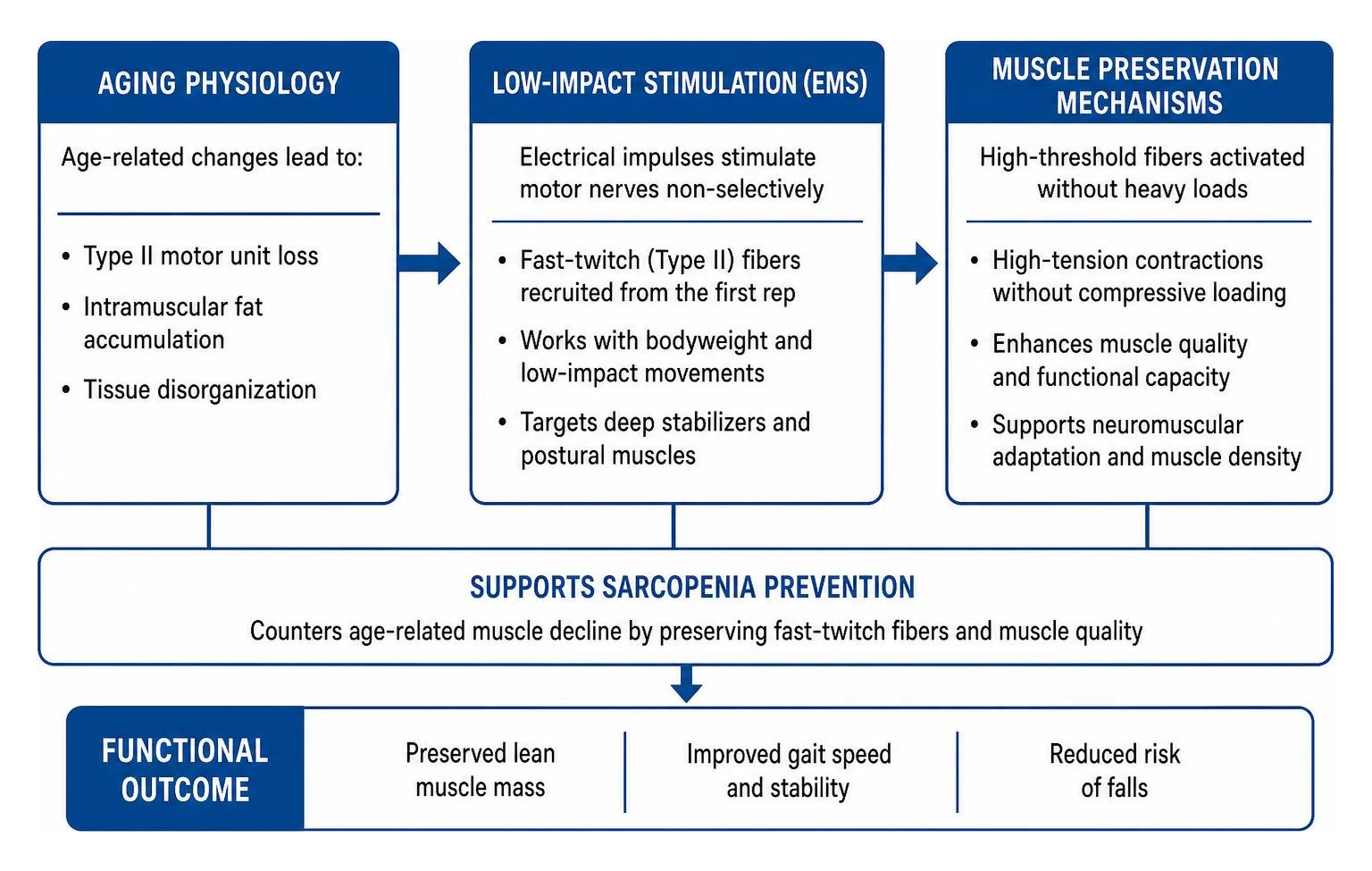
Maintaining high-threshold muscle fibers traditionally required heavy lifting, which can present injury risks for aging joints, post-operative patients, or individuals managing chronic pain. Whole-body EMS provides a solution by delivering high-tension contractions without compressive spinal loading or shearing forces on the knees and hips.
Clinical research demonstrates that pairing low-frequency electrical stimulation with proper nutrition significantly enhances muscle quality, functional capacity, and gait stability (PMCID PMC4670752). For individuals managing previous musculoskeletal injuries or joint wear, using joint-friendly conditioning for injury recovery allows for progressive muscular overload while sparing vulnerable connective tissues.
Core Benefits for Fast-Paced Lifestyles
Modern schedules leave little room for two-hour gym commitments. Between commuting through traffic, hunting for parking spots, waiting for weight racks, and driving home, traditional workout routines often cost more time in logistics than in actual physical exertion.
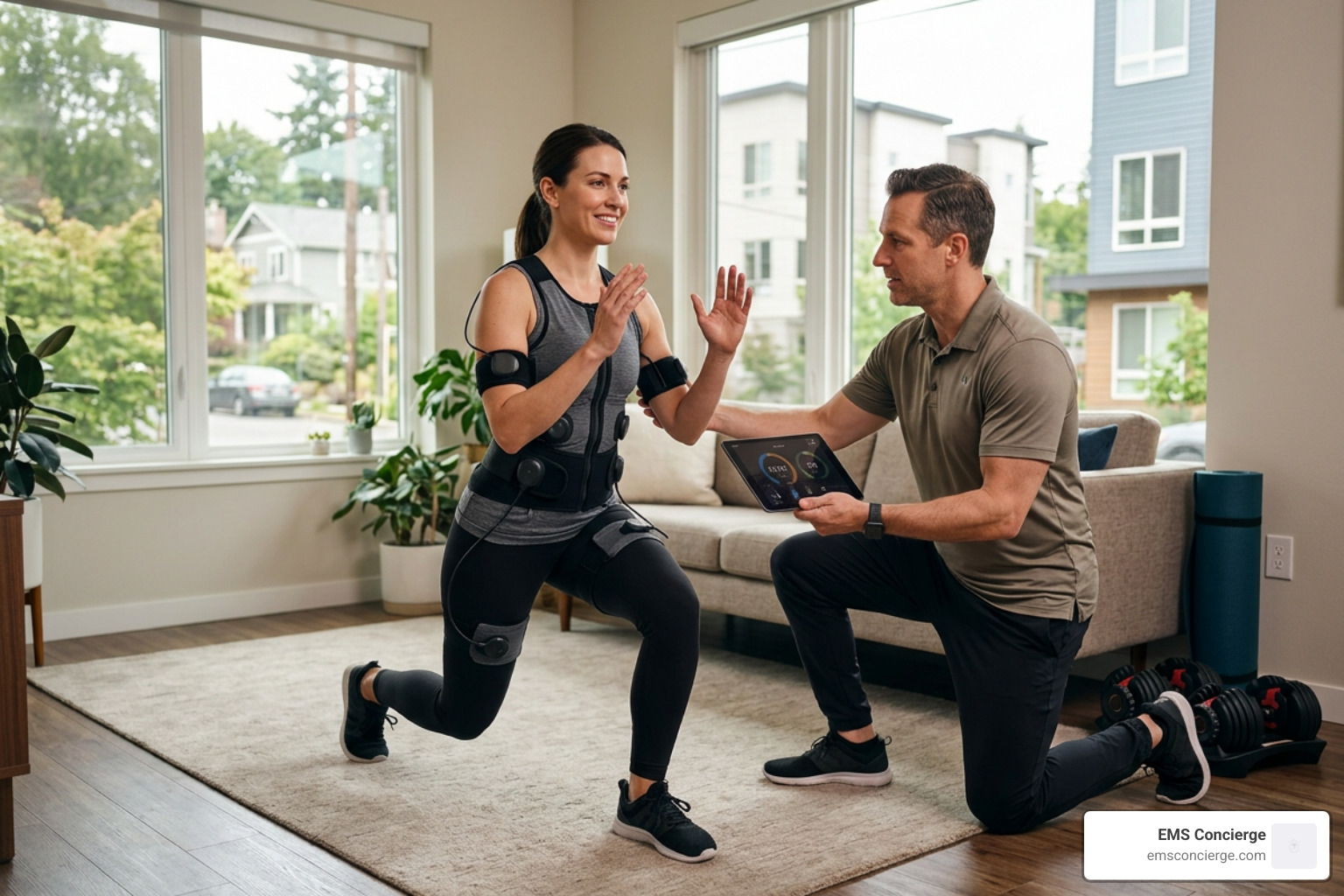
At-home EMS eliminates that friction entirely. By transforming your living room, home office, or patio into a professional training space, you remove the barriers of travel and public gym environments. The in-home EMS training convenience and concierge benefits mean you receive one-on-one personal coaching in the complete privacy of your own space, with every parameter customized to your fitness baseline.
Maximizing Results in 20-Minute Windows
Time density is the cornerstone of electrical muscle stimulation. In a standard 60-minute personal training session, the actual "time under tension"—the duration during which your muscles are actively working—rarely exceeds 10 to 12 minutes due to rest intervals between sets.
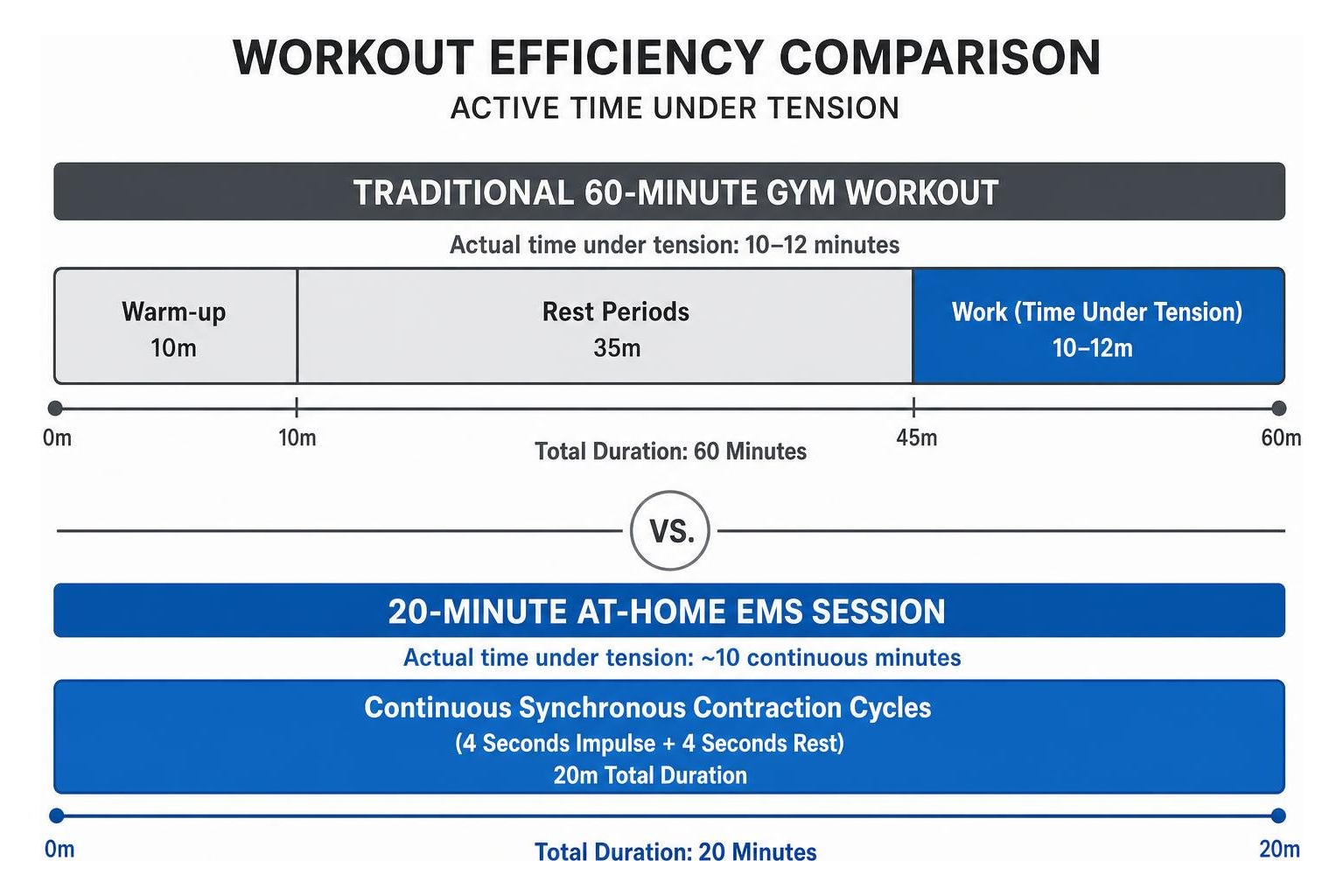
During a 20-minute EMS routine, the device delivers calibrated impulses on a rhythmic cycle (typically 4 seconds of impulse followed by 4 seconds of rest). Across those 20 minutes, every primary muscle group experiences roughly 10 continuous minutes of high-intensity contraction while moving through functional movement patterns.
This high density makes it an ideal fit for demanding routines. Exploring time-saving fitness strategies for busy professionals demonstrates how cutting out travel time while maximizing muscle recruitment makes regular strength training sustainable, even during demanding workweeks.
Professional-Grade At-Home EMS Equipment
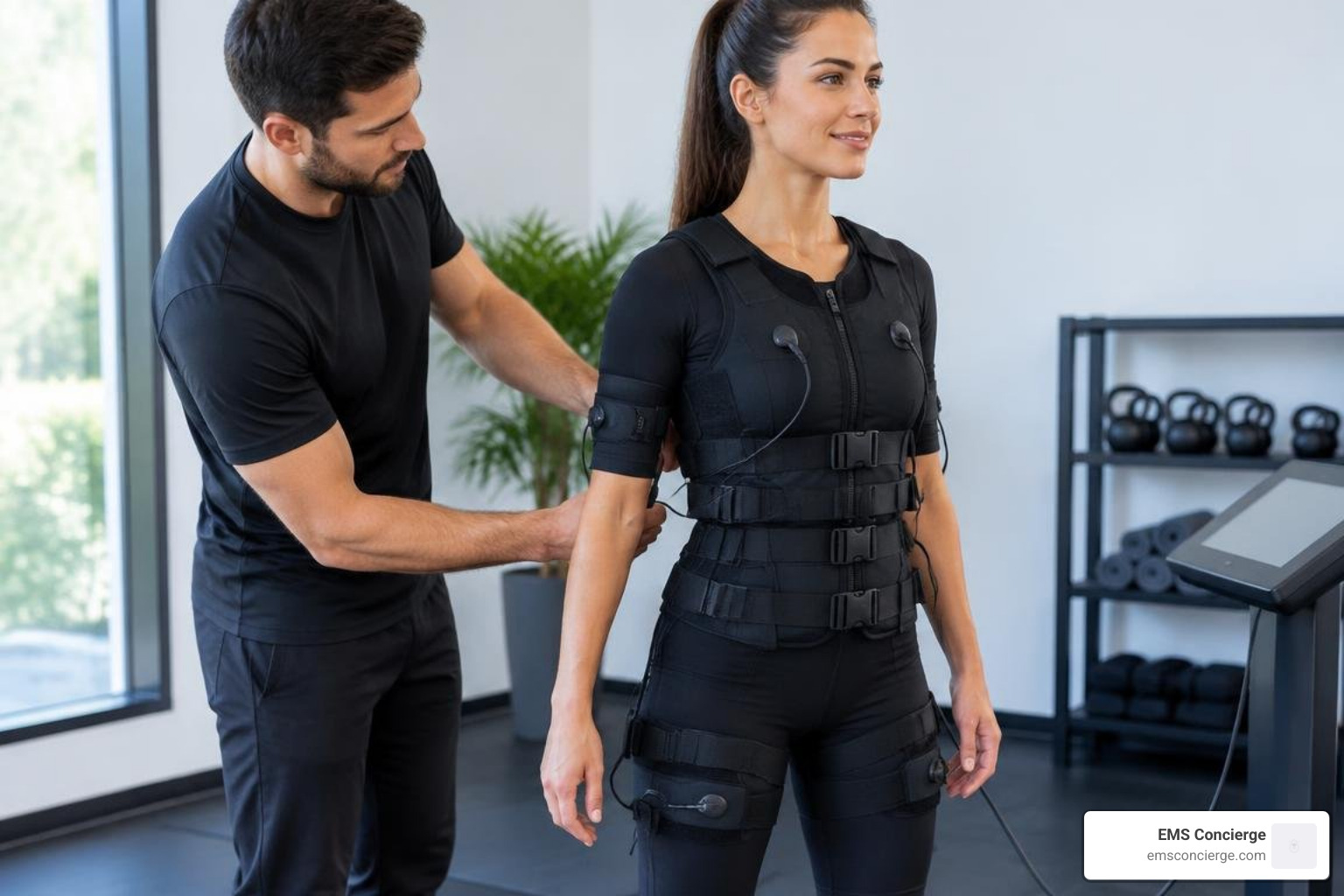
The results of an EMS workout depend directly on the technology delivering the impulses. Professional-grade setups use German-engineered systems, such as Miha Bodytec, which feature precision-milled electrode vests, arm straps, glute belts, and leg wraps constructed with antibacterial technical fabrics.
These medical-grade devices feature multi-channel controls that allow a certified trainer to calibrate current depth independently across up to ten distinct muscle regions. In our comprehensive guide to in-home EMS training equipment and setup, we review how mobile, studio-grade consoles deliver stable, balanced impulses that consumer-grade wearable gadgets cannot replicate.
Step-by-Step Guide to Structuring Your Sessions
Consistency and proper movement mechanics are essential for maximizing the benefits of electro-muscle stimulation. Practicing smart at-home EMS training requires deliberate structure, clear progression, and attention to movement quality.
Before diving into complex movements, reviewing the foundational tips in the beginner's guide to EMS helps set realistic expectations for your first few sessions.

Designing an Efficient Routine for At Home EMS Training
To get the most out of every impulse, pair the electrical stimulation with controlled, deliberate movement patterns:
- Pre-Session Calibration and Moisturization: Technical undergarments are dampened with water to ensure optimal electrical conductivity between the suit's integrated electrode pads and your skin. Once the suit is fitted snugly, your trainer dials in comfortable baseline impulse levels across all muscle groups.
- Impulse Synchronization: All movements are timed to match the duty cycle of the machine. When the 4-second impulse begins, you initiate the active phase of the exercise; during the 4-second pause, you return to the starting position and reset your posture.
- Compound Lower-Body Patterns: Begin with foundational functional movements like bodyweight box squats, split squats, and lateral lunges. As the impulse contracts the quadriceps, hamstrings, and glutes, focus on driving through the heels and maintaining knee alignment.
- Upper-Body Push and Pull Mechanics: Transition into standing chest presses, simulated lat pulldowns, and bent-over rows. The device provides resistance throughout the entire range of motion, creating active tension during both the concentric and eccentric phases without requiring external weights.
- Anti-Rotational Core Stability: Finish with isometric holds such as standing paloff holds, modified bird-dogs, or pelvic tilts. The deep stimulation to the transversus abdominis and erector spinae challenges spinal stability while keeping shear forces low.
Equipment Quality and Technology Standards
Not all electrical stimulation systems operate the same way. The market contains everything from small battery-powered abdominal units to commercial, medical-grade whole-body consoles.
Understanding the distinctions between professional-grade EMS equipment and other EMS machines helps explain why equipment quality matters for safety and results. High-end systems utilize balanced bi-polar square impulses that penetrate deeply into target muscle bellies without irritating superficial skin receptors or causing uncomfortable stinging sensations.
Furthermore, adhering to FDA cleared device safety guidelines ensures that the training equipment has met rigorous international performance and electrical safety standards.
Health Optimization and Safety Considerations

Because whole-body electrical muscle stimulation activates a large volume of muscle tissue simultaneously, it creates significant metabolic demand. Respecting recovery protocols and maintaining balanced hydration helps ensure you gain strength safely and sustainably.
Just as structured safety protocols are central to emergency preparedness and home safety education—such as the resources provided by the Adult & Child CPR Anytime® Training Kit—a responsible fitness routine begins with clear safety guidelines.
Safety Standards and Best Practices for At Home EMS Training
To keep your at-home workouts safe and productive, keep these foundational rules in mind:
- Hydrate Before and After: Drink at least 16 ounces (500 ml) of water roughly 30 minutes before your workout, and replenish fluids with electrolytes afterward. Good hydration improves tissue conductivity and helps your kidneys clear standard metabolic byproducts like creatine kinase.
- Work with Certified Professionals: Avoid self-administering unregulated high-intensity currents. A certified trainer monitors your form, adjusts impulse intensity safely, and prevents overtraining.
- Respect the 48-to-72-Hour Recovery Window: Because whole-body EMS engages fast-twitch fibers across multiple large muscle groups at once, your body needs adequate recovery time. Limit high-intensity EMS sessions to one or two times per week.
- Observe Contraindications: Whole-body EMS is not suitable for individuals with cardiac pacemakers, implanted defibrillators, active epilepsy, pregnancy, or acute severe illnesses. Complete a comprehensive health screening before your first session.
Frequently Asked Questions about At-Home Electrical Stimulation
How often should someone perform home EMS workouts per week?
For most individuals, one to two 20-minute sessions per week is the ideal frequency. Because EMS recruits high-threshold Type II muscle fibers across multiple muscle groups at once, it induces deep neuromuscular fatigue.
Your body needs adequate time for muscular protein synthesis and central nervous system recovery. Spacing sessions at least 48 to 72 hours apart allows your muscles to repair and adapt, maximizing strength and metabolic improvements.
Can EMS sessions support broader cardio and strength goals?
Yes. While EMS acts as a concentrated strength stimulus, it pairs naturally with low-intensity steady-state cardio, outdoor running, cycling, swimming, and mobility routines.
Many clients use EMS as their core weekly resistance session, freeing up the rest of their week for active outdoor recreation, sports, or dedicated cardiovascular conditioning.
Is professional-grade EMS safe for individuals with previous injuries?
Yes, when supervised by a certified trainer. Because EMS elicits muscular contractions through electrical impulses rather than heavy external loads, you can challenge target muscles without placing compressive stress on the spine, shoulders, or knees.
This makes it a practical, joint-friendly option for individuals recovering from joint injuries, managing chronic back discomfort, or working around degenerative joint conditions.
Conclusion
Finding time for effective strength training does not require spending hours in a commercial gym. By pairing medical-grade electrical muscle stimulation with the convenience of personalized in-home coaching, you can build lean muscle, protect joint health, and support long-term physical vitality—all within a focused 20-minute window.
At EMS Concierge, we bring the studio directly to your doorstep. Our certified trainers handle the setup, tailor the intensity to your individual goals, and guide you through every movement using state-of-the-art Miha Bodytec equipment. Whether you want to preserve functional strength, recover from injuries, or streamline a busy schedule, our team is here to support your routine.
Ready to upgrade your weekly fitness routine? Explore our customized in-home EMS sessions to experience personalized, efficient strength training in the comfort of your own home.
References
"Abstracts of the 8th International Conference on Cachexia, Sarcopenia and Muscle Wasting, Paris, France, 4-6 December 2015." Journal of Cachexia, Sarcopenia and Muscle, 2015. PMCID PMC4670752.