How Often Should You Do EMS Training?
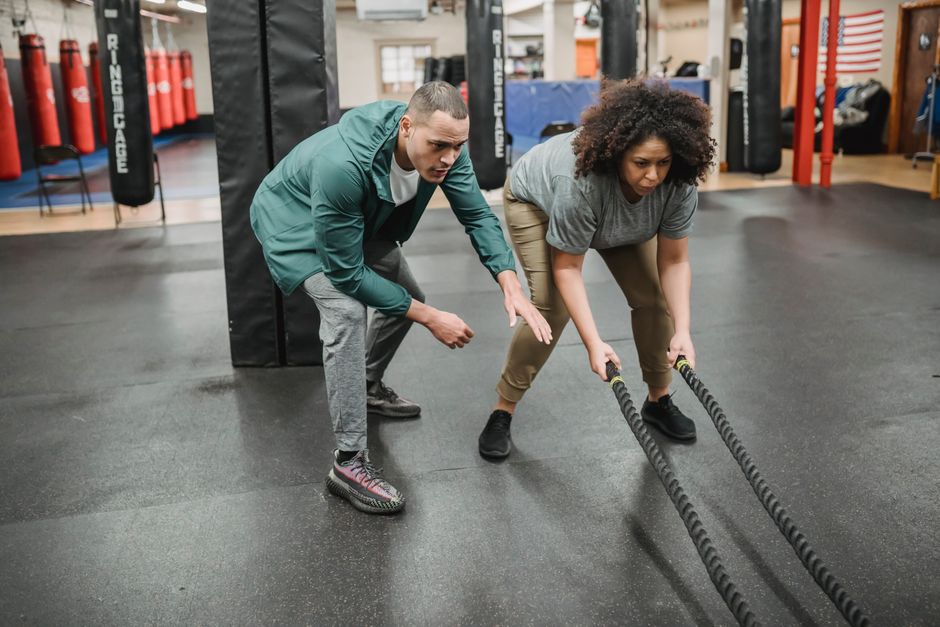
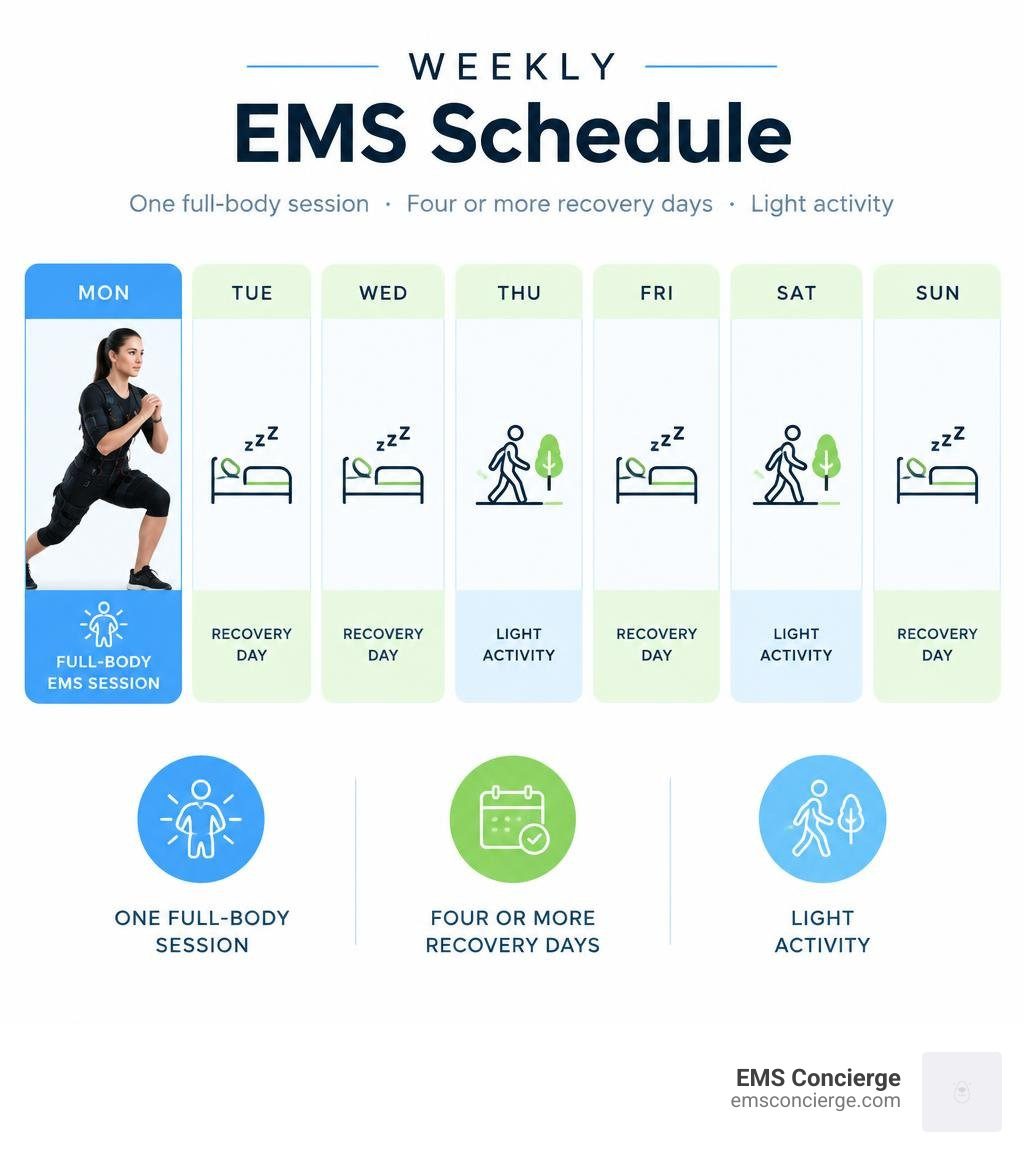
Start with one full-body EMS workout per week. Leave at least four days before your next hard session so your muscles have time to recover. Keep the first sessions gentle, and increase the impulse intensity gradually with a qualified trainer.
More sessions are not always better. If you are still sore or unusually tired, give yourself another rest day. You can use the days between workouts for walking or light mobility work. This conservative approach helps your nervous system adapt to the unique demands of electrical muscle stimulation while reducing the risk of excessive muscle breakdown.
Ems training frequency terms explained:
- gyms in santa monica ca
- outdoor gyms santa monica
The Science of Neuromuscular Stimulation: Why Impulse Frequency Differs from Other Training Stimuli
When you perform a standard exercise like a barbell squat or a bicep curl, your brain decides how many muscle fibers to recruit. It follows Henneman’s size principle: smaller, slow-twitch Type I fibers activate first to conserve energy, and larger, fast-twitch Type II fibers only join the effort when the load becomes heavy or fatigue sets in.
Full-body electro-muscle stimulation (EMS) flips this recruitment dynamic. External low-frequency electrical impulses bypass the voluntary brain-to-nerve signal, activating motor units across agonist and antagonist muscle groups simultaneously. This is why a short impulse session can feel far more demanding than a traditional workout of the same duration.

This simultaneous contraction creates intense mechanical tension deep within the muscle tissue without loading your joints with heavy iron. By demystifying the science behind muscle contractions, we see that electrical impulses engage up to 90% of motor units at once. Because fast-twitch fibers fire immediately alongside slow-twitch fibers, the rate of metabolic waste production and micro-tissue stress is dramatically higher than in conventional weightlifting.
This intense deep-tissue stimulation places a high demand on both your muscular system and your central nervous system (CNS). While a 20-minute session feels short and time-efficient, the biological recovery cost matches or exceeds a multi-hour gym session. Understanding this recovery cost is essential for setting a safe weekly training frequency.
Determining Your Optimal EMS Training Frequency
Finding your ideal workout frequency requires balancing adaptation goals against systemic fatigue. Unlike traditional split routines where you train chest on Monday and legs on Tuesday, full-body EMS activates up to ten major muscle groups in a single session. That means every impulse workout is effectively a full-body training day, and your weekly schedule must account for that total-body demand.
The table below outlines our recommended session frequencies based on training goals and conditioning levels:
| Goal & Fitness Level | Recommended Frequency | Primary Focus | Rest Window Between Sessions |
|---|---|---|---|
| Beginner / General Wellness | 1 session every 7 days | Neuro-adaptation, baseline strength | 6 to 7 days |
| Fat Loss & Body Toning | 1 to 2 sessions per week | Metabolic activation, caloric expenditure | 4 to 5 days minimum |
| Athletic Performance | 2 sessions per week max | Explosive power, Type II fiber recruitment | 3 to 4 days minimum |
| Active Recovery & Mobility | 1 gentle pulse session weekly | Lymphatic drainage, light blood flow | 48 hours |
Starting Out: Recommended EMS Training Frequency for Beginners
If you are new to electrical stimulation, your initial sessions serve as a foundation for neuromuscular adaptation. Even experienced gym-goers find that involuntary muscle contractions trigger deep structural soreness. This soreness is a sign that your muscles are responding to an unfamiliar stimulus, not a signal to train harder.
During your first several weeks, a strict once-weekly protocol is essential. Our beginners guide to impulse fitness outlines how gradual impulse progression helps your tendons, ligaments, and muscle fibers acclimate to rapid contractions without risking overtraining or extreme soreness. Starting with conservative impulse settings allows your neuromuscular system to adapt smoothly while maintaining complete comfort.
Advanced Protocols: Adjusting EMS Training Frequency for Athletes and Recovery
For seasoned athletes and high performers, increasing training frequency requires careful periodization. Once you have established a consistent foundation over several weeks, you can transition to a targeted split or dual-session weekly protocol.
Scientific literature highlights the benefits of deliberate interval spacing in physical conditioning. For instance, a study on spaced training intervals shows that regular, high-frequency intervals improve long-term skill retention and physical response over sporadic sessions.
When tailoring protocols for athletic performance, we separate intense strength-building impulses from lower-intensity recovery sessions. A competitive athlete might schedule one maximum-activation strength session early in the week, followed four days later by a low-frequency recovery session focused on circulation and mobility.

The Physiology of Recovery: Understanding CK Levels and Rest Windows
To understand why rest windows after an EMS workout are non-negotiable, we look at cellular biomarkers—specifically Creatine Kinase (CK).
Creatine kinase is an intracellular enzyme found inside your muscle cells. When muscle fibers experience micro-damage during intense contractions, CK leaks across the cell membrane into the bloodstream. In traditional weight training, CK levels peak roughly 24 to 48 hours post-workout. With whole-body EMS, however, the simultaneous activation of deep muscle tissue causes CK levels to peak closer to 72 hours (3 days) after your session.
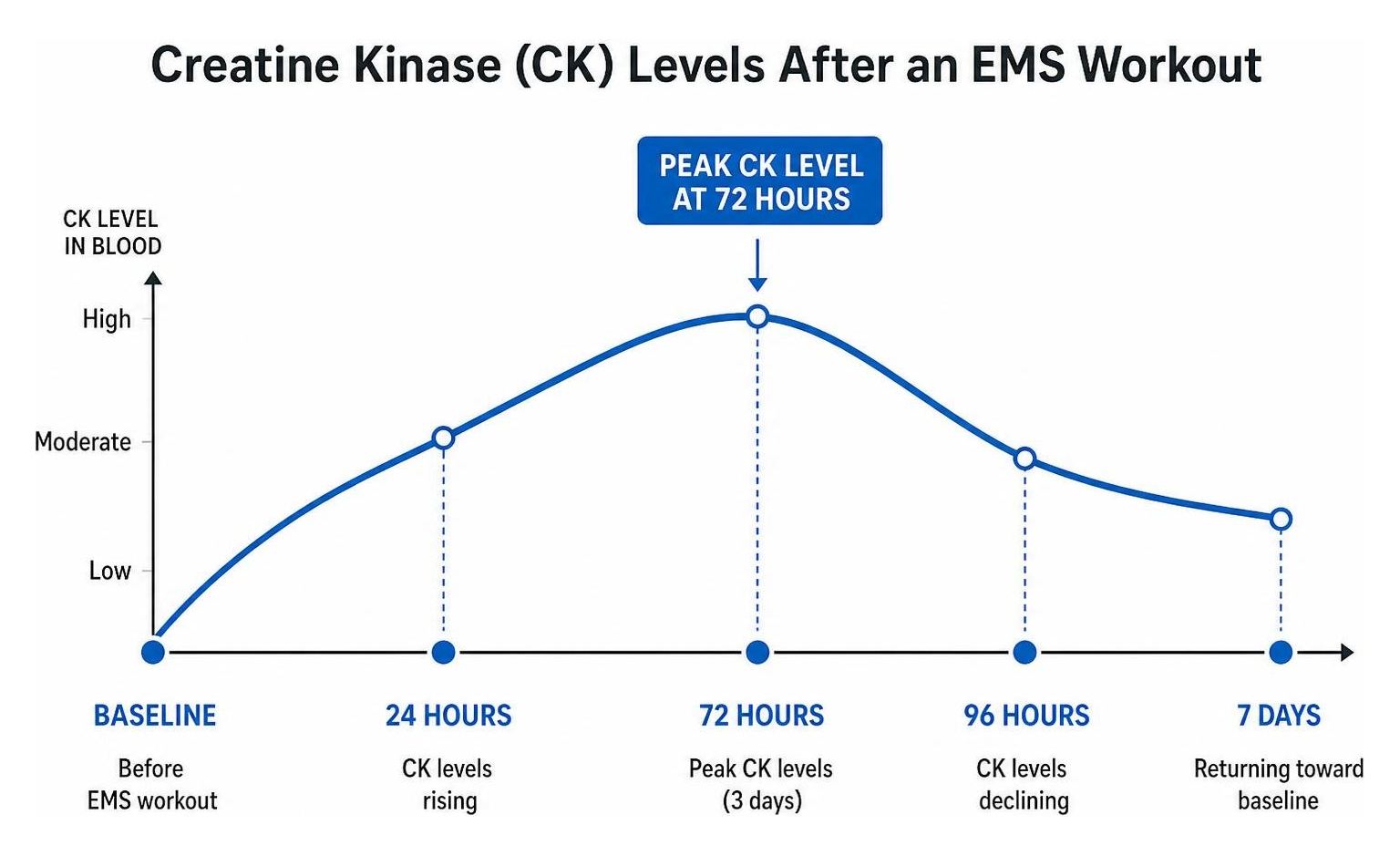
Because muscle protein synthesis and cellular repair remain elevated well into the fourth day following a session, scheduling another intense workout too soon disrupts tissue remodeling and strains your kidneys. This is why a 72-hour minimum rest window is the foundation of safe EMS training frequency. By applying evidence-based muscle recovery strategies, including proper hydration and quality sleep, you support safe cellular clearance and optimize strength gains during this 4-day rest interval.
How to Structure Your Weekly Routine Step by Step
Integrating full-body EMS into your weekly schedule is straightforward when you balance impulse work with active recovery. The goal is to give your body enough stimulation to adapt while leaving enough room for complete cellular repair.
- Schedule Your 20-Minute Core EMS Session: Pick a consistent day (for example, Tuesday) for your primary impulse workout.
- Prioritize Immediate Post-Workout Hydration: Drink 16–24 oz of water with electrolytes immediately after your session to assist cellular flush and enzyme clearance.
- Take 48 Hours of Complete Rest: Keep Days 2 and 3 low-key. Avoid heavy resistance training; light walks or gentle stretching are ideal.
- Incorporate Low-Impact Active Recovery: On Day 4 or 5, engage in low-impact activities like swimming, cycling, or yoga to stimulate blood flow without taxing your central nervous system.
- Evaluate Muscle Soreness Before Re-training: Ensure all deep muscle soreness has resolved before your next session.
We prioritize client safety above all else, which is why our mobile sessions rely on certified trainers who adhere to established safety guidelines and FDA-cleared standards using professional Miha Bodytec equipment.

Frequently Asked Questions About EMS Training Frequency
Can I do EMS workouts two days in a row?
No. Training two consecutive days with full-body EMS is unsafe. Because impulse workouts recruit nearly all motor units simultaneously, your muscles need time to repair damaged fibers and clear metabolic byproducts. Stacking sessions back-to-back can cause severe systemic fatigue and dramatically raises the risk of rhabdomyolysis (excessive muscle breakdown). Always maintain a 48-to-72-hour rest window between high-intensity impulse sessions.
Is one 20-minute session per week enough to build lean muscle?
Yes. A single 20-minute full-body EMS workout delivers up to 50,000 muscle contractions across major muscle groups, achieving depth and recruitment levels comparable to hours of traditional weightlifting. For most people, one high-intensity session per week provides the progressive overload required to stimulate muscle protein synthesis, increase functional strength, and enhance muscle tone.
How long should I wait before increasing my training frequency to twice a week?
We recommend maintaining a once-per-week schedule for at least 6 to 8 weeks. This adaptation period allows your body to build cellular tolerance, strengthen connective tissues, and adapt to involuntary contractions. Once your trainer confirms that your post-session soreness resolves within 48 hours and your baseline conditioning has improved, you can safely trial two sessions per week with at least 3 to 4 rest days in between.
Conclusion
Balancing intense electrical impulses with adequate recovery days is the key to unlocking the full benefits of whole-body EMS. By respecting the 72-hour cellular recovery window, you give your muscles the time they need to rebuild stronger, leaner, and more resilient.
At EMS Concierge, our certified personal trainers bring luxury, one-on-one fitness directly to your home. Using medical-grade Miha Bodytec equipment, we create customized workout and rest schedules tailored to your lifestyle. Book your session today for professional mobile EMS training in Santa Monica and throughout our Southern California locations.