Why 20 Minute EMS Fits a Packed Schedule
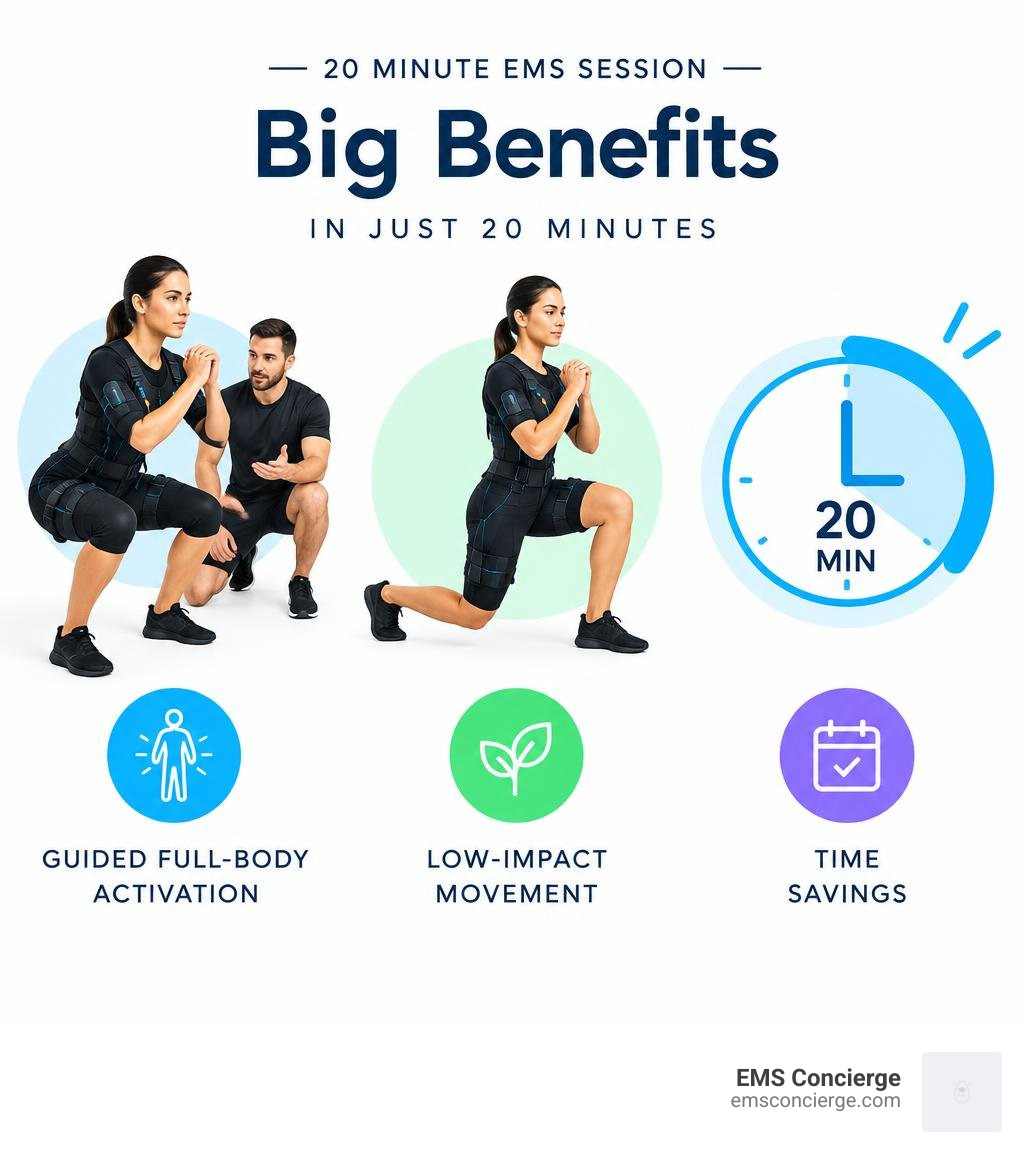
20 minute EMS training is a time-efficient, low-impact workout that uses electrical impulses and guided movements to create strong muscle contractions across multiple major muscle groups. For busy professionals, the practical approach is simple: train with a qualified coach, begin at a manageable intensity, use controlled movements such as squats and holds, and allow adequate recovery between sessions.
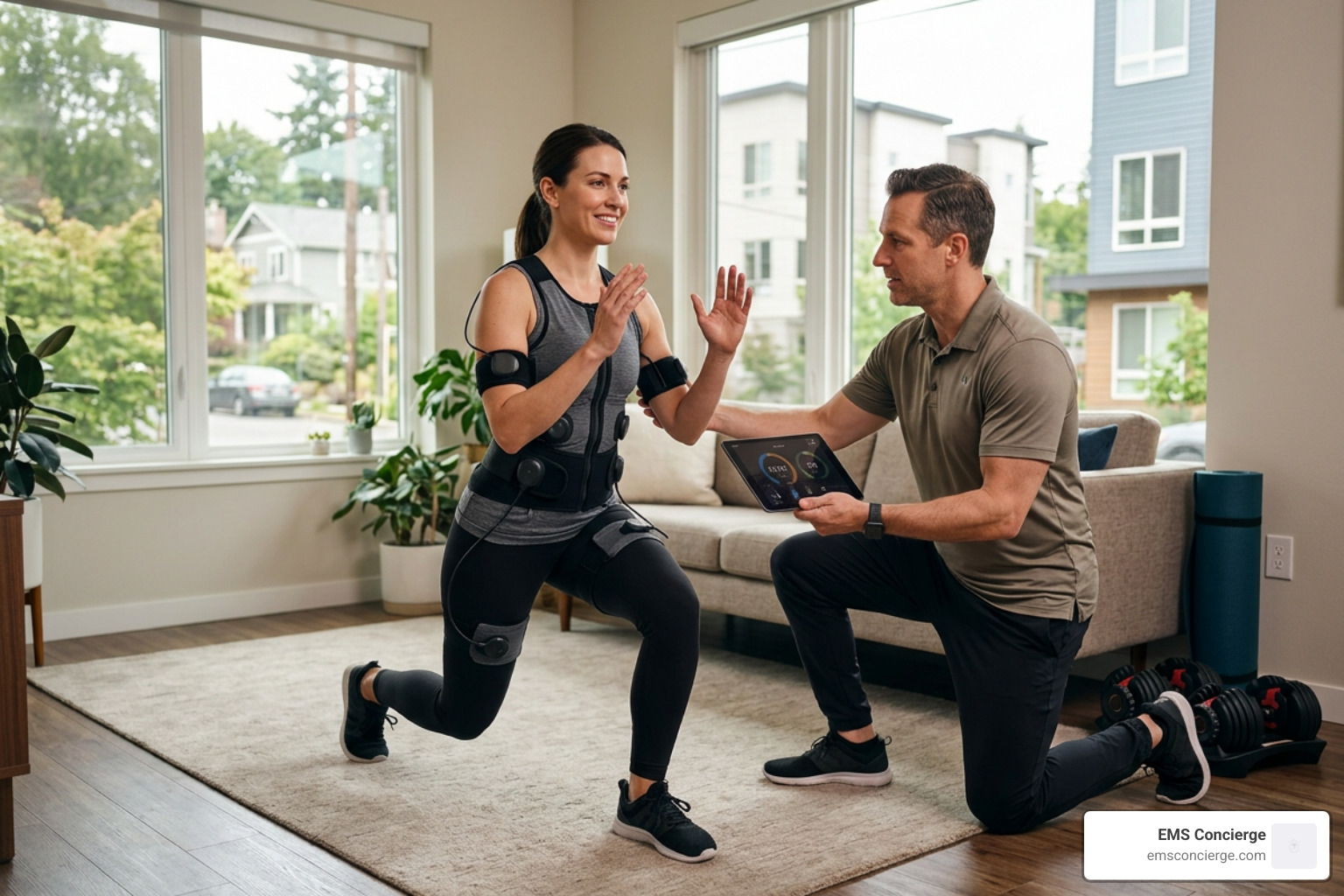
Rather than spending an hour commuting to a crowded gym, you can complete a focused full-body session at home. EMS adds external stimulation to the contractions your body already creates during exercise. That can make light bodyweight movements feel more challenging without adding heavy loads to your joints.
A well-run session should prioritize:
- Coach-led intensity adjustment based on your fitness level and comfort
- Slow, controlled functional movements instead of rushed repetitions
- Full-body muscle engagement through a wearable electrode suit
- Recovery and hydration after training, since the workout can be demanding
EMS is not a shortcut around good training habits. It is a tool for making limited workout time more productive, especially when travel time, long gym sessions, or high-impact exercise do not fit your schedule.
The Science and Physiology of a 20 Minute EMS Workout
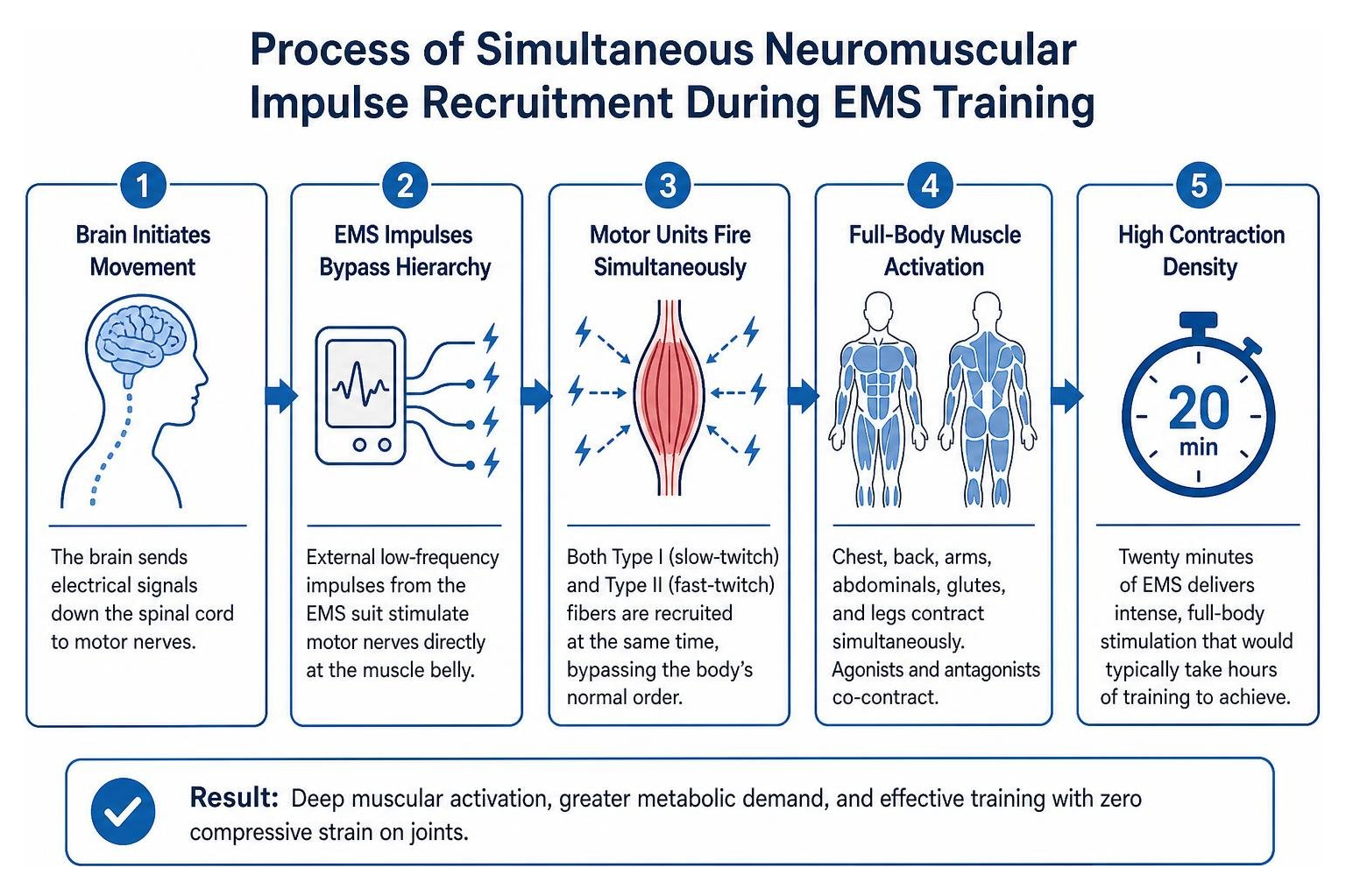
Understanding how electro-muscle stimulation works starts with the neuromuscular system. In conventional resistance training, your brain sends electrical signals down your spinal cord and through peripheral nerves to tell muscle fibers to contract. Your body recruits motor units hierarchically—starting with small, slow-twitch endurance fibers and only calling upon larger, fast-twitch power fibers when the load becomes heavy or fatigue sets in.
During a 20-minute electro-muscle stimulation session, external low-frequency electrical impulses bypass this standard recruitment hierarchy. The impulses stimulate motor nerves directly at the muscle belly, causing involuntary contractions across target zones. If you are curious about what EMS training is, it is essentially an advanced method of engaging major muscle groups simultaneously without needing external weights.
By applying targeted frequencies, we trigger rhythmic contractions across your chest, back, arms, abdominals, glutes, and legs at the exact same moment. This creates an exceptionally high contraction density that would typically take hours of lifting to replicate. When paired with light, functional bodyweight exercises, you unlock deeper metabolic conditioning and muscular fatigue with zero compressive strain on your spine or knees. To dive deeper into how impulses interact with muscle fibers, explore the science behind muscle contractions.
Understanding Neuromuscular Electrical Impulse Technology
The magic of modern EMS lies in its precision. In our mobile sessions, we use medical-grade Miha Bodytec equipment designed to mirror the natural electrical signals generated by your central nervous system.
When your brain triggers a movement, it relies on action potentials—small electrical voltage spikes that travel along motor neurons. The electrode pads in our specialized suits send low-to-medium frequency impulses (typically between 7Hz and 85Hz) that trigger those identical action potentials in muscle tissue.
Because the stimulation occurs externally through precise, targeted channels, we can fine-tune the resistance for individual muscle groups. If your lower back needs gentle activation while your glutes and quads need a challenging workout, we adjust the output channel by channel. This makes EMS training for busy professionals an effective, joint-friendly way to maintain high fitness standards without spending valuable hours traveling to a facility.
Why 20 Minute EMS Triggers Deeper Muscle Activation
Traditional lifting relies heavily on voluntary recruitment, meaning your mind actively dictates which fibers fire. Most people rarely recruit more than 60% of their available muscle fibers during standard gym exercises.
EMS changes that dynamic completely. It bypasses Henneman’s size principle, recruiting both Type I (slow-twitch) and Type II (fast-twitch) muscle fibers right from the first impulse. Fast-twitch fibers are notoriously difficult to target without heavy weights, explosive power movements, or near-failure exhaustion.
Furthermore, a full-body EMS suit creates simultaneous agonist and antagonist co-contraction. When you perform a simple movement like a bicep curl or a bodyweight squat, the opposing muscle groups (such as your triceps or hamstrings) are contracting alongside the primary mover. This delivers profound core engagement and myofibrillar stimulation. You can explore our full body EMS training services to see how comprehensive these full-body impulse routines are.
Step-by-Step Guide to Structuring an Effective EMS Session
To get the most out of every impulse, an EMS session needs clear structure and expert guidance. Because the technology recruits muscle fibers so intensely, having a certified personal trainer guide your form, timing, and hydration ensures safety and efficiency.
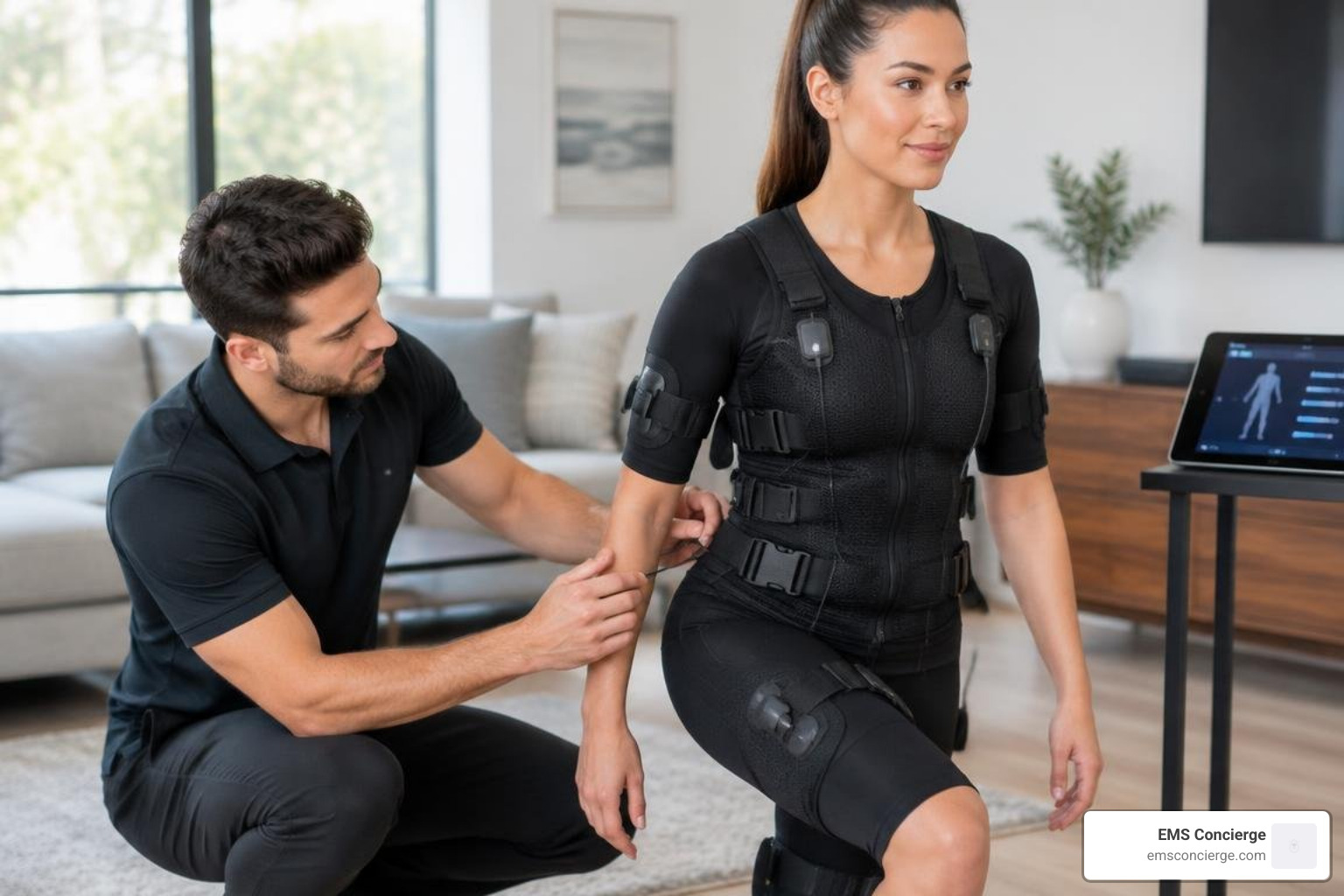
If you are new to this style of conditioning, our beginners guide to EMS training outlines what to expect from your initial appointment. Here is how a well-structured session unfolds from start to finish.
Preparing Your Body and Gear Before the Session
Preparation is essential for optimal conductivity, comfort, and physical performance. Because electrical impulses travel through water, your hydration levels and your workout gear dictate how smoothly the stimulation reaches your muscles.
Follow these practical preparation steps:
- Hydrate thoroughly beforehand: Drink 16 to 20 ounces of water 30 to 45 minutes prior to your workout. Proper cellular hydration lowers electrical resistance in the skin and allows impulses to stimulate deeper muscle layers comfortably.
- Consume a balanced light snack: Eat a small meal containing easily digestible complex carbohydrates and electrolytes 1 to 2 hours beforehand so your muscles have adequate glycogen.
- Wear specialized base layers: Put on the clean, breathable cotton undergarment provided by your trainer. These base layers are slightly dampened with warm water to optimize electrical impulse transmission from the pads to your skin.
- Fasten the suit securely: Your certified coach will help you step into the vest and strap on the arm, leg, and glute cuffs, ensuring each electrode aligns precisely with major muscle bellies.
- Verify professional-grade safety: Always ensure your session uses certified equipment. Understanding why FDA approval matters helps protect your health and ensures the electrical frequencies used are regulated, stable, and safe.
Maximizing Results During Your 20 Minute EMS Routine
Once suited up, your 20-minute workout begins. The machine operates on an interval cycle—typically 4 seconds of impulse followed by 4 seconds of rest.

To get maximum results during those 20 active minutes, focus on these core techniques:
- Synchronize your breathing: Exhale through your mouth during the 4-second impulse phase as you contract your muscles, and inhale through your nose during the 4-second rest interval.
- Control your tempo: Move smoothly into your functional exercises (such as squats, lunges, chest presses, and hinges) right as the impulse starts. Avoid rushing; slow, deliberate movement creates higher tension.
- Embrace static holds: Holding an isometric position (like a half-squat or a plank) during the impulse maximizes fiber recruitment and eliminates momentum.
- Maintain active engagement: Consciously squeeze your core, glutes, and postural muscles throughout every contraction cycle instead of letting the suit do all the work.
Curious about how a typical workout flows from start to finish? Read through our breakdown of how a typical EMS concierge session works step by step to see the detailed choreography behind our private appointments.
Maximizing the Efficiency of 20-Minute EMS
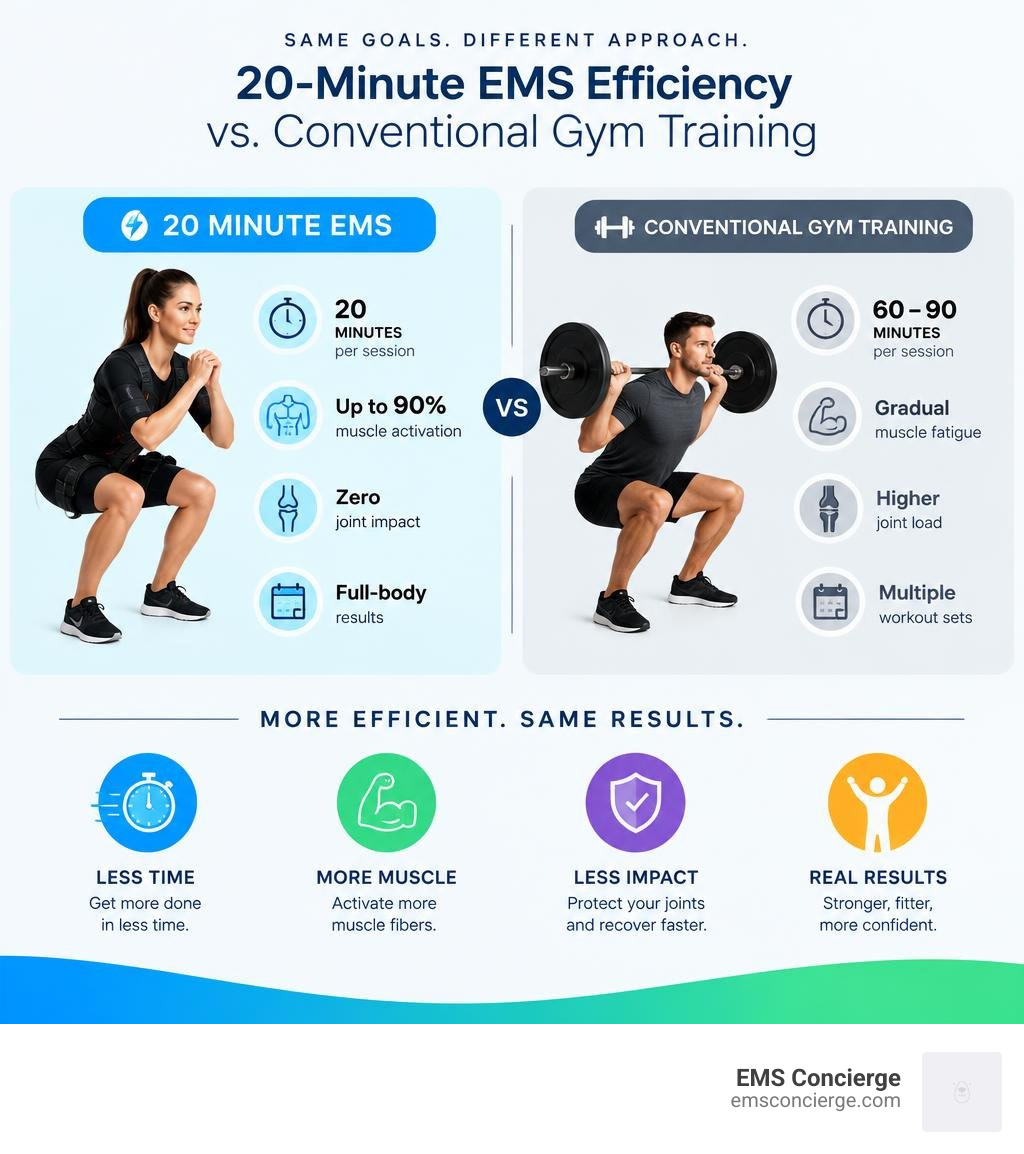
The real advantage of 20-minute electro-muscle stimulation is its remarkable efficiency. In conventional fitness, achieving complete full-body fatigue requires multiple compound lifts, dedicated rest sets, and significant joint loading. By the end of a traditional 60-to-90-minute session, spinal compression, connective tissue fatigue, and neurological burnout can mount quickly.
EMS reorganizes that workload. By stimulating up to 90% of your skeletal muscle tissue simultaneously under zero joint impact, you trigger the metabolic benefits of a heavy strength session in a fraction of the time.
High-performance physical training demands discipline, focus, and adherence to proven operational protocols. In high-stakes fields like emergency response, success hinges on structured processes and avoiding critical procedural errors; you can listen to an audio overview on protocol discipline and performance to see how systematic preparation creates reliable outcomes under pressure. In fitness, that same structured discipline—combining calibrated impulse settings, strict rest cycles, and precise movement coaching—is what makes a short 20-minute session produce results comparable to extended workouts.
Frequently Asked Questions About 20 Minute EMS
How often should you complete a 20-minute EMS workout each week?
For most individuals, 1 to 2 sessions per week is optimal. Because the electrical impulses recruit both superficial and deep muscle fibers simultaneously across your whole body, your muscles experience substantial microscopic strain. Your body needs 48 to 72 hours of recovery between sessions to repair tissue, replenish glycogen stores, and adapt. Over-training with EMS can lead to excessive muscle soreness or central nervous system fatigue, making proper rest and recovery just as important as the workout itself.
Is 20 minutes of EMS truly enough to build lean muscle?
Yes. Muscle hypertrophy and strength gains are driven by mechanical tension, muscle fiber recruitment, and metabolic stress. EMS achieves high levels of all three by inducing thousands of involuntary contractions throughout the 20-minute window without requiring heavy external weights. When combined with adequate protein intake and consistent recovery, the stimulus is more than sufficient to build functional strength, improve muscle tone, and boost metabolic rate.
Who should avoid electro-muscle stimulation training?
While EMS is safe and low-impact for the vast majority of healthy adults, certain medical conditions are strict contraindications. You should not participate in EMS training if you have a cardiac pacemaker, an implanted defibrillator, epilepsy, severe circulatory disorders, or active tumor diseases, or if you are pregnant. Before beginning any routine, our certified trainers conduct a thorough medical screening to ensure the training is safe and appropriate for your health profile.
Conclusion
Finding time for consistent, high-yield fitness should not require sacrificing hours from your personal or professional life. With mobile electro-muscle stimulation, you can achieve full-body muscle recruitment, improve metabolic health, and build lean functional strength in a single 20-minute appointment delivered straight to your living room.
Whether you live in Beverly Hills, Calabasas, Newport Beach, or Aspen, our certified trainers bring professional Miha Bodytec technology directly to your door. Take control of your schedule and experience the future of time-efficient strength training. Schedule your in-home Santa Monica mobile EMS training session with EMS Concierge today.