(Medical-Grade vs Non-Medical Devices, Safety, and Risk Reduction)
EMS training is one of the most efficient ways to activate muscles and train the body in a short amount of time. But as EMS becomes more popular, there’s one topic that separates safe, high-quality EMS from risky or inconsistent experiences:
FDA approval.
Many people assume all EMS devices are similar because they all “stimulate muscles.” But EMS systems vary massively in their design, build quality, safety standards, and control mechanisms.
That’s why FDA approval matters—not as a marketing label, but as a signal of safety and reliability.
What FDA Approval Really Means
The FDA (Food and Drug Administration) regulates medical devices in the United States.
When an EMS system is FDA-approved or FDA-cleared, it means the device has met specific standards related to:
- safe electrical output delivery
- device performance reliability
- risk reduction mechanisms
- controlled stimulation parameters
- appropriate intended usage
This is critical because EMS is not like a normal workout tool. It influences muscle activation directly, which means it must be handled responsibly.
Medical-Grade vs Non-Medical EMS Devices
Here’s the simplest way to understand the difference:
Medical-Grade EMS (FDA-approved / FDA-cleared)
Designed for professional use with high safety standards, controlled output, and consistent performance.
Non-Medical EMS Devices (Consumer or Unregulated Equipment)
Often designed for casual home use, with less precision, less oversight, and generic one-size-fits-all settings.
Non-medical devices may still “work,” but they often lack the refinement, consistency, and safety controls you want from a serious EMS training system.
Why FDA Approval Matters for Safety
One of the biggest objections people have about EMS is fear:
“Is it safe?”
The honest answer is: EMS can be very safe when it’s medical-grade and supervised.
But it can also become risky when intensity is uncontrolled or devices aren’t built to medical standards.
FDA-approved EMS devices are designed to reduce risk by supporting:
- more stable and consistent stimulation output
- safer intensity parameters
- better system-level controls
- reduced risk of over-stimulation or imbalance
This is especially important for people who are:
- new to EMS
- returning to fitness after a break
- postpartum (after medical clearance)
- recovering from injury
- training with joint sensitivity
Why FDA Approval Matters for Effectiveness
Results aren’t only about how hard the stimulation feels.
EMS works best when stimulation is:
- precisely targeted
- evenly balanced across muscle groups
- adjusted to match real movement patterns
- progressed safely over time
FDA-approved medical-grade systems are typically engineered to deliver a more consistent, refined stimulation experience—allowing clients to train harder without discomfort or unnecessary strain.
That’s why medical-grade EMS often feels more “premium” in practice:
it’s smoother, more controlled, and more effective.
Risk Reduction Comes from Supervision + Quality
FDA approval is powerful—but it works best when combined with professional supervision.
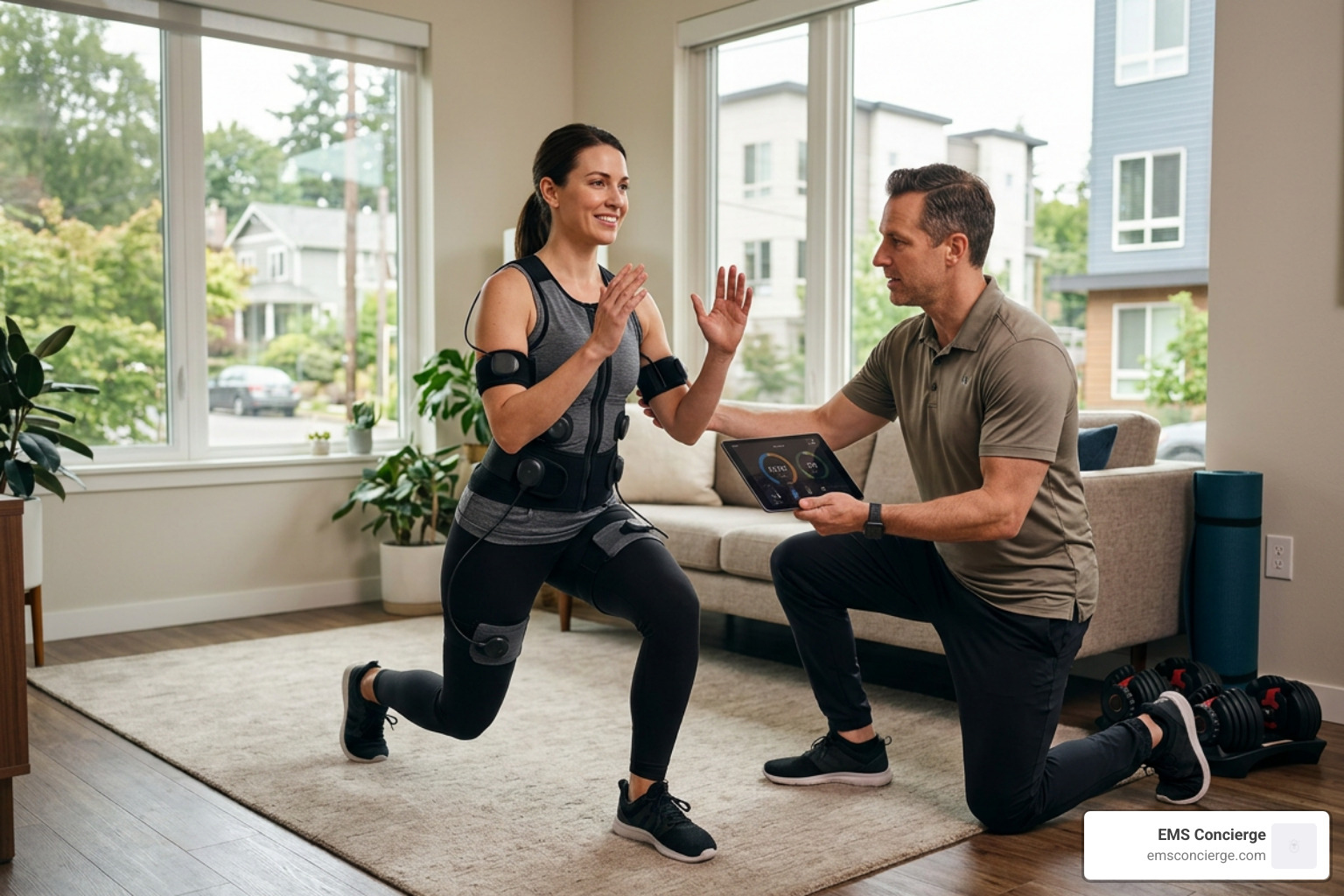
At EMS Concierge, every session includes:
- proper suit fitting and electrode positioning
- controlled intensity calibration per muscle group
- real-time coaching and output adjustment
- safe progression based on your goals and response
This is what reduces risk and improves results:
a medical-grade system paired with expert guidance.
Final Thoughts
If you’re investing in EMS training, FDA approval should matter to you—because it directly impacts safety, comfort, and outcomes.
Medical-grade EMS isn’t about being “stronger.”
It’s about being safer, more precise, and more effective.
EMS Concierge is built on that standard.
Book a medical-grade EMS Concierge session today and experience the difference.