Modality Breakdown: Comparing TENS, EMS, NMES, and FES
When people talk about electrotherapy, they often use terms like TENS, EMS, and e-stim interchangeably. In practice, these modalities serve very different physiological purposes. The primary distinction lies in whether the electrical current is calibrated to target sensory nerves for pain modulation or motor nerves to induce physical muscle contractions.
Understanding these differences begins with an in-depth guide to electrical muscle stimulation basics, which explains how distinct waveform parameters, pulse frequencies (measured in Hertz, or Hz), and pulse durations dictate how your body responds to electrical currents.
- Transcutaneous Electrical Nerve Stimulation (TENS): Operates primarily at sensory-level intensities using high or low frequencies (typically 2 to 150 Hz). Its goal is to alter pain perception rather than cause muscle movement.
- Electrical Muscle Stimulation (EMS): Delivers currents designed specifically to depolarize motor neurons, causing rhythmic muscle contractions. It is widely utilized in athletic performance, fitness activation, and recovery.
- Neuromuscular Electrical Stimulation (NMES): A clinical variation of EMS used extensively in physical therapy. It targets specific peripheral motor nerves to rehabilitate weakened muscles, prevent disuse atrophy, and restore localized strength after surgery or injury.
- Functional Electrical Stimulation (FES): Combines motor-level electrical stimulation with active, functional movements. FES activates paralyzed or paretic muscles in a coordinated pattern to execute functional tasks, such as opening a hand, stepping forward, or pedaling a stationary cycle.
| Modality | Primary Target | Primary Mechanism | Clinical & Functional Objective | Typical Sensation |
|---|---|---|---|---|
| TENS | Sensory nerve fibers ($Abeta$) | Pain gating & endorphin release | Symptomatic pain relief (acute/chronic) | Tingling, buzzing, "pins and needles" |
| EMS | Motor neurons / Skeletal muscle | Synchronous motor unit recruitment | Conditioning, muscle activation, recovery | Rhythmic, controlled muscle tension |
| NMES | Peripheral motor nerves | Targeted motor unit depolarization | Atrophy prevention, localized strength rehab | Deep, localized muscle contraction |
| FES | Motor pathways during tasks | Patterned functional neuro-activation | Motor relearning, gait assistance, grasp | Coordinated contractions during movement |
How Electrical Stimulation Therapy Works on Nerves and Muscles
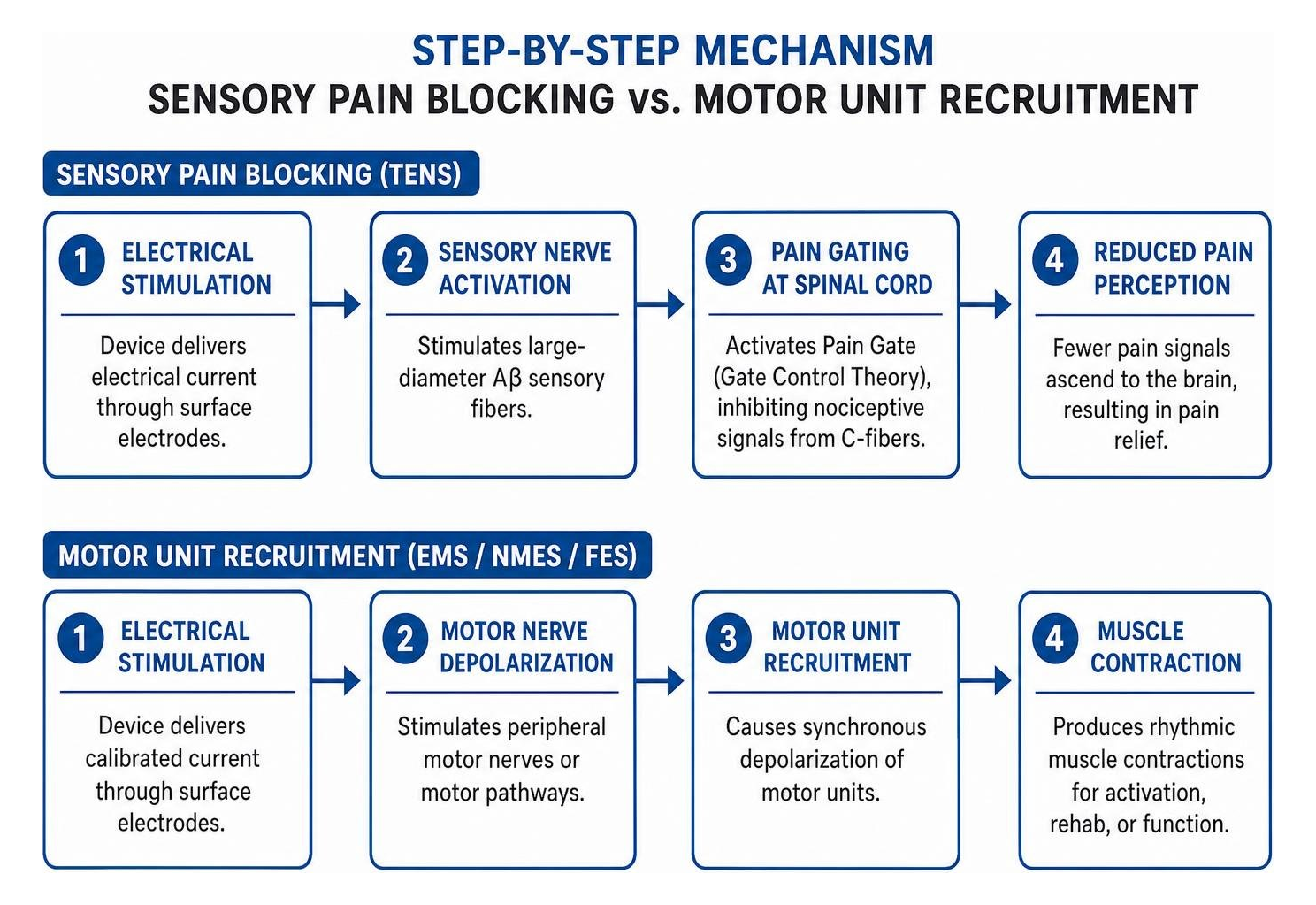
At its core, electrical stimulation therapy works by generating artificial electrical potentials across cell membranes. Under normal conditions, your brain sends electrical signals down the spinal cord to peripheral nerves. An electrotherapy device bypasses or assists this pathway by applying surface electrodes that send controlled current into underlying tissues.
For sensory pain control, the current stimulates large-diameter myelinated $Abeta$ (A-beta) nerve fibers. As detailed in a clinical review of peripheral nerve stimulation, activating these non-pain sensory fibers inhibits nociceptive signals transmitted along small, unmyelinated C-fibers (NBK557561). This mechanism, based on Melzack and Wall's classical Gate Control Theory, prevents pain messages from ascending the spinal cord to the brain.
When the objective shifts to muscle activation, the current parameters are tuned to depolarize motor axons at the neuromuscular junction. The resulting action potential spreads across the sarcolemma, releasing calcium ions and generating a true muscle contraction. Unlike voluntary contractions—which recruit small, fatigue-resistant Type I muscle fibers first—electrical stimulation recruits motor units non-selectively and synchronously. This enables deep activation of fast-twitch Type II fibers even at lower overall physical exertion levels.
Targeted Pain Control vs. Functional Neuromuscular Activation
Targeted pain modulation provides symptomatic relief by closing the dorsal horn "pain gate" and stimulating the release of endogenous opioids (endorphins and enkephalins) within the central nervous system. However, this is largely a passive intervention; it manages the sensation of pain without directly altering underlying musculoskeletal mechanics.
In contrast, neuromuscular activation focuses on structural and functional restoration. When an individual suffers an injury or undergoes surgery, arthrogenic muscle inhibition can prevent the brain from fully activating surrounding muscles, leading to rapid disuse atrophy. Modalities like NMES and FES overcome this neural block. According to a clinical guide on functional electrical stimulation, FES is particularly valuable for complex neurological conditions—such as managing hemiplegic shoulder subluxation or treating foot drop—by stimulating the peroneal nerve during the swing phase of walking to restore functional mobility.
Clinical Applications of Electrical Stimulation Therapy
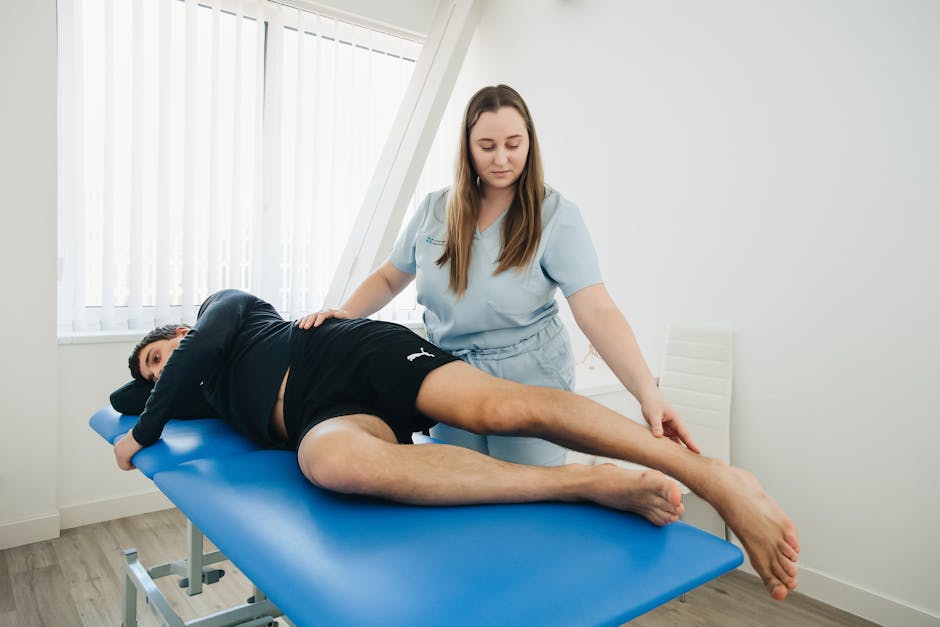
Electrical stimulation spans a wide spectrum of healthcare disciplines, from orthopedic outpatient physical therapy to intensive neurological rehabilitation.
- Post-Stroke Motor Recovery: Non-invasive electrical stimulation helps retrain neural pathways through neuroplasticity (Allen et al., 2023). Stroke survivors often utilize FES or NMES to regain upper-extremity reaching and grasping, as well as lower-extremity gait mechanics.
- Spinal Cord Injury (SCI) Management: FES cycling protocols allow individuals with partial or complete lower-body paralysis to pedal stationary ergometers. This maintains cardiovascular fitness, preserves lean muscle mass, supports bone mineral density, and aids circulation.
- Pediatric Rehabilitation (Cerebral Palsy): Targeted NMES protocols help children with cerebral palsy improve gross motor function, optimize joint alignment, and reduce dynamic contractures.
- Orthopedic Recovery & Post-Surgical Care: Following procedures like total knee arthroplasty (TKA) or anterior cruciate ligament (ACL) reconstruction, NMES combats quadriceps shutdown, allowing patients to regain knee extension and weight-bearing capabilities faster. For those navigating muscular imbalances or joint strain, integrating joint-friendly rehabilitation and injury recovery protocols provides safe, progressive strength development without overloading healing connective tissues.
Assessing the Long-Term Efficacy of Electrical Stimulation Therapy
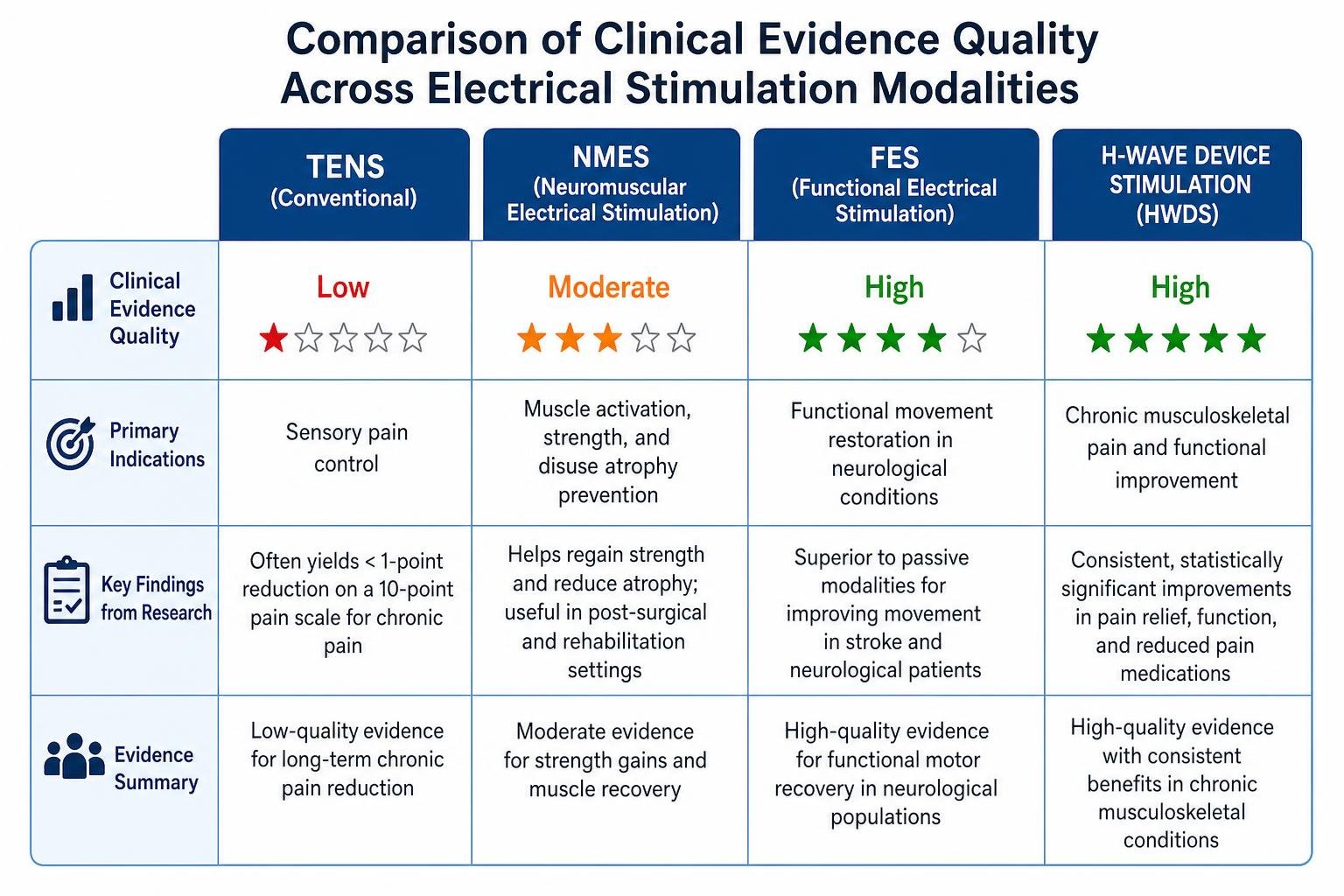
Clinical research shows that efficacy depends heavily on the chosen modality, stimulation parameters, and clinical indications (Allen et al., 2023).
A systematic review published in highlights a critical divergence between modalities: while standard TENS devices frequently show low-quality evidence for long-term chronic pain reduction—often yielding less than a 1-point reduction on a standard 10-point visual analog scale—other targeted electrical modalities demonstrate substantial therapeutic value (Allen et al., 2023). For example, specialized forms like H-Wave device stimulation (HWDS) have demonstrated consistent, statistically significant improvements in pain relief, functional ability, and reduction of pain medications in chronic musculoskeletal conditions (Allen et al., 2023).
Similarly, in neurological populations, systematic reviews indicate that FES is superior to passive modalities for improving movement scores in stroke patients with upper limb dysfunction (Allen et al., 2023). When used as part of an opioid-sparing protocol after major surgeries, electrotherapy can reduce acute narcotic requirements during initial recovery phases.
Comparison with Traditional Physical Therapy and Active Exercise
Electrical stimulation is an adjunct to active exercise, not a standalone replacement. While electrotherapy provides essential neuromuscular stimulation when voluntary movement is compromised, it lacks the broader systemic adaptations created by traditional physical therapy, such as joint proprioception, cardiovascular loading, dynamic balance, and multi-planar motor control.
The most effective clinical outcomes occur when electrical stimulation is paired synergistically with active, voluntary movement. Combining an external current with conscious patient effort accelerates motor relearning and muscular hypertrophy far more efficiently than passive stimulation alone.
Candidacy, Safety Profiles, and Clinical Protocols

Electrical stimulation has a well-established safety profile, but proper screening is essential. Because electrical currents alter localized cellular and neural electrical fields, certain medical conditions represent absolute or relative contraindications.
Absolute & Relative Contraindications:
- Implanted Cardiac Devices: Patients with cardiac pacemakers or implantable cardioverter-defibrillators (ICDs) should avoid electrical stimulation near the chest or trunk, as the current can interfere with device sensing.
- Deep Vein Thrombosis (DVT): Electrical stimulation over an active blood clot can dislodge the thrombus, risking a pulmonary embolism.
- Active Malignancy: Electrodes must not be placed directly over cancerous tissue or active lesions.
- Pregnancy: While TENS is occasionally used during labor under direct obstetric supervision, routine electrotherapy over the abdomen, pelvis, or lower back is contraindicated during pregnancy.
- Active Epilepsy: Electrodes should never be applied across the head, neck, or carotid sinus in patients with seizure disorders (NBK538266).
For individuals cleared for exercise who want to optimize physical fitness, understanding how full-body electrical muscle stimulation works helps illustrate how controlled motor impulses can safely activate major muscle groups simultaneously without heavy joint loading.
What to Expect During a Session: Sensation, Intensity, and Duration
A typical electrical stimulation session follows a structured, comfortable clinical protocol:
- Skin Preparation: The skin is cleansed to remove oils, lotions, and dead skin cells. This ensures low impedance and uniform current distribution across the electrode surface.
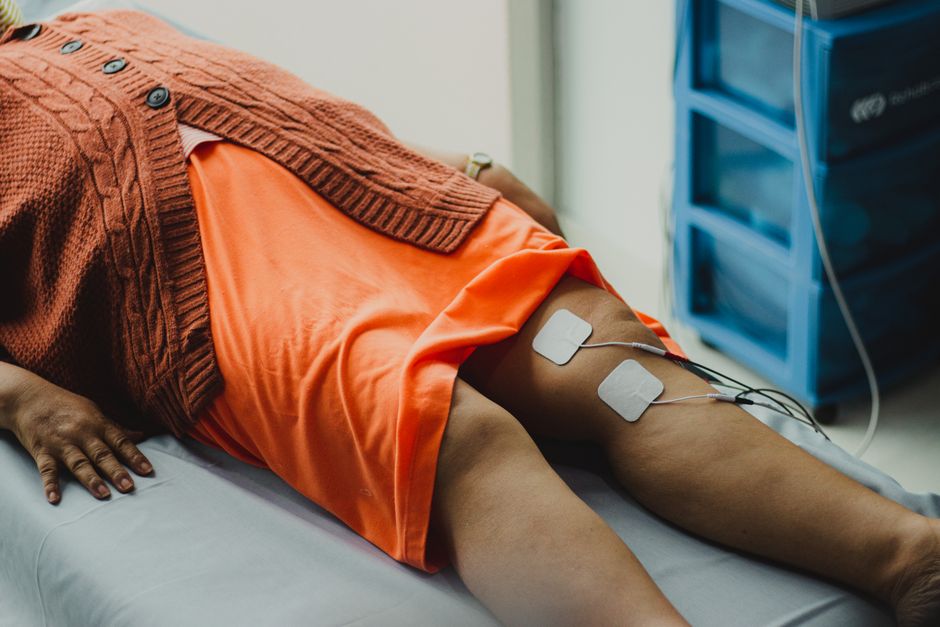
- Electrode Application: Self-adhesive hydrogel pads or damp conductive garments are placed over specific motor points or sensory dermatomes.
- Current Titration: The practitioner slowly increases the intensity from zero. The initial sensation is a mild paresthesia—a light, prickly tingling. For sensory protocols (TENS), the current is kept at a comfortable buzzing sensation. For motor protocols (EMS/NMES), the intensity is raised until a strong, visible, but comfortable muscle contraction occurs.
- Session Duration: Clinical rehabilitation sessions typically last between 20 and 45 minutes, depending on the therapeutic objective.
- Post-Treatment Inspection: Electrodes are removed, and the skin is checked for mild erythema (redness), which normally dissipates within 30 to 60 minutes due to localized vasodilation.
Professional Trainer-Guided Sessions vs. At-Home Devices
The commercial marketplace is flooded with consumer-grade, battery-operated electrotherapy units. While basic over-the-counter TENS units are widely available for home use, unsupervised application often leads to suboptimal results. Consumers frequently struggle with improper electrode placement, incorrect frequency selection, and inadequate intensity settings, which limits therapeutic benefit.
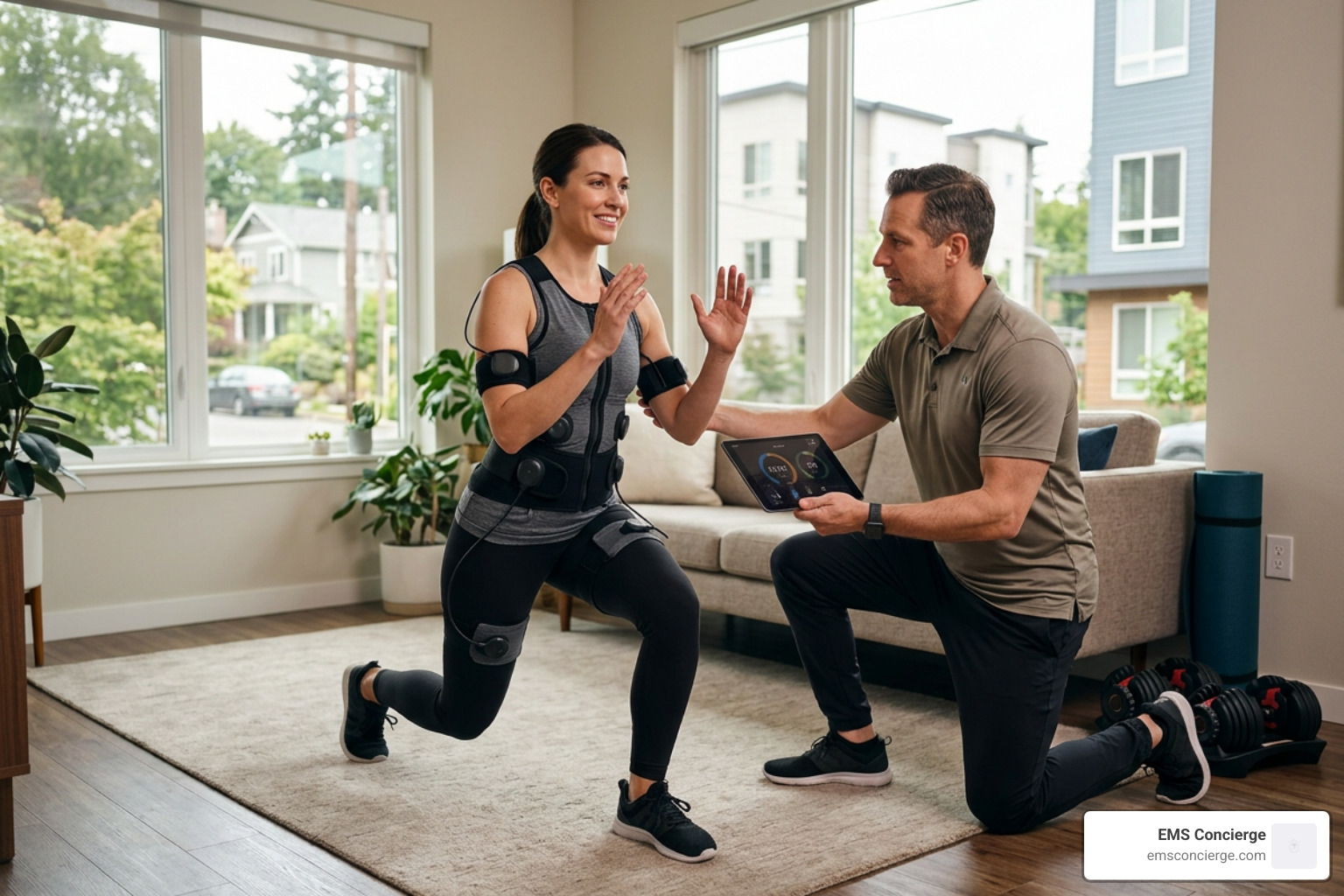
Professional-grade systems—classified as FDA-cleared Class II medical and fitness devices—offer multi-channel control, balanced biphasic waveforms, and precise pulse-width modulations. At EMS Concierge, we bring professional-grade Miha Bodytec equipment directly to your home throughout our service areas, including Malibu, Beverly Hills, Santa Monica, Pasadena, Newport Beach, and Aspen. Guided by certified trainers, our personalized 20-minute sessions ensure that current parameters, electrode contacts, and exercise movements are calibrated to your individual goals and safety profile.
Frequently Asked Questions about Electrical Stimulation
What is the primary difference between TENS and EMS devices?
The fundamental difference lies in their biological targets and therapeutic outcomes. TENS targets sensory nerve fibers ($Abeta$) using lower current intensities to block pain signals from reaching the brain and trigger endorphin release. It is a passive modality for symptomatic pain management. EMS targets peripheral motor neurons with higher pulse charges to cause full muscle contractions, focusing on muscle strengthening, physical conditioning, and post-workout recovery.
Can electrical stimulation therapy cause skin burns or nerve injury?
When applied correctly using intact, properly moistened electrodes and FDA-cleared devices, electrical stimulation does not damage nerves or burn tissue. Skin irritation or superficial burns only occur if electrodes lose adhesion (creating high current density in a small area), if the intensity is turned up excessively high, or if non-conductive worn-out pads are used. Professional guidance eliminates these risks through proper skin preparation and active monitoring.
How quickly do patients experience clinical improvements from electrotherapy?
For sensory pain relief (such as TENS or specialized recovery currents), patients often experience acute analgesia during the session and for a few hours afterward. For neuromuscular re-education, strength building, and atrophy prevention (via NMES or EMS), functional improvements develop cumulatively over 4 to 8 weeks of consistent, multi-week programming, mirroring the physiological timelines of neuromuscular adaptation and muscular hypertrophy.
Conclusion
Electrical stimulation therapy represents a versatile, scientifically grounded continuum of care that bridges the gap between passive pain relief and active neuromuscular performance. From hospital-based stroke rehabilitation using FES to specialized pain modulation and comprehensive motor re-education, matching the appropriate modality—TENS, EMS, NMES, or FES—to your specific physiological needs is essential for achieving meaningful results.
While electrotherapy is a powerful tool, it delivers its greatest clinical and functional impact when integrated into a broader lifestyle that prioritizes functional movement, joint health, and proper physical conditioning.
If you are looking to accelerate muscle recovery, reduce tension, and stimulate blood flow from the comfort of your home, our team at EMS Concierge provides expert, trainer-guided sessions customized to your body. Discover how our targeted recovery stimulation programs can support your wellness, mobility, and performance goals today.
References
Allen CB, Williamson TK, Norwood SM, Gupta A. "Do Electrical Stimulation Devices Reduce Pain and Improve Function?-A Comparative Review.." Pain and therapy, 2023. PMCID PMC10616008. NBK557561. NBK538266.