Can EMS Training Build Real Muscle?
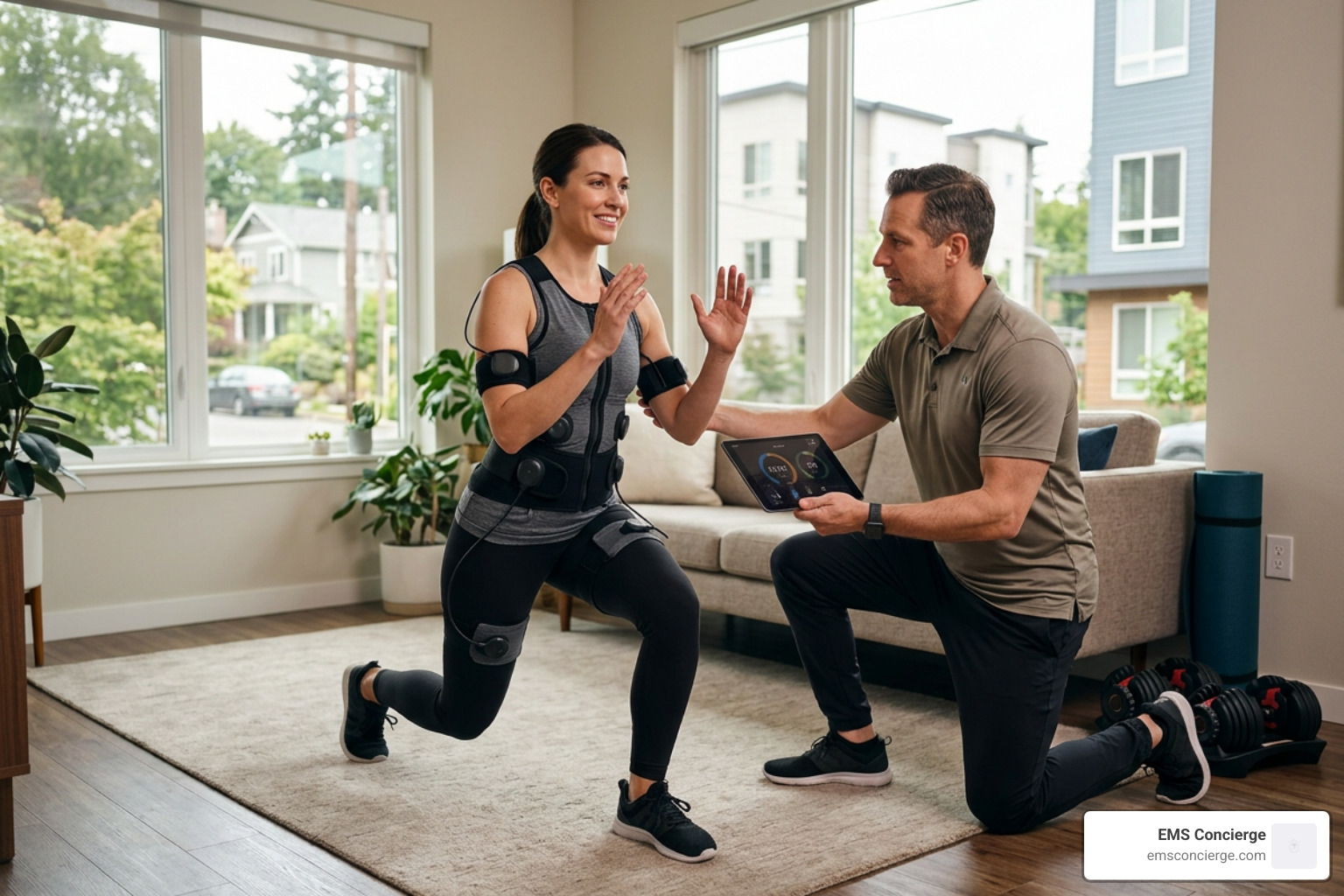
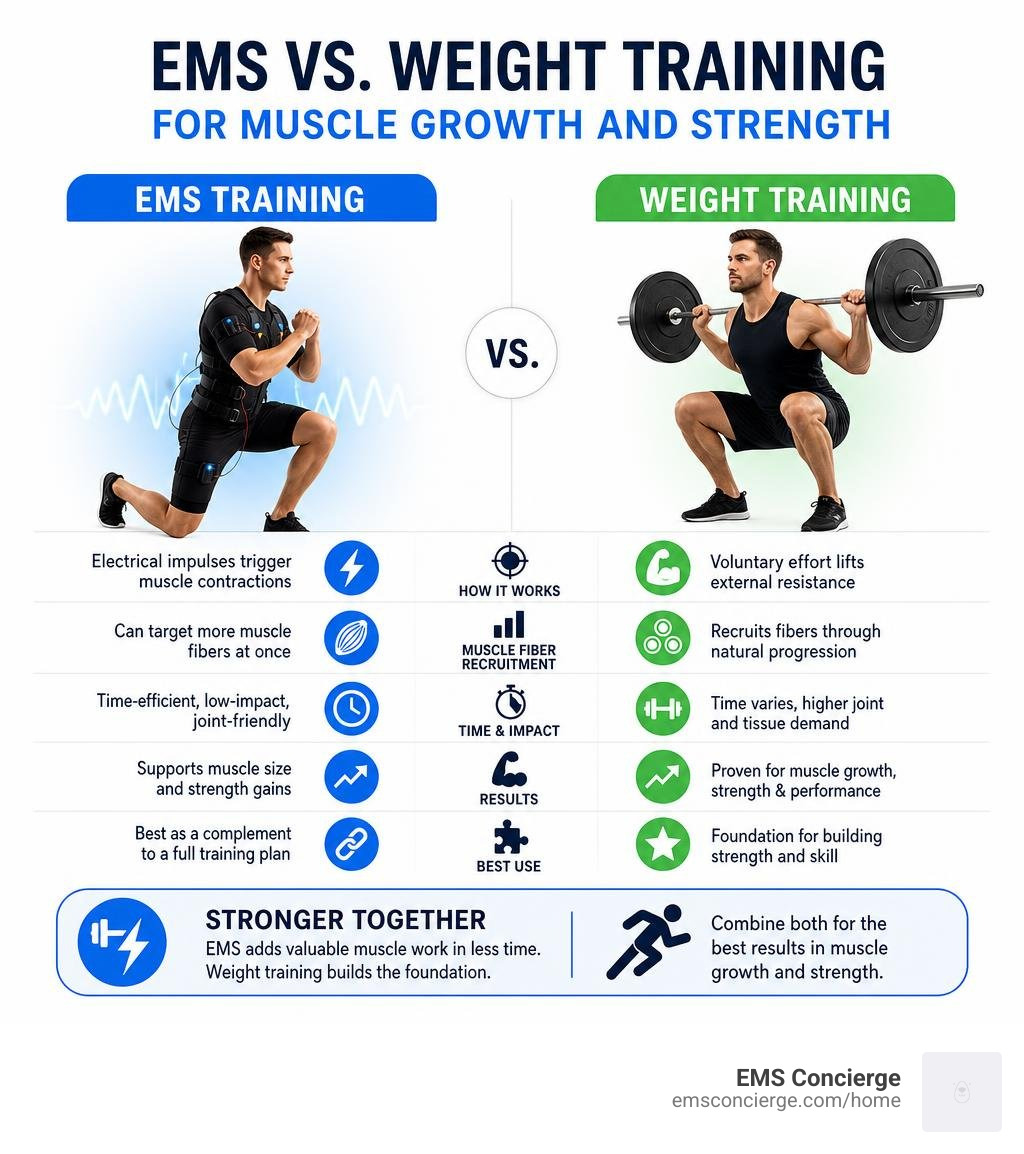
EMS training for muscle building can help you add muscle and improve strength, especially when it supports a well-planned resistance routine. It is not a magic replacement for lifting weights, but it can be a useful, low-impact tool when time, joint comfort, or training access is limited.
For the best results:
- Use EMS alongside progressive strength exercises, not as your only form of training.
- Start with supervised, moderate-intensity sessions and allow at least 48 hours to recover.
- Treat the electrical impulse as added training stress. Increase intensity slowly.
- Keep lifting, walking, sport, or other voluntary movement in your week for practical strength and fitness.
EMS sends electrical pulses through the skin to trigger muscle contractions. This can recruit muscle fibers differently from voluntary exercise, including fast-twitch fibers that matter for force production. Studies show promising gains in stimulated muscle size and body composition, but traditional resistance training still has the stronger record for maximizing full-body strength and movement skill.
For busy professionals, that makes whole-body EMS most valuable as a smart complement: a short, joint-friendly way to add meaningful muscle work without another long gym session.
The Science of EMS Training for Muscle Building
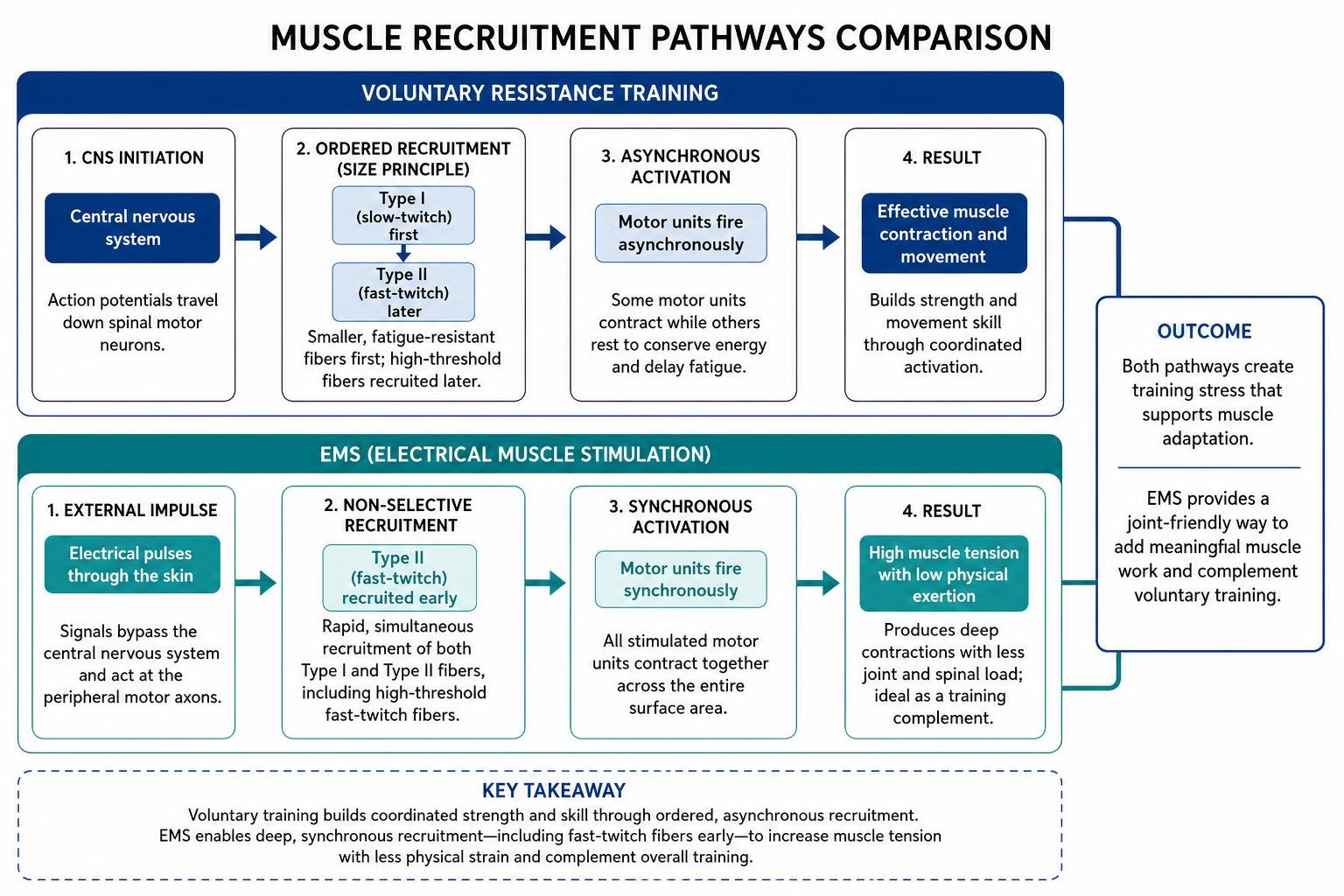
To evaluate electro-muscle stimulation objectively, we have to look under the hood at human physiology. When you lift a dumbbell, your central nervous system fires action potentials down spinal motor neurons to stimulate muscle fibers. The body follows Henneman's size principle, recruiting smaller, fatigue-resistant Type I (slow-twitch) fibers first before tapping into larger, high-threshold Type II (fast-twitch) motor units.
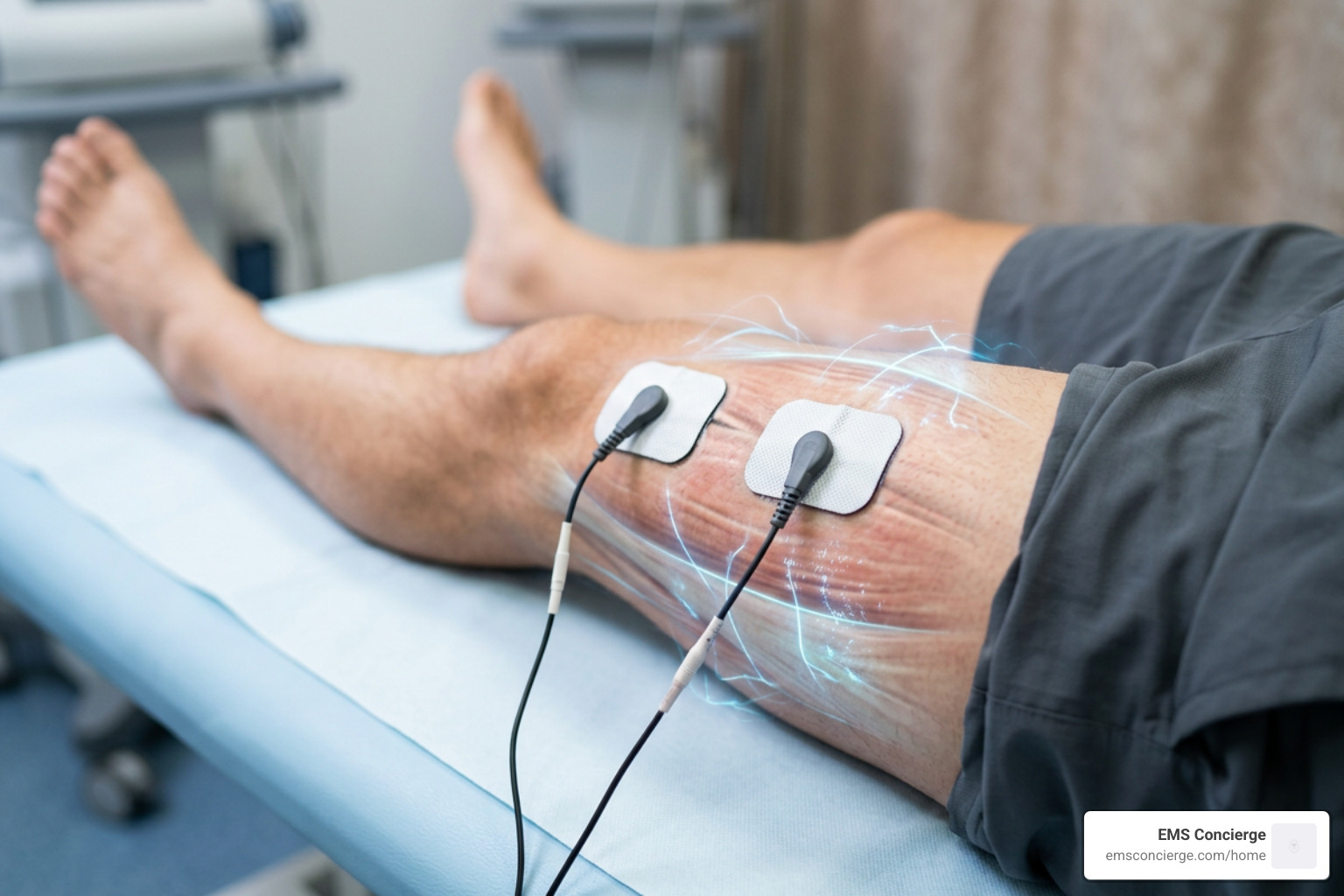
Electrical muscle stimulation bypasses this standard pathway. By delivering tailored electrical currents directly through surface electrodes, external impulses depolarize peripheral motor axons non-selectively and synchronously. This forces rapid, simultaneous recruitment of Type II fibers even at lower overall physical exertion, sparking the mechanical tension and metabolic perturbation required for hypertrophy (Lee et al., 2023).
Recent research highlights how these contractions trigger favourable molecular adaptations. A randomized study on myokine profiles and muscular performance in adults revealed that whole-body EMS (WB-EMS) significantly altered systemic muscle-building markers over eight weeks:
- Interleukin-15 (IL-15) levels surged by 15.9%, supporting skeletal muscle protein synthesis.
- Follistatin rose by 18%, encouraging anabolic signaling pathways.
- Myostatin—the primary physiological brake on muscle growth—plummeted by 21.2%.
- Participants experienced an average 14.1% reduction in body-fat percentage, dropping from 29.97% to 25.77%.
Understanding Motor Unit Recruitment in EMS Training for Muscle Building
During voluntary lifting, motor units recruit asynchronously to conserve energy and prevent premature exhaustion. As some motor units contract, others rest. With electrical stimulation, muscle activation occurs synchronously across the entire stimulated surface area.
This synchronous recruitment pattern drives profound muscular tension without placing heavy axial loads on the spine or compressive strain on delicate joint capsules. An ABC News analysis of EMS muscle and fat mechanisms highlighted that while this reversed recruitment order enables deep contractions, the absence of complex spatial coordination means EMS should complement dynamic movement patterns rather than completely displace voluntary coordination.
Metabolic Stress and Hormonal Adaptation
Building muscle demands progressive mechanical tension, micro-damage, and metabolic stress. Superimposing electrical impulses onto voluntary movement dramatically accelerates blood lactate and ammonia accumulation, yielding deep local fatigue.
However, the systemic endocrine response remains nuanced. Rigorous research on metabolic and hormonal responses to superimposed EMS demonstrated that while superimposed impulses during heavy squats generated acute metabolic distress, they did not meaningfully elevate serum testosterone or growth hormone beyond regular resistance exercise (Wirtz et al., 2015). EMS builds muscle primarily by maximizing localized mechanical strain and motor unit activation rather than triggering an artificial systemic hormone surge.
EMS vs. Traditional Resistance Training: What the Data Shows
How does a 20- to 25-minute WB-EMS session measure up against a standard 90-minute gym workout? Sports science researchers tracked 46 active adults over a 20-week longitudinal trial comparing twice-weekly 25-minute EMS sessions against traditional 90-minute resistance workouts.
| Outcome Metric | 25-Minute EMS Training (2x/week) | 90-Minute Resistance Training (2x/week) | Practical Takeaway |
|---|---|---|---|
| Maximal Strength (1RM) | Moderate improvements across compound lifts | Superior maximal strength gains (bench press, leg press, shoulder press) | Traditional heavy loads remain king for maximal neurological force output. |
| Isolated Strength (e.g., Biceps) | Comparable strength gains | Comparable strength gains | Single-joint hypertrophy and force production adapt similarly. |
| Fat Loss & Body Composition | Greater reduction in overall body weight and BMI | Greater reduction in total body fat percentage | EMS drives exceptional time-efficient energy turnover. |
| Total Time Commitment | 50 minutes/week | 180 minutes/week | EMS yields ~70% time savings for busy schedules. |
| Joint & Spinal Loading | Minimal to non-existent | Moderate to high axial load | EMS protects arthritic or injury-prone joints. |
Longitudinal investigations published in a Frontiers study on dynamic whole-body EMS leg strength and power confirmed these patterns: dynamic EMS superimposition boosted knee extension maximum force ($F_{max}$) by 6.9% (compared to 0.5% in standard controls) and increased leg curl peak power ($P_{max}$) by 15.9%.
Muscle Hypertrophy Across Upper vs. Lower Body
Muscle architecture influences how different body segments respond to electro-stimulation. Upper-body musculature—such as the biceps brachii, pectorals, and rectus abdominis—frequently exhibits substantial hypertrophic growth under EMS protocols.
In clinical trials assessing body composition:
- Whole-body EMS stimulated a 22% increase in biceps muscle thickness (expanding from 12.83 mm to 15.73 mm) alongside a significant medium-to-large effect size ($eta^2 = 0.65$).
- Over eight weeks of combined training, daily EMS yielded a net +0.8 kg increase in lean muscle mass ($p = 0.002$) alongside a 1.0% drop in body fat, while control groups without stimulation lost 0.2 kg of muscle (Lee et al., 2023).
- Left-hand grip strength increased by 2.7 kg and right-hand grip strength by 4.4 kg, outpacing the control improvements of 1.0 kg and 1.4 kg (Lee et al., 2023).
Lower-body muscle groups like the glutes and quadriceps possess thicker subcutaneous fat layers and complex pennation angles, requiring calibrated impulse depth to engage deep motor units fully.
Integrating Superimposed EMS for Strength Athletes
For seasoned weightlifters, superimposing electrical stimulation during active compound lifting offers a novel plateau-busting stimulus. A clinical trial examining EMS combined with resistance training in weightlifters investigates how dynamic compound lifts paired with an 85 Hz impulse frequency optimize peak rate of force development ($RFD$) and muscle cross-sectional area.
By stimulating agonist and antagonist muscles concurrently during the concentric phase of a squat or deadlift, lifters experience intense muscle fiber recruitment without piling on extra plates that compromise joints.
Optimal Parameters and Programming for Practical Results
Achieving real hypertrophy with electrical stimulation requires precise modulation of impulse parameters. You cannot simply turn on a basic TENS unit and expect muscle growth; neuromuscular adaptation demands medical-grade electro-stimulation protocols.

- Impulse Frequency (30–85 Hz): Low frequencies (under 20 Hz) induce localized twitching suitable for recovery. Frequencies between 30 Hz and 85 Hz create smooth tetanic contractions that recruit Type II fibers for muscle hypertrophy.
- Pulse Duration (350–400 µs): Wider pulse widths ensure sufficient electrical charge penetrates deep into large muscle bellies without burning surface skin.
- Duty Cycle (4s ON / 4s OFF or 10s ON / 50s OFF): Intermittent stimulation allows intramuscular vascular reperfusion, clearing acute waste products while maintaining muscular output.
- Session Duration (20 Minutes): Because whole-body EMS activates up to 90% of major muscle groups simultaneously, 20 minutes provides the physiological stimulus of a much longer gym session.
Evaluating how in-home EMS training compares to standard fitness alternatives shows why professional mobile delivery is so effective: expert calibration prevents plateauing while keeping impulse levels safe and productive.
Structuring Weekly Routines with EMS Training for Muscle Building
Because whole-body electrical stimulation recruits deep motor units synchronously, your central nervous system and structural proteins need proper recovery windows.
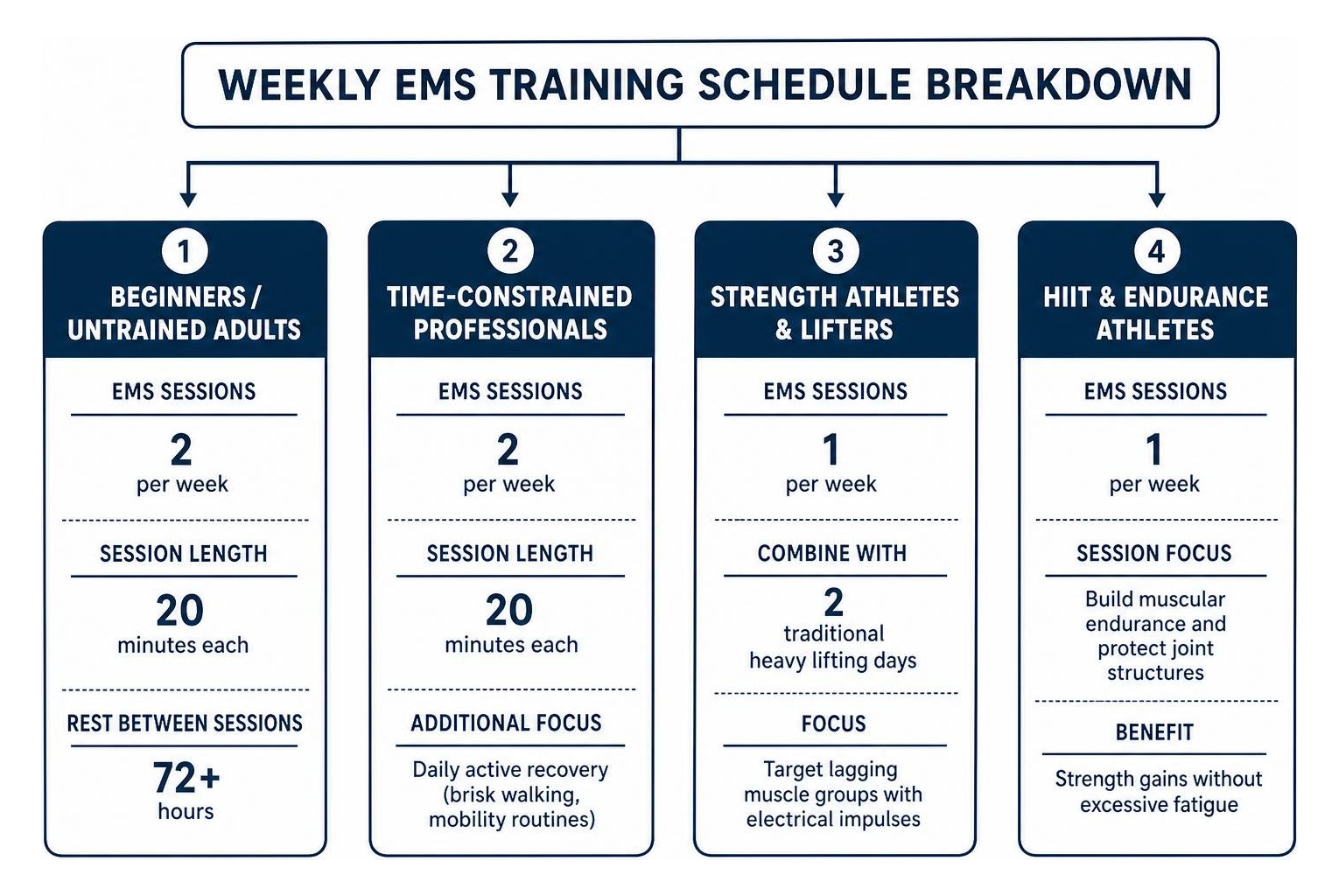
- Beginners / Untrained Adults: 2 sessions per week (20 minutes each) with at least 72 hours of rest between workouts.
- Time-Constrained Professionals: 2 sessions per week paired with daily active recovery (brisk walking, mobility routines).
- Strength Athletes & Lifters: 1 EMS session combined with 2 traditional heavy lifting days, focusing electrical impulses on lagging muscle groups.
- HIIT & Endurance Athletes: 1 EMS strength session per week to build muscular endurance and protect joint structures without excessive fatigue.
Discovering how transforming weekly workout schedules with mobile EMS streamlines fitness shows that high-frequency training isn't required—consistency and proper recovery are what drive long-term adaptation.
Safety Guidelines, Contraindications, and Mitigating Muscle Damage
Because EMS creates unaccustomed muscular contractions, initial exposure triggers elevated delayed onset muscle soreness (DOMS). Studies note that unconditioned participants show marked soreness peaks 48 hours post-session (Wirtz et al., 2015).
To safeguard your health and prevent conditions like exertional rhabdomyolysis:
- Hydrate Thoroughly: Drink 500 ml of water before and after every workout to support kidney function and cellular recovery.
- Gradual Impulse Titration: Never crank settings to maximum pain thresholds during early sessions. Certified trainers progressively adjust intensity across muscle groups.
- Medical Clearances: WB-EMS is strictly contraindicated for individuals with cardiac pacemakers, active cardiac arrhythmias, epilepsy, pregnancy, or acute severe illnesses.
- Professional Oversight: Always train under the watchful eye of a certified professional utilizing calibrated equipment like Miha Bodytec systems.
Frequently Asked Questions About EMS Muscle Growth
Can EMS completely replace heavy weightlifting for building strength?
No. While WB-EMS excels at building muscle cross-sectional area, improving body composition, and stimulating isolated strength, it does not replicate the balance, coordination, and bone-loading adaptations of multi-joint barbell lifting. For well-rounded athleticism, a hybrid approach combining EMS with functional movement patterns yields optimal results.
How quickly can you see muscle hypertrophy from EMS training?
Visible changes in muscle tone and posture typically manifest within 4 to 6 weeks. Statistically significant hypertrophy (measurable increases in muscle thickness and lean body mass) is consistently documented at the 8-week mark when paired with adequate dietary protein intake.
Is whole-body EMS safe for beginners and active lifters alike?
Yes, provided sessions are customized and supervised. Certified trainers tailor impulse depths independently across major muscle groups—including the quads, hamstrings, glutes, lats, chest, abdomen, and arms—aligning current intensities with each individual's baseline conditioning.
Conclusion
Electrical muscle stimulation has evolved from a specialized clinical rehabilitation modality into an evidence-backed tool for muscle building and body recomposition. By recruiting Type II fast-twitch motor units synchronously and modulating anabolic myokines, WB-EMS provides a joint-friendly, time-efficient stimulus for modern fitness routines.
At EMS Concierge, we bring professional-grade Miha Bodytec technology and certified personal trainers directly to your doorstep. Experience a complete, personalized 20-minute workout designed around your schedule and physical goals—schedule a full-body EMS training session today.