What EMS Means for Fast, Low Impact Fitness
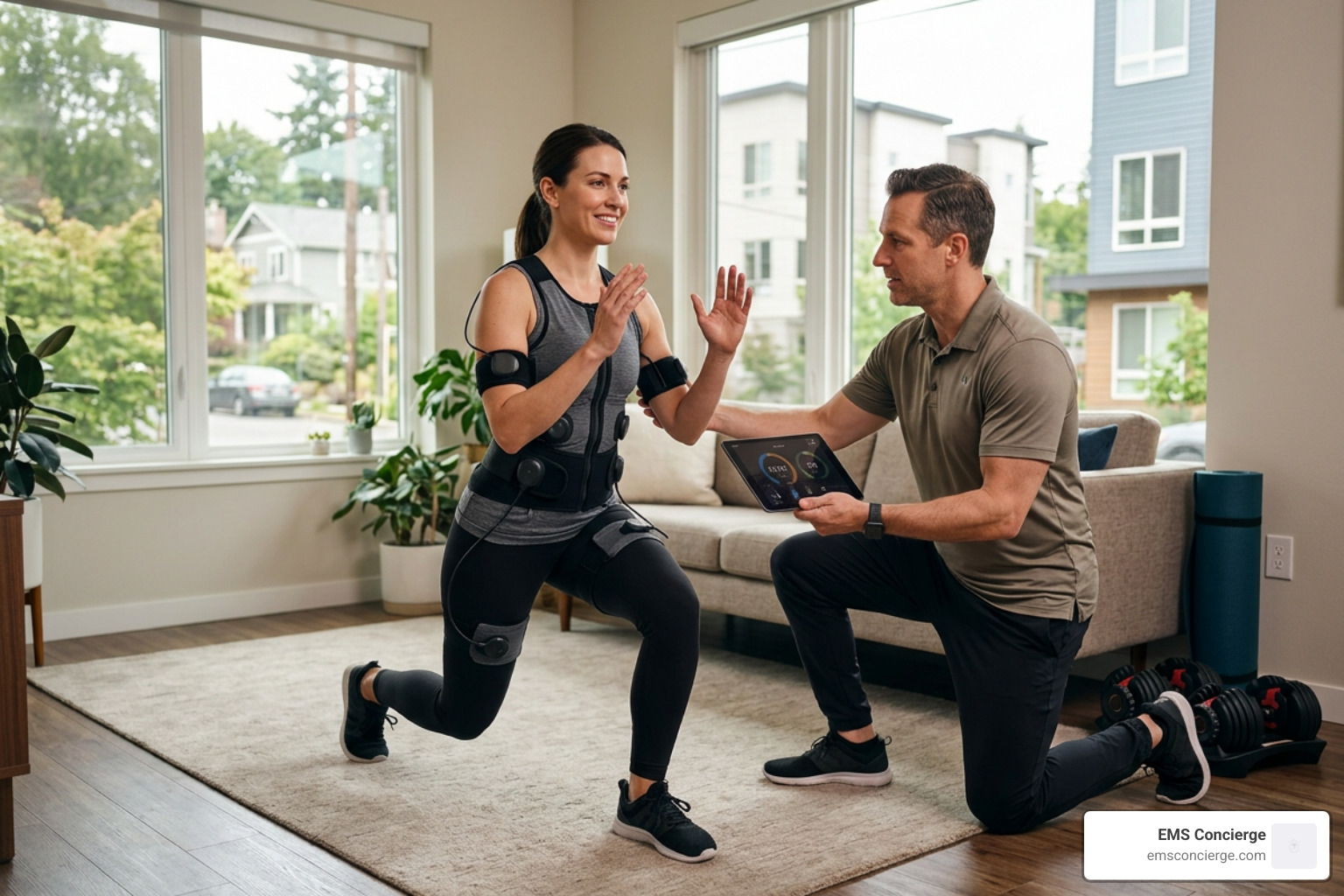
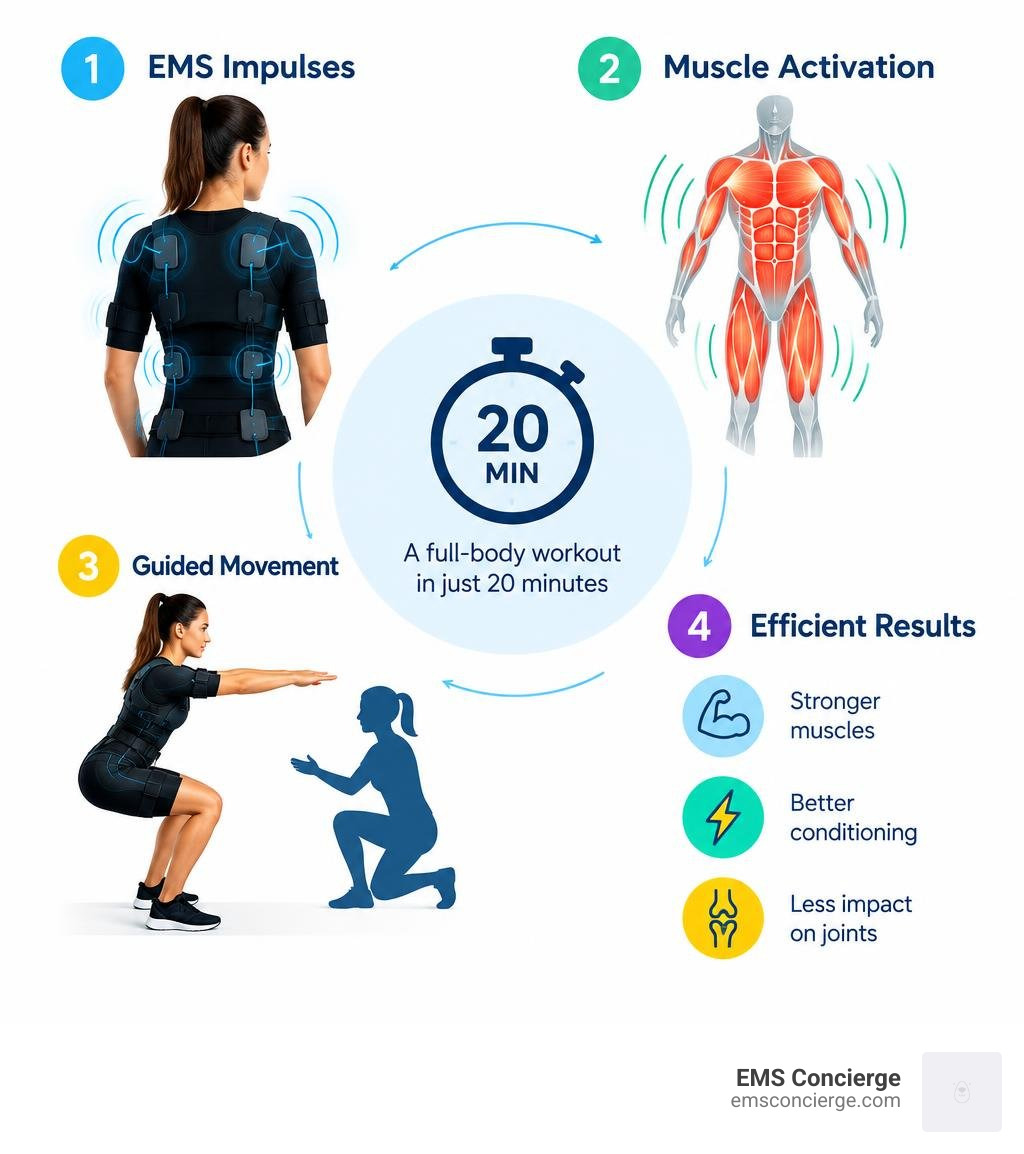
EMS, or electro-muscle stimulation, is a fitness method that uses controlled electrical impulses to activate muscles while you perform simple, guided movements. In a trainer-led session, wearable equipment stimulates multiple major muscle groups at once, making it possible to complete a focused full-body workout in about 20 minutes.
For busy professionals, the appeal is simple: efficient strength and conditioning work at home, with less impact on joints than many high-impact training options. The intensity should always be adjusted to your fitness level and managed by a qualified trainer.
"EMS" can also mean Emergency Medical Services or Express Mail Service. In this guide, it means electro-muscle stimulation for fitness. You can read more about the broader term on Wikipedia.
EMS training is not passive exercise. You still move, brace, squat, pull, or hold positions. The electrical stimulation is designed to add to your voluntary muscle contraction, helping create a demanding workout in less time.
Core Applications of EMS for Fitness and Conditioning
Modern fitness focuses on working smarter rather than simply spending endless hours lifting heavy weights. Electro-muscle stimulation technology has transformed how we approach physical conditioning by using targeted electrical impulses that mimic the natural signals sent by your central nervous system.
When you perform a standard exercise like a squat or push-up, your brain sends electrical signals down your spinal cord to motor neurons, prompting your muscle fibers to contract. EMS technology enhances this natural physiological pathway by sending external, low-frequency electrical impulses directly to the motor nerves through specialized conductive pads.
The primary difference lies in the recruitment depth and volume of muscle fibers. During conventional physical exercise, your body naturally conserves energy by recruiting only the muscle fibers necessary to lift the chosen load, typically starting with slow-twitch endurance fibers. Electro-muscle stimulation bypasses some of this energy-conservation strategy, activating both superficial and deeper postural muscle fibers simultaneously. Understanding how EMS compares to traditional workouts reveals why a 20-minute targeted session can generate muscle fatigue and training stimulus comparable to a 90-minute conventional gym session.
At EMS Concierge, we harness this technology to deliver personalized, in-home training sessions that maximize full-body activation without requiring heavy iron, complex machinery, or long commutes.
Key Concepts in Electro-Muscle Stimulation
To understand how EMS operates, it helps to distinguish between the various sectors that share the acronym:
- Electro-Muscle Stimulation (Fitness & Wellness): The application of controlled electrical currents to stimulate skeletal muscles for strength building, metabolic conditioning, and recovery.
- Emergency Medical Services (Public Safety & Healthcare): Pre-hospital medical care provided by responders like Emergency Medical Responders (EMRs), EMTs, Advanced EMTs (AEMTs), and Paramedics.
- Express Mail Service (Global Logistics): An international postal express network governed by the EMS Cooperative under the Universal Postal Union, providing priority document and merchandise delivery across 179 countries.
- Eastern Mountain Sports (Outdoor Retail): An outdoor equipment and apparel brand.
In physical fitness, the science centers on motor unit recruitment. A motor unit consists of a single motor nerve and all the muscle fibers it innervates. By delivering targeted, painless impulses, EMS ensures synchronous motor unit firing across multiple muscle groups, including the quadriceps, glutes, core, lower back, lats, chest, and arms.
This dual-activation approach delivers intense muscular work with zero external compressive load on your joints, spine, or connective tissues, making it an ideal choice for both high-performance conditioning and joint-friendly training.
EMS Training: Equipment, Sessions, and Trainer Guidance
A successful EMS session requires professional equipment, an individualized program, and expert human supervision. We bring professional-grade Miha Bodytec equipment directly into your living room, home gym, or office, ensuring a clean, seamless, and private experience.

How EMS Training Works
The foundation of modern electro-muscle stimulation relies on synchronized hardware and precision calibration:
- Precision Placement: You wear a base layer made of specialized functional fabric beneath an ergonomically designed training suit. This suit contains integrated electrode pads positioned over major muscle chains (calves, thighs, glutes, abdomen, lower back, upper back, lats, chest, and arms).
- Controlled Electrical Impulses: The suit connects to the Miha Bodytec control unit. The unit transmits gentle, low-frequency impulses that cycle between contraction phases (usually 4 seconds) and relaxation intervals (usually 4 seconds).
- Simultaneous Muscle Engagement: While a traditional barbell curl works primarily your biceps, an EMS impulse activates up to 90% of your body's skeletal muscle mass simultaneously during every contraction cycle.
- Gym-Level Intensity Without Heavy Weights: Because the tension is generated electronically rather than mechanically through heavy iron, you achieve profound muscular activation without straining your lumbar spine, knees, or shoulders.
During each contraction phase, our certified trainers guide you through low-impact, functional movement patterns such as dynamic squats, isometric core bracing, lunges, and controlled arm drives. You actively contract against the impulse, creating an intense, focused workout.
For those curious about the fundamentals, exploring our beginners guide to EMS training provides a detailed breakdown of what to expect during your first session.
Safety, Suitability, and Session Preparation
Safety is the cornerstone of effective EMS training. High-end systems operate within strict physiological parameters designed to stimulate skeletal muscle without affecting smooth muscle (such as internal organs) or cardiac muscle.
Key safety protocols include:
- Trainer-Led Calibration: Every muscle group is individually adjusted on the control console. Your certified trainer customizes the intensity level for each body part according to your tolerance, fitness level, and specific goals.
- Hydration is Vital: Muscle tissue is primarily water and electrolytes, which conduct electrical impulses. Drinking 16–20 ounces of water before and after your session ensures optimal impulse conductivity and prevents cramping.
- Recovery and Rest: Because EMS stimulates muscle fibers deeply, your body requires adequate rest between sessions. Most individuals achieve optimal results with just 1–2 sessions of 20 minutes per week.
- Proper Equipment Standards: Utilizing professional systems with proper regulatory clearances guarantees reliable impulse delivery. Read more about why FDA approval matters in EMS training to understand how regulated equipment ensures user safety and performance.
Fitness Benefits and Practical Applications
Electro-muscle stimulation offers diverse benefits across various populations, from high-performing executives short on time to individuals managing joint sensitivities.
| Benefit Category | Traditional Gym Training | In-Home EMS Training with EMS Concierge |
|---|---|---|
| Time Investment | 60–90 minutes per session + travel | 20 minutes total, conducted in your home |
| Joint Loading | High compressive forces from weights | Low to zero joint impact; bodyweight only |
| Muscle Activation | 40–60% of motor units engaged | Up to 90% simultaneous motor unit recruitment |
| Supervision | Often unsupervised or self-guided | 100% certified 1-on-1 trainer guidance |
| Deep Core & Postural Work | Requires isolated, complex movements | Deep stabilizers stimulated automatically |
EMS Training for Different Fitness Goals
Electro-muscle stimulation is adaptable to diverse lifestyle demands and wellness objectives:
1. Busy Professionals
Time is often the biggest barrier to consistent exercise. Balancing executive responsibilities, family life, and travel leaves little room for extended gym visits. Our personalized programs for busy professionals seeking maximum results in minimum time provide a full-body conditioning routine in just 20 minutes, fitting seamlessly into demanding schedules.
2. Athletic Performance and Activation
Athletes use EMS to target fast-twitch muscle fibers, correct left-to-right muscular imbalances, and reinforce movement mechanics. Learn more about how athletes and high performers use EMS for strength, activation, and recovery.
3. Joint-Friendly Strength and Injury Recovery
Lifting heavy weights can aggravate chronic joint pain, arthritis, or past injuries. Because EMS generates muscle tension through electrical impulses rather than heavy spinal loading, it offers an effective alternative for physical conditioning. Review our guide on joint-friendly fitness and low-impact strength for injury recovery.
4. Postnatal Strengthening
Postpartum individuals often need to rebuild deep core strength, activate pelvic floor stabilizers, and restore posture without putting excessive stress on healing connective tissues. Discover how postpartum recovery training rebuilds strength safely.
Frequently Asked Questions About EMS Training
How does electro-muscle stimulation function in modern physical conditioning?
EMS works by sending mild electrical impulses through specialized surface electrodes placed over major muscle groups. These impulses trigger motor nerves, causing muscle fibers to contract and relax rhythmically alongside your active movements. This delivers comprehensive muscle activation, enhances metabolic demand, and builds functional strength while keeping joint stress minimal.
Is the electrical impulse painful or uncomfortable?
Not at all. The impulse feels like a deep, vibrating muscle squeeze or a firm tingling sensation. Because our trainers calibrate each channel individually, the intensity is kept within your comfortable working threshold.
How many times a week can I train with EMS?
Because EMS recruits deep muscle fibers across the entire body, recovery is essential. For most clients, 1 to 2 sessions of 20 minutes per week provide optimal muscular adaptation, metabolic conditioning, and recovery.
Can I do EMS training at home?
Yes! EMS Concierge brings the complete studio experience to your home. Discover the convenience and privacy of in-home EMS training, where our certified trainers handle all setup, guidance, and equipment sanitization.
What should I wear and bring to my session?
You only need to provide yourself and stay well-hydrated! We provide the specialized base layer garments and fit you with the Miha Bodytec equipment upon arrival.
Conclusion
Electro-muscle stimulation offers an efficient, evidence-backed approach to building strength, improving muscle tone, and enhancing overall conditioning without spending hours in a crowded gym. By combining advanced technology with expert trainer guidance, EMS allows you to activate up to 90% of your muscle fibers in a single, focused 20-minute session.
Whether you are looking to save time, train around joint sensitivities, or elevate your fitness routine, our team at EMS Concierge provides a supportive, personalized in-home fitness experience tailored to your lifestyle. To discover more about the technology and schedule your first session, read our complete guide on what EMS training is and how it works.