Cold Plunge or Sauna: The Right Exercise Recovery Treatment Depends on Your Goal
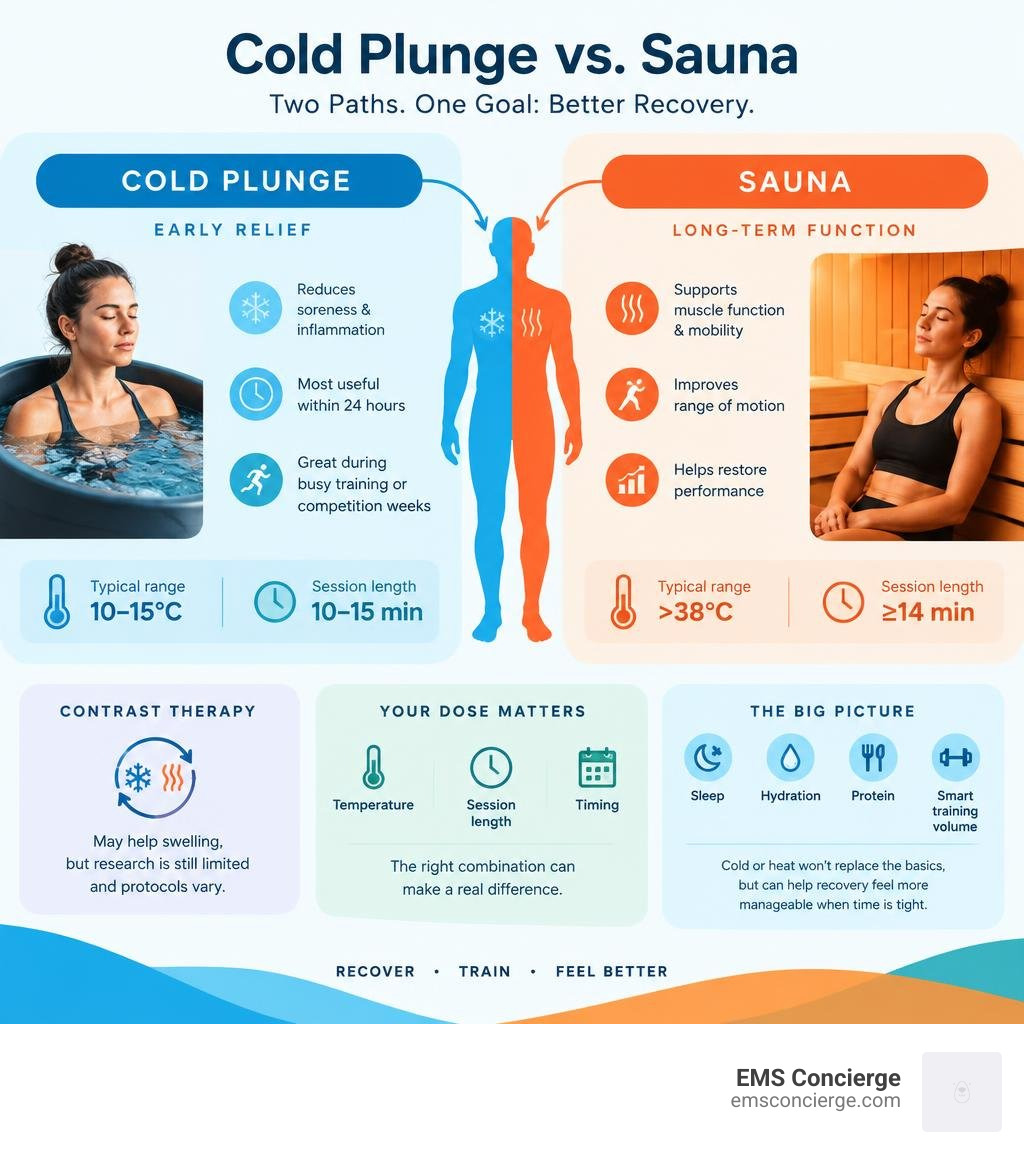
For an effective exercise recovery treatment after a hard workout, choose cold when your main goal is short-term soreness relief and heat when you want to support muscle function and mobility. Cold-water immersion is most useful in the first 24 hours after demanding exercise, while passive heat appears more consistently helpful for restoring movement and performance.
- Cold plunge: Best for early soreness and inflammation management, especially during a busy training or competition week.
- Sauna or hot-water immersion: A strong option for improving range of motion and functional recovery after muscle-damaging exercise.
- Contrast therapy: May help swelling, but research is still limited and protocols vary.
- Your dose matters: Temperature, session length, and timing can matter as much as the method itself.
Hard training can cause exercise-induced muscle damage, including stiffness, delayed-onset muscle soreness (DOMS), and a temporary drop in strength or power. A cold plunge or sauna will not replace sleep, hydration, protein, and smart training volume. But used well, each can make recovery feel more manageable when time is tight.
Research suggests hot-water immersion above 38 C for at least 14 minutes may be particularly useful for functional recovery. For cold water immersion, 10 to 15 C for roughly 10 to 15 minutes is a commonly studied range for reducing early soreness.
Science-Backed Exercise Recovery Treatment Modalities Compared
When we subject our bodies to demanding physical training, the resulting physiological stress triggers a cascade of micro-tears in muscle fibers, shifts in systemic inflammation, and changes in vascular tone. Selecting the proper post-workout strategy requires understanding how different environmental stressors alter these mechanisms.
Whether we apply freezing water, soothing dry heat, alternating thermal cycles, or localized tissue hypoxia, each modality creates a distinct vascular and cellular response.
| Recovery Modality | Primary Mechanism | Optimal Temperature / Dose | Primary Benefit | Best Post-Workout Timing |
|---|---|---|---|---|
| Cold Water Immersion (CWI) | Peripheral vasoconstriction, reduced metabolic demand | 10–15°C for 10–15 minutes | Alleviates acute DOMS & blunts acute IL-6 | Immediate to 2 hours post-exercise |
| Whole-Body Cryotherapy (WBC) | Systemic thermal shock, neuroendocrine activation | -110°C to -140°C for 2–3 minutes | Lowers 48–72h creatine kinase & aids power | 2 to 24 hours post-exercise |
| Passive Heat / Sauna | Vasodilation, capillary perfusion, heat shock proteins | >38°C (water) or 70–90°C (sauna) for 15–30 min | Restores range of motion & functional strength | Post-exercise or during deload days |
| Contrast Water Therapy (CWT) | Vasomotor pumping action, fluid mobilization | Alternating 10–15°C and 38–40°C cycles | Clears localized edema & relieves stiffness | Within 2 to 4 hours post-exercise |
| Intermittent Hypoxia / BFR | Ischemic preconditioning, metabolic flush | Calibrated arterial occlusion (40–80%) | Enhances microvascular repair & cellular adaptation | Peri-workout or scheduled recovery sessions |
Cold Water Immersion and Cryotherapy for Acute Soreness
Cold application works primarily through rapid peripheral vasoconstriction. By narrowing blood vessels, cold plunges limit local blood pooling, slow nerve conduction velocity, and dampen the acute inflammatory response.
According to a comprehensive network meta-analysis on cryotherapy interventions, cold water immersion (CWI) shows its greatest efficacy in the early recovery window (0 to 24 hours), significantly reducing delayed-onset muscle soreness and suppressing interleukin-6 (IL-6) levels.
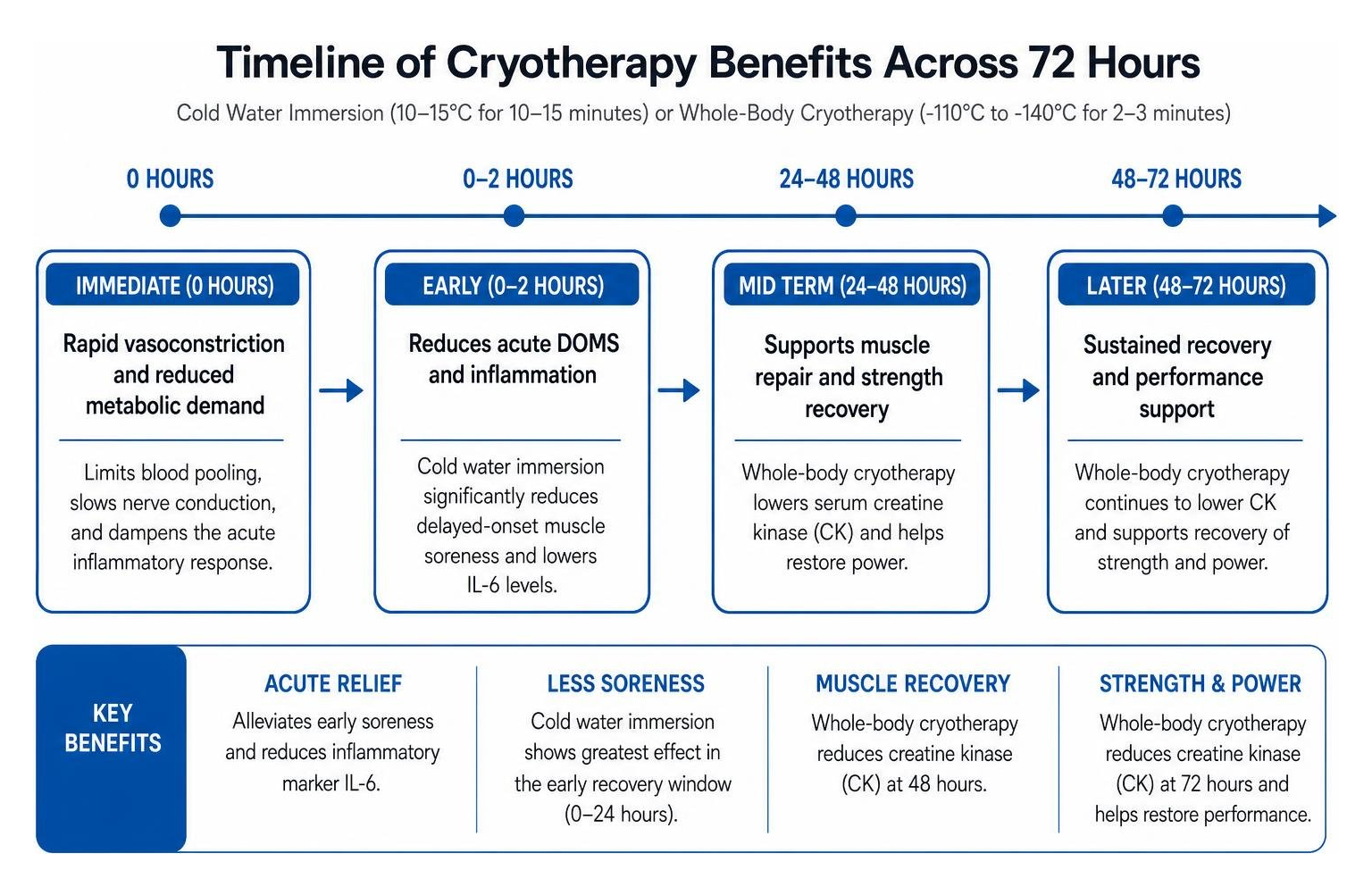
While local cold therapy (LCT) provides targeted relief for specific muscle groups, whole-body cryotherapy (WBC) triggers a systemic response. Modern meta-analyses show that WBC notably lowers serum creatine kinase (CK) concentrations at 48 and 72 hours while helping restore countermovement jump performance.
However, as highlighted in an evidence-based analysis of post-exercise recovery techniques (Dupuy et al., 2018), while cold modalities effectively manage acute pain perception, hands-on interventions like massage still boast the largest overall effect sizes for perceived fatigue and subjective soreness.
Passive Heat Therapy and Sauna for Functional Muscle Repair
While ice calms tissue, heat revitalizes it. Passive heat therapies—such as traditional Finnish saunas, far-infrared saunas, and hot-water immersion—cause profound vasodilation. Expanding the vascular bed increases capillary blood flow, enhances muscle tissue oxygenation, and accelerates the clearance of metabolic byproducts.
Recent research on thermal and hypoxia therapies for muscle recovery demonstrates that heat therapy exhibits the highest proportion of beneficial effects across functional recovery criteria. Elevated intramuscular temperatures stimulate the expression of heat shock proteins (HSPs), which protect cellular structure and assist in realigning damaged myofibrils.
For athletes and fitness enthusiasts who need to regain dynamic flexibility and muscular power, heat offers superior restoration of joint range of motion compared to cold therapy. This makes passive heat an outstanding companion for joint-friendly recovery and active rehabilitation.
Contrast Water Therapy and Intermittent Hypoxia Stressors
Contrast water therapy (CWT) bridges the gap between cold-induced constriction and heat-induced dilation. By alternating between hot and cold pools (typically a 1:1 or 1:2 minute ratio for 3 to 6 cycles), CWT creates a rhythmic "vasomotor pump."
This oscillating vascular response assists the lymphatic system in draining intramuscular edema and clearing metabolic waste without placing mechanical strain on tired joints.

Intermittent hypoxia, often delivered via blood flow restriction (BFR) or pneumatic compression, introduces brief periods of localized tissue hypoxia followed by rapid reperfusion. This mechanism mimics ischemic preconditioning, stimulating endothelial nitric oxide production, upregulating capillary density, and resetting autonomic nervous system balance.
When applied with individualized pressure calibration, localized hypoxia can reduce structural swelling and promote tissue remodeling.
Physiological Biomarkers and Dose-Response Mechanisms
Maximizing recovery is never about enduring the coldest ice bath or the hottest sauna—it comes down to the biological dose. Just like a strength training stimulus, environmental stressors follow a hormetic curve. Too little exposure yields no physiological adaptation, while excessive exposure induces central nervous system fatigue and delays recovery.
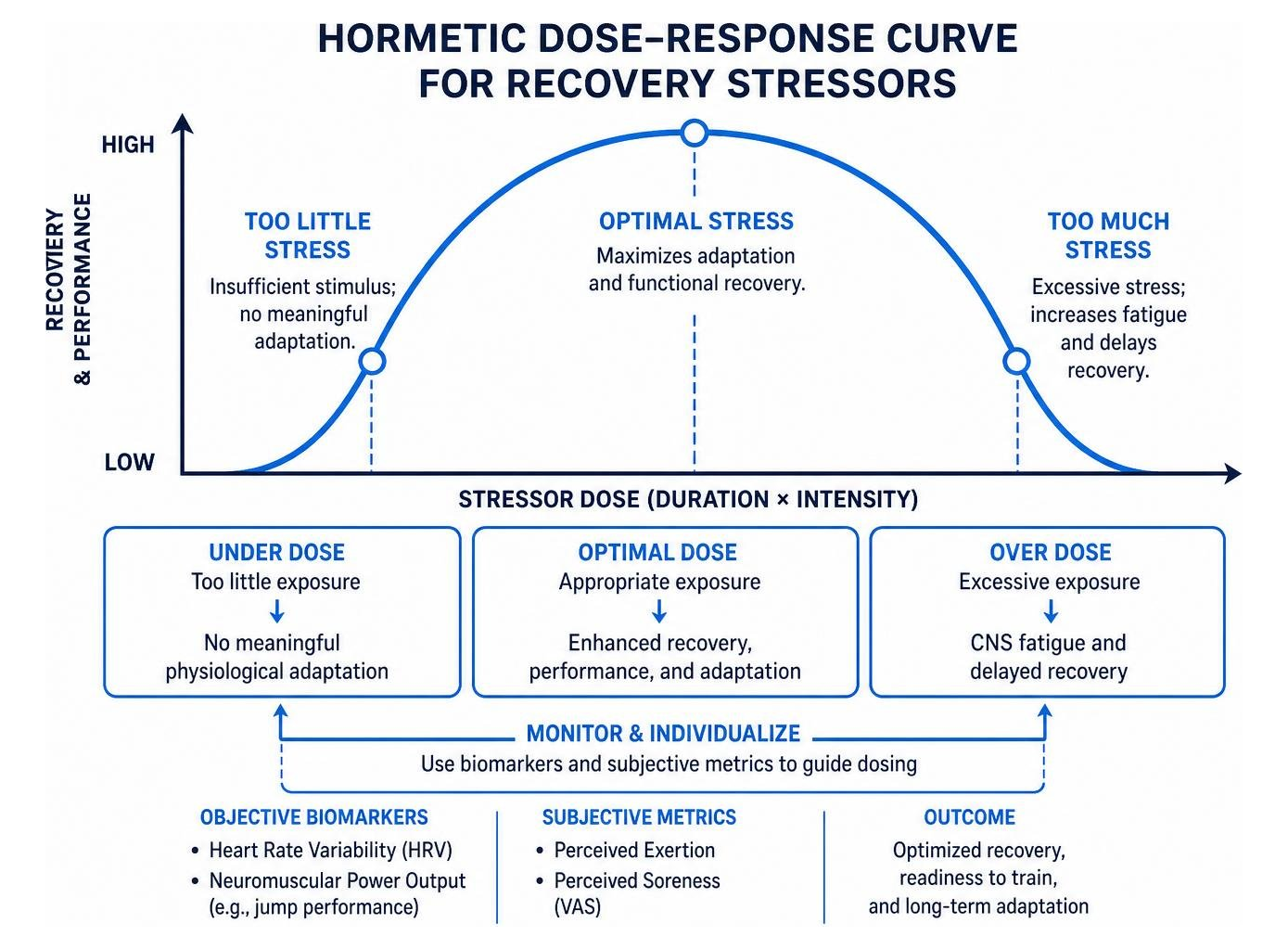
Optimizing therapy requires monitoring both objective blood biomarkers and subjective recovery metrics:
- Heart Rate Variability (HRV): Indicates autonomic nervous system balance; higher parasympathetic tone signals readiness to train.
- Perceived Exertion and Soreness: Visual analog scales (VAS) track the subjective intensity of DOMS.
- Neuromuscular Power Output: Restoring jump height and voluntary contraction proves structural integrity.
- Circulating Biomarkers: Measuring systemic muscle damage through enzymatic and inflammatory proteins.
Optimizing Exercise Recovery Treatment Protocols by Timing and Dose
The efficacy of an environmental recovery protocol hinges entirely on when and how it is applied relative to exercise-induced muscle damage (EIMD). To maximize benefits while avoiding interference with training adaptations, follow these key dosing guidelines:
- Cold Immersion Window: Administer within 0 to 2 hours post-exercise at 10–15°C for 10–15 minutes, limiting frequency to 2–3 sessions weekly to avoid blunting hypertrophy.
- Heat Exposure Strategy: Utilize passive heating (>38°C water or 70–90°C sauna) for 15–30 minutes, ideally scheduled several hours post-session or on non-lifting recovery days.
- Contrast Protocol Timing: Perform 3 to 6 alternating cycles (1–2 minutes cold at 10–15°C followed by 2–4 minutes warm at 38–40°C) within 2 to 4 hours post-workout.
- Hypoxia and Reperfusion Dosing: Apply intermittent blood flow restriction or compression for 3–5 minute intervals at 40–80% arterial occlusion during deload or dedicated active recovery sessions.
Inflammatory Markers, Creatine Kinase, and Performance Metrics
When muscle fibers undergo high eccentric loading, the structural sarcolemma is disrupted, allowing intracellular enzymes like creatine kinase (CK) to spill into the bloodstream. Plasma CK concentrations typically peak between 24 and 72 hours post-workout.

Cryotherapy and cold plunges blunt early inflammatory cytokine cascades (such as IL-6 and CRP), keeping initial swelling in check. However, heat therapy shines when we evaluate functional performance recovery. Studies assessing countermovement jump (CMJ) height and maximal voluntary isometric contraction (MVIC) show that heat exposure significantly accelerates the restoration of neuromuscular power output by facilitating muscle compliance and metabolic substrate delivery.
Combining Environmental Modalities with Active Stimulation and Nutrition
No single recovery tool functions in isolation. Elite athletic programming combines environmental stressors with targeted nutritional support and active muscle stimulation to achieve rapid systemic regeneration.
Integrating Cellular Nutrition and the 4R's Framework
Environmental therapies modulate blood flow, but your body requires raw biochemical substrates to rebuild damaged myofibrillar proteins and replenish empty energy reserves.
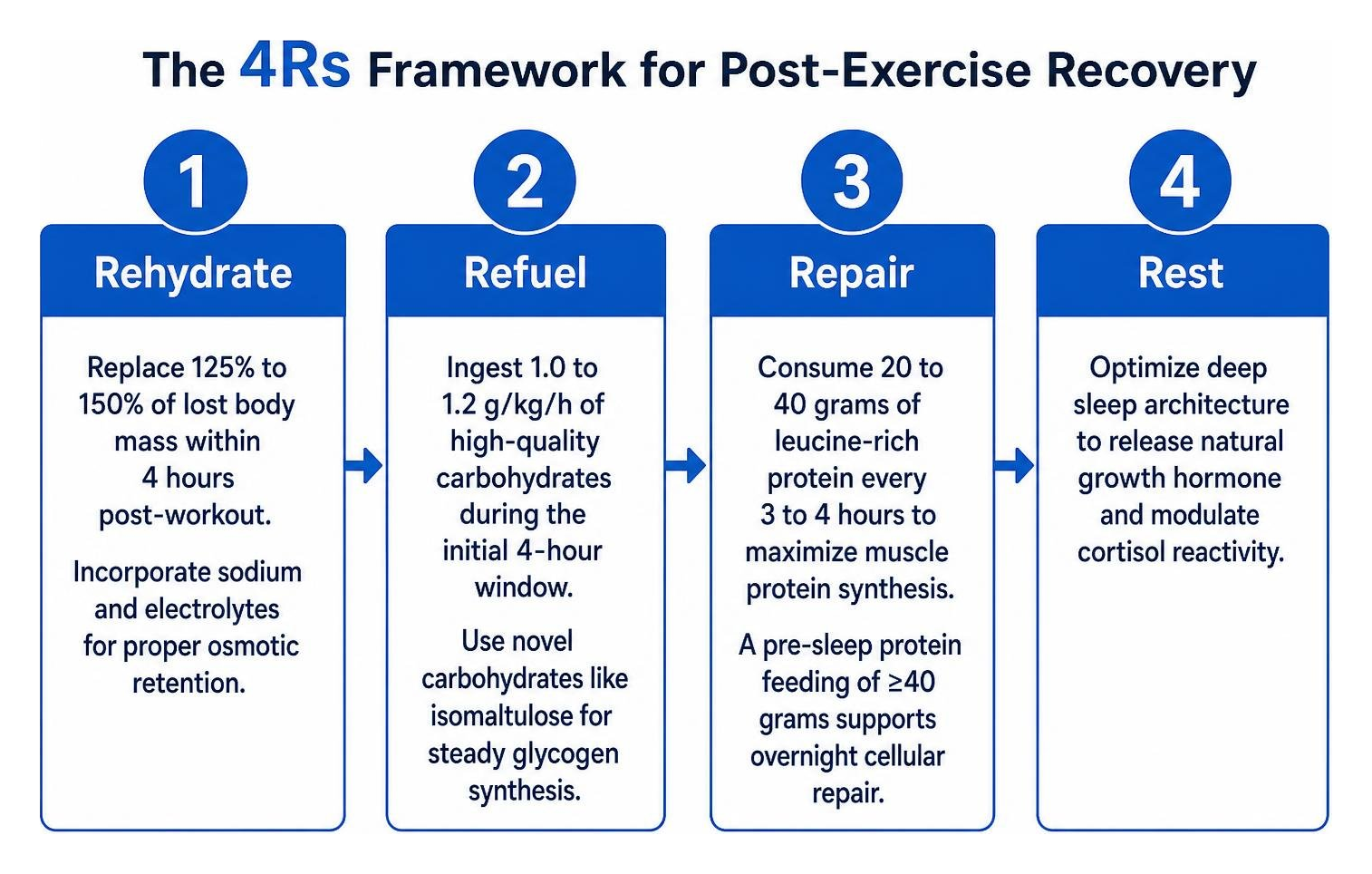
We structure recovery nutrition around the 4R's nutritional framework for recovery (Bonilla et al., 2020):
- Rehydrate: Replace 125% to 150% of lost body mass within 4 hours post-workout. Incorporating sodium and electrolytes ensures proper osmotic retention.
- Refuel: Ingest 1.0 to 1.2 g/kg/h of high-quality carbohydrates during the initial 4-hour window according to scientific guidelines on post-exercise nutrient timing. Utilizing novel bioengineered carbohydrates like isomaltulose can promote steady glycogen synthesis without sharp glycemic spikes.
- Repair: Consume 20 to 40 grams of leucine-rich protein every 3 to 4 hours to maximize muscle protein synthesis. A pre-sleep protein feeding of ≥40 grams further safeguards overnight cellular repair.
- Rest: Optimize deep sleep architecture to release natural growth hormone and modulate cortisol reactivity.
Additionally, a modern meta-analysis on polyphenol-rich interventions for muscle damage shows that supplements like tart cherry, curcumin, and pomegranate extracts provide a small but statistically significant reduction in delayed-onset muscle soreness, giving your nutrition protocol an extra edge.
Targeted Exercise Recovery Treatment with Neuromuscular Stimulation
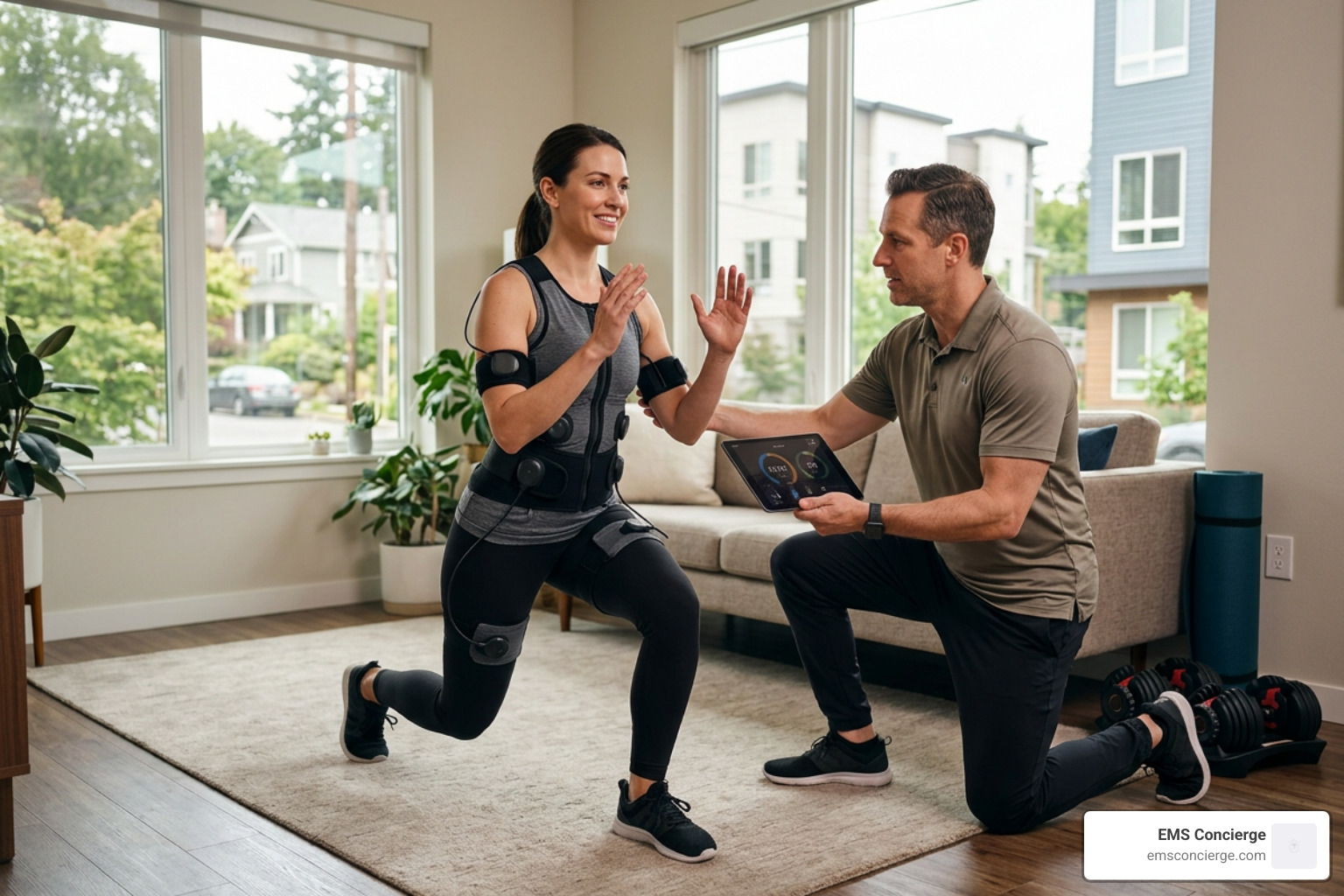
While passive immersion therapies alter tissue temperature, they do not create active muscular pumping. That is where electro-muscle stimulation (EMS) comes in. By delivering controlled, low-frequency electrical impulses to major muscle groups, EMS initiates gentle, non-fatiguing muscle twitching.
These rhythmic contractions compress intramuscular veins and lymphatic vessels, dramatically accelerating venous blood return and clearing metabolic waste without loading your tendons, spine, or joints.
At EMS Concierge, we bring this technology directly to your living room. We specialize in mobile, 20-minute full-body sessions using professional-grade Miha Bodytec equipment guided by certified trainers.
Whether utilizing targeted recovery stimulation for athletic performance or learning how full-body EMS works, you can experience profound muscle activation and waste clearance that far exceeds passive sitting. When evaluating EMS technology compared to traditional active recovery, electro-stimulation offers the ultimate joint-friendly shortcut to full-body rejuvenation.
Frequently Asked Questions About Workout Recovery Modalities
Should I do cold plunge or sauna first after heavy training?
If using both in a single session, it is generally recommended to start with the sauna and finish with the cold plunge—or cycle between them using contrast protocols. The heat expands blood vessels and increases tissue elasticity, while the cold finishes the sequence by inducing vasoconstriction, limiting post-workout inflammation, and providing an invigorating neuroendocrine reset.
However, if your primary goal is long-term muscle hypertrophy, avoid immediate cold plunges altogether and stick to heat to prevent blunting anabolic pathways.
How long should you stay in cold water immersion for optimal muscle repair?
The optimal immersion duration is between 10 and 15 minutes at a water temperature of 10°C to 15°C. Staying in longer than 15 minutes does not provide additional anti-inflammatory benefits and substantially increases the risk of hypothermia or excessive sympathetic nervous system stress. Consistency and proper temperature dosing matter far more than extreme endurance in freezing water.
Does cold therapy blunt muscle hypertrophy and strength adaptations?
Yes, regular cold water immersion applied immediately (within 1–2 hours) after resistance training can blunt long-term muscle hypertrophy and maximal strength gains. Cold shock suppresses the p70S6K and mTOR anabolic signaling pathways and dampens the natural inflammatory signals necessary for muscle remodeling.
If your primary goal is building muscle size, reserve cold plunges for competition weekends, tournament play, or endurance-focused blocks rather than standard hypertrophy training days.
Conclusion
Building a holistic recovery plan is not about blindly following wellness trends; it is about matching the right biological stimulus to your specific performance goals. Use cold water immersion when you need fast, short-term relief from acute soreness during congested training schedules. Turn to passive saunas and heat therapy when your priority is restoring mobility, improving tissue compliance, and rebuilding functional power.
When you want to take your recovery to the next level, combine thermal therapy with targeted neuromuscular stimulation. We at EMS Concierge make elite-level recovery seamless by delivering convenient in-home fitness and recovery sessions straight to your door.
Ready to accelerate your muscle repair, flush out systemic fatigue, and optimize your physical longevity? Schedule professional recovery stimulation with our certified team today.
References
Dupuy O, Douzi W, Theurot D, Bosquet L, Dugué B. "An Evidence-Based Approach for Choosing Post-exercise Recovery Techniques to Reduce Markers of Muscle Damage, Soreness, Fatigue, and Inflammation: A Systematic Review With Meta-Analysis.." Frontiers in physiology, 2018. PMCID PMC5932411. Bonilla DA, Pérez-Idárraga A, Odriozola-Martínez A, Kreider RB. "The 4R's Framework of Nutritional Strategies for Post-Exercise Recovery: A Review with Emphasis on New Generation of Carbohydrates.." International journal of environmental research and public health, 2020. PMCID PMC7796021.