Understanding Full-Body EMS Training After 50
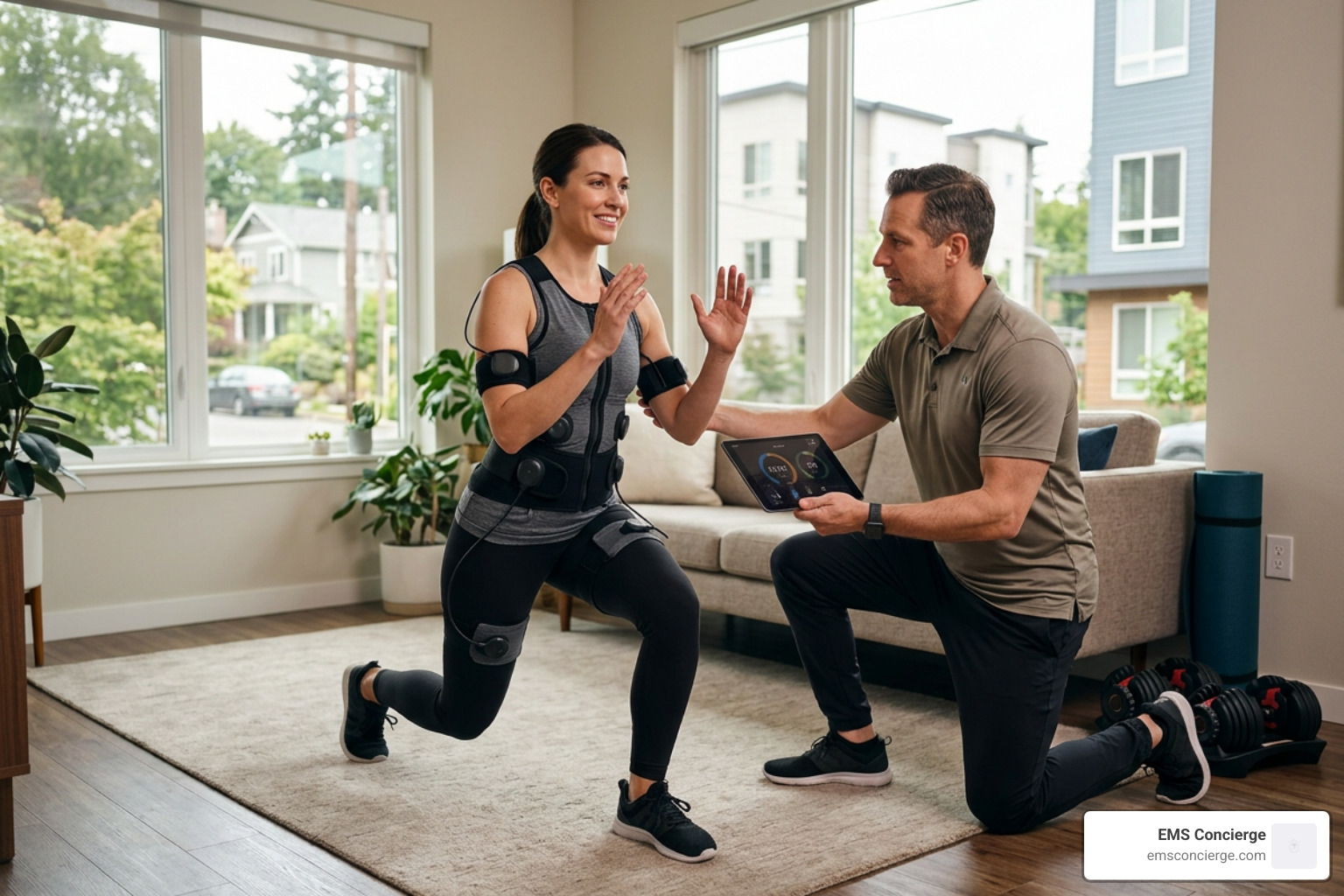
Full-body EMS training helps adults over 50 build and maintain strength by using gentle, targeted low-frequency impulses to activate major muscle groups while they perform controlled, low-impact movements. Because the muscles are stimulated through technical garments rather than heavy external weights, EMS can recruit deep fibers and support balance, posture, and metabolic health without adding high compressive stress to knees, hips, shoulders, or the spine.
As we pass the age of 50, staying physically active becomes essential for preserving independence, sustaining daily energy, and maintaining metabolic vitality. However, conventional fitness advice that emphasizes lifting heavy barbells, intense plyometrics, or pushing through sharp joint discomfort often leads to nagging aches, inflamed tendons, or debilitating injuries. For mature adults navigating arthritis, spinal stiffness, or previous orthopedic surgeries, standard gym regimens can feel counterproductive and risky.
In modern healthcare and physical conditioning, addressing the unique physiological realities of aging requires an intentional approach. Programs such as the NAEMT geriatric care principles emphasize how physiological changes - such as decreased joint space, reduced bone mineral density, diminished proprioception, and slower connective tissue repair - demand specialized strategies. Full-body EMS aligns perfectly with these principles by decoupling intense muscular contraction from joint strain, allowing older adults to stimulate high-threshold muscle fibers safely and efficiently.
How Electrical Muscle Stimulation Works for Aging Muscles
Under normal physiological circumstances, your brain sends electrical signals down your spinal cord to motor neurons, prompting muscle fibers to contract. As we age, our neuromuscular pathways naturally become less efficient. This age-related reduction in motor unit firing rates often leads to a sluggish recruitment of fast-twitch muscle fibers, which are vital for explosive balance recovery, stair climbing, and posture.
Full-body EMS enhances and reinforces this natural biological pathway. Using professional-grade medical and fitness systems like Miha Bodytec, calibrated low-frequency electrical impulses are delivered simultaneously across major muscle groups - including the quadriceps, hamstrings, glutes, lower and upper back, latissimus dorsi, chest, arms, and deep abdominal core.
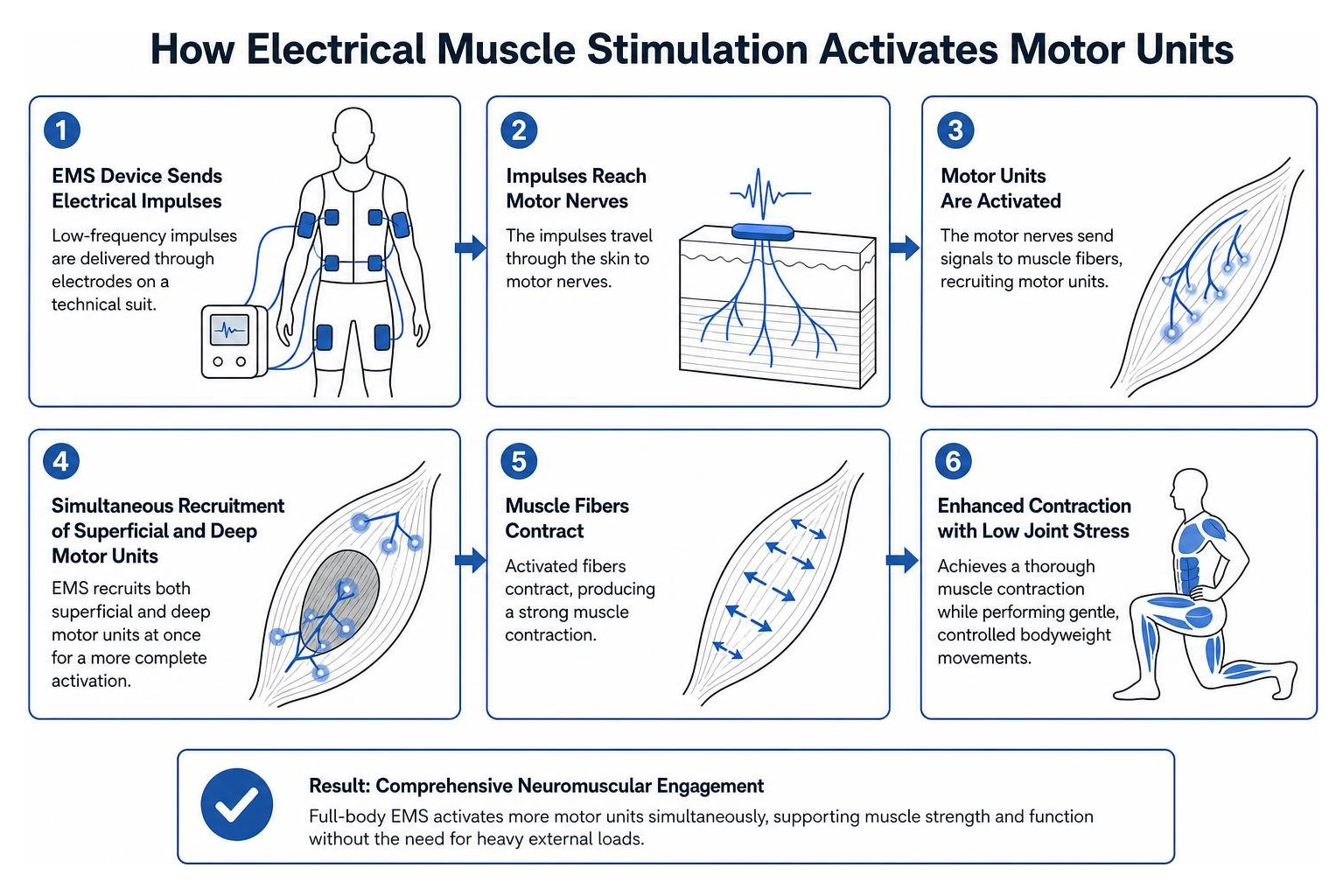
Because the stimulation recruits both superficial and deep-layer motor units at the same time, your muscles undergo a thorough, high-tension contraction while you perform gentle, controlled bodyweight movements. You do not need to perform high-impact jumps or balance heavy dumbbells to achieve comprehensive neuromuscular engagement. The impulses bypass mental fatigue and joint vulnerability, stimulating over 90% of targeted muscle groups in synchronized harmony.
Key Physical Benefits of EMS Training After 50
Integrating structured electro-muscle stimulation into your weekly wellness routine provides several tangible, functional advantages designed for long-term health:
- Targeted Muscle Retention: Stimulates hard-to-reach motor units and preserves lean mass without overloading tendons, ligaments, or delicate joint capsules.
- Enhanced Balance and Stability: Strengthens the deep postural stabilizers of the spine, pelvis, and hips, helping reduce fall risk and improving gait mechanics.
- Improved Joint Comfort: Builds the supporting musculature around the knees, hips, and shoulders to cushion daily movement and absorb mechanical shock.
- Time Efficiency: A focused 20-minute session delivers gym-grade recruitment without spending hours in a crowded fitness facility.
- Gentle on the Cardiovascular System: Provides a robust metabolic response and promotes muscular circulation without requiring breathless, high-impact cardiovascular strain.
- Promotes Active Longevity: Encourages consistent physical autonomy, making everyday tasks like lifting groceries, walking up stairs, and gardening pain-free and effortless.
Discovering how electrical stimulation can transform your weekly workout routine allows mature adults to build lean muscle while keeping recovery predictable and manageable.
Overcoming Age-Related Muscle Loss and Joint Strain

One of the most persistent hurdles mature adults face is sarcopenia—the natural, age-related loss of skeletal muscle mass and strength that typically accelerates after age 50. Left unchecked, sarcopenia can lead to a reduced resting metabolic rate, postural decline, bone density loss (osteopenia), and increased functional vulnerability during routine tasks.
Combating Sarcopenia Without Heavy Weight Lifting
The traditional clinical approach to reversing muscle loss involves high-load resistance training. While effective for younger populations, heavy loading places significant shear stress on the lumbar spine, cervical vertebrae, knees, and hips. For seniors with degenerative disc disease or osteoarthritis, lifting heavy weights frequently triggers chronic inflammation rather than positive adaptation.
Full-body EMS solves this dilemma by specifically targeting type-II (fast-twitch) muscle fibers, which are often the first to atrophy as we age. In conventional workouts, recruiting these fibers requires lifting near-maximal loads or moving with rapid velocity. Because the electrical impulse bypasses the central nervous system threshold and excites motor neurons directly, you can safely stimulate these critical fast-twitch fibers using simple isometric holds or gentle bodyweight movements like shallow squats, hip hinges, and light arm reaches. This maintains strength, bone mineral stimulation via muscular tension, and metabolic vitality without risking orthopedic trauma.
Protecting Vulnerable Joints and Improving Mobility
Joint discomfort from chronic wear-and-tear or osteoarthritis often discourages seniors from staying consistent with exercise, leading to a sedentary lifestyle that further weakens the musculoskeletal system. Understanding broader geriatric health considerations reinforces that maintaining muscular strength around joints is the most effective natural defense against pain and stiffness.
By activating the surrounding musculature without compressive loading, EMS helps stabilize vulnerable joints, supporting better posture and freer movement in daily activities. Synovial fluid circulation improves through gentle movement, while strengthened quadriceps, hamstrings, and glutes act as natural shock absorbers for the knees and hips. This active stabilization decompresses joint capsules, allowing mature adults to regain mobility, flexibility, and freedom of motion.
Safe Protocols and What to Expect During a Session
Safety, personalization, and proper recovery are the foundation of any effective fitness regimen for mature adults. When exploring ems training after 50, understanding the differences between technological stimulation and standard resistance exercises ensures you can train with complete confidence:
| Feature | Conventional Resistance Training | Full-Body EMS Fitness |
|---|---|---|
| Joint Load & Impact | High compressive and shear forces on joints | Virtually zero joint compression; bodyweight only |
| Fiber Recruitment | Requires heavy loads to activate deep type-II fibers | High activation across deep and superficial fibers |
| Session Duration | 45–60 minutes per workout | 20 minutes per session |
| Trainer Oversight | Often self-directed or generic gym guidance | 1-on-1 supervised coaching throughout |
| Post-Workout Recovery | Higher risk of tendon and ligament soreness | Primarily localized muscular fatigue |
Getting Started With EMS Training After 50 Safely
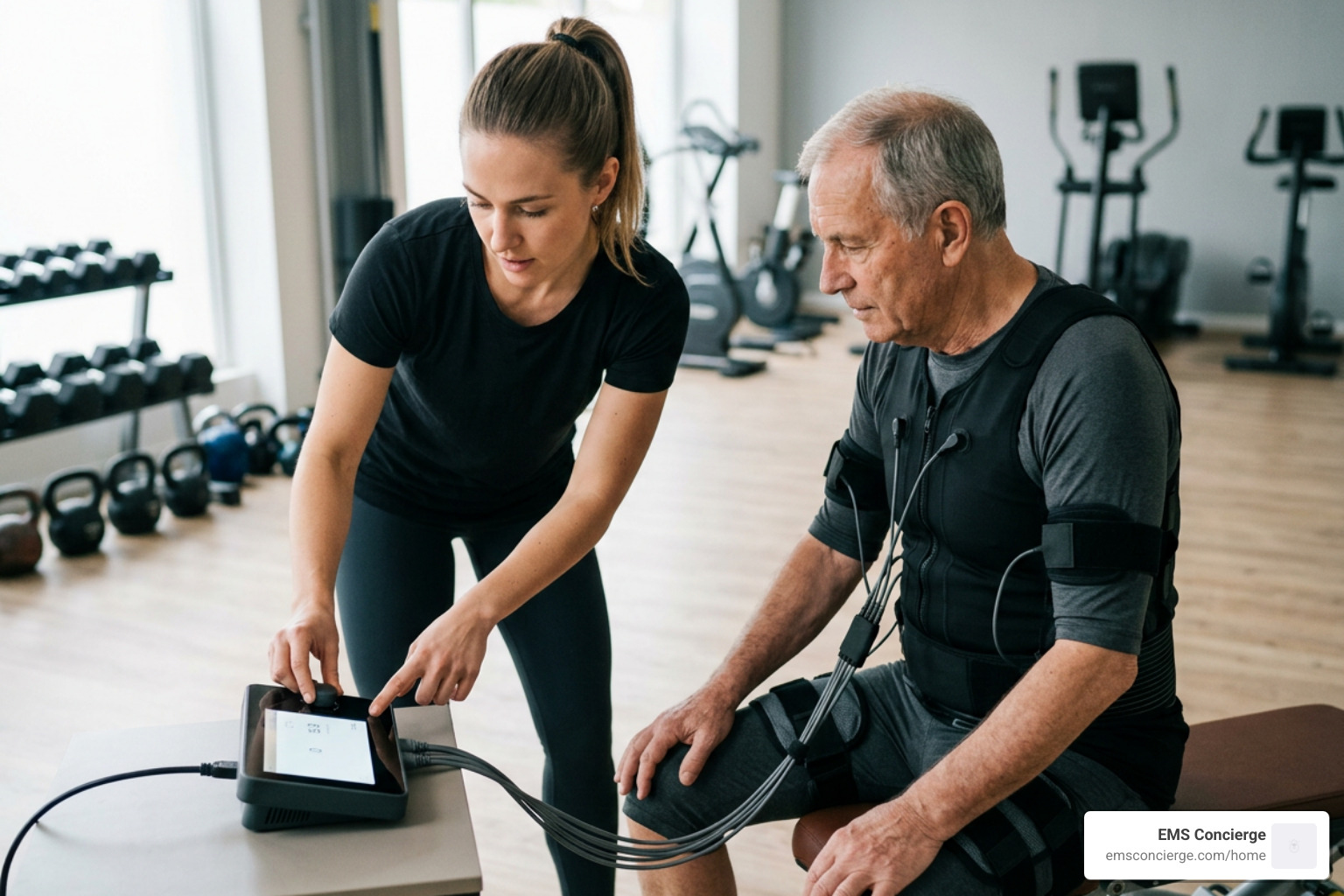
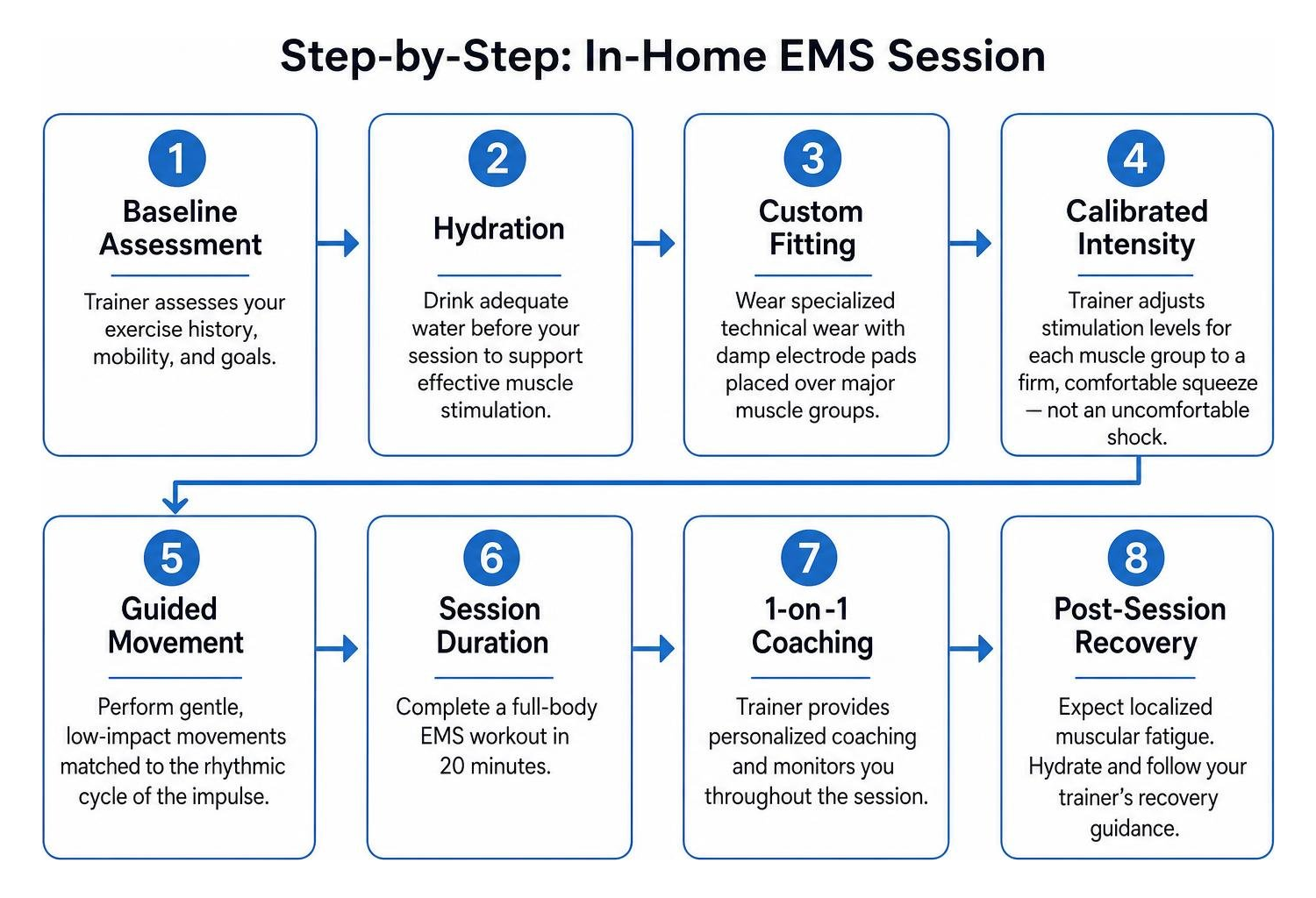
Prior to your first session, a qualified trainer will conduct a comprehensive baseline physical assessment to understand your exercise history, mobility, previous injuries, and individual goals. Following established safety protocols guarantees a comfortable and effective experience:
- Hydration: Drinking adequate water before your session is essential, as well-hydrated muscle tissue conducts electrical impulses more efficiently and minimizes localized resistance.
- Custom Fitting: You will put on specialized technical wear fitted with damp electrode pads placed precisely over major muscle groups.
- Calibrated Intensity: The trainer will adjust the stimulation levels individually for each muscle group, ensuring the sensation feels like a firm, comfortable squeeze rather than an uncomfortable shock.
- Guided Movement: Over 20 minutes, you will complete gentle, low-impact movements matched to the rhythmic cycle of the impulse, guided step-by-step by your certified instructor.
Comparing In-Home EMS Workouts to Traditional Gym Routines
Navigating crowded gym environments, sharing equipment, commuting through traffic, and walking on slippery locker room surfaces can be intimidating and inconvenient for mature adults. Reviewing the advantages of in-home EMS training versus traditional gym alternatives highlights how mobile fitness brings professional guidance directly to your living room, ensuring complete privacy, zero travel friction, and customized attention.
Having an expert trainer arrive at your home with specialized equipment removes all common barriers to consistency. You avoid the physical fatigue associated with driving and parking, eliminate the risk of gym-floor accidents, and receive dedicated one-on-one supervision in a relaxed, comfortable home environment tailored entirely to your schedule.
Frequently Asked Questions About EMS Fitness for Seniors
Is full-body EMS safe for individuals over 50 with joint discomfort?
Yes. Because the electrical impulses stimulate your muscles directly without requiring external weights, there is no excessive compressive force placed on your joints, making it an ideal option for individuals with osteoarthritis, previous joint injuries, spinal stiffness, or mobility limitations. Certified trainers constantly monitor impulse intensity to maintain complete comfort throughout the workout.
How often should older adults participate in EMS sessions?
Due to the depth of muscle fiber recruitment, one to two 20-minute sessions per week provide ample stimulus. Because EMS activates both superficial and deep muscle layers simultaneously, allowing 48 to 72 hours of recovery between sessions ensures your body has adequate time to repair and strengthen muscle tissue without risking overtraining.
Can EMS training help with posture and core stability?
Yes. The technical suit includes dedicated electrode pairs for the deep abdominal wall, lower back, thoracic spine, and glutes. Activating these deep stabilizing muscles simultaneously helps correct postural imbalances, supports spinal alignment, relieves chronic lower back tension, and enhances functional core stability for everyday activities.
Conclusion
Staying strong, agile, and resilient after 50 does not require punishing your body with heavy weights or high-impact routines. With full-body electro-muscle stimulation, you can maintain muscle mass, reinforce joint stability, and protect your mobility through gentle, time-efficient sessions.
At EMS Concierge, our certified trainers bring professional-grade Miha Bodytec equipment directly to your doorstep. We customize every impulse to your unique fitness level and comfort, delivering an effective, supportive workout in just 20 minutes. Ready to experience low-impact strength tailored for your lifestyle? You can book a personalized full-body EMS training session with our team today.