At-Home Cardio Training That Fits a Busy Schedule
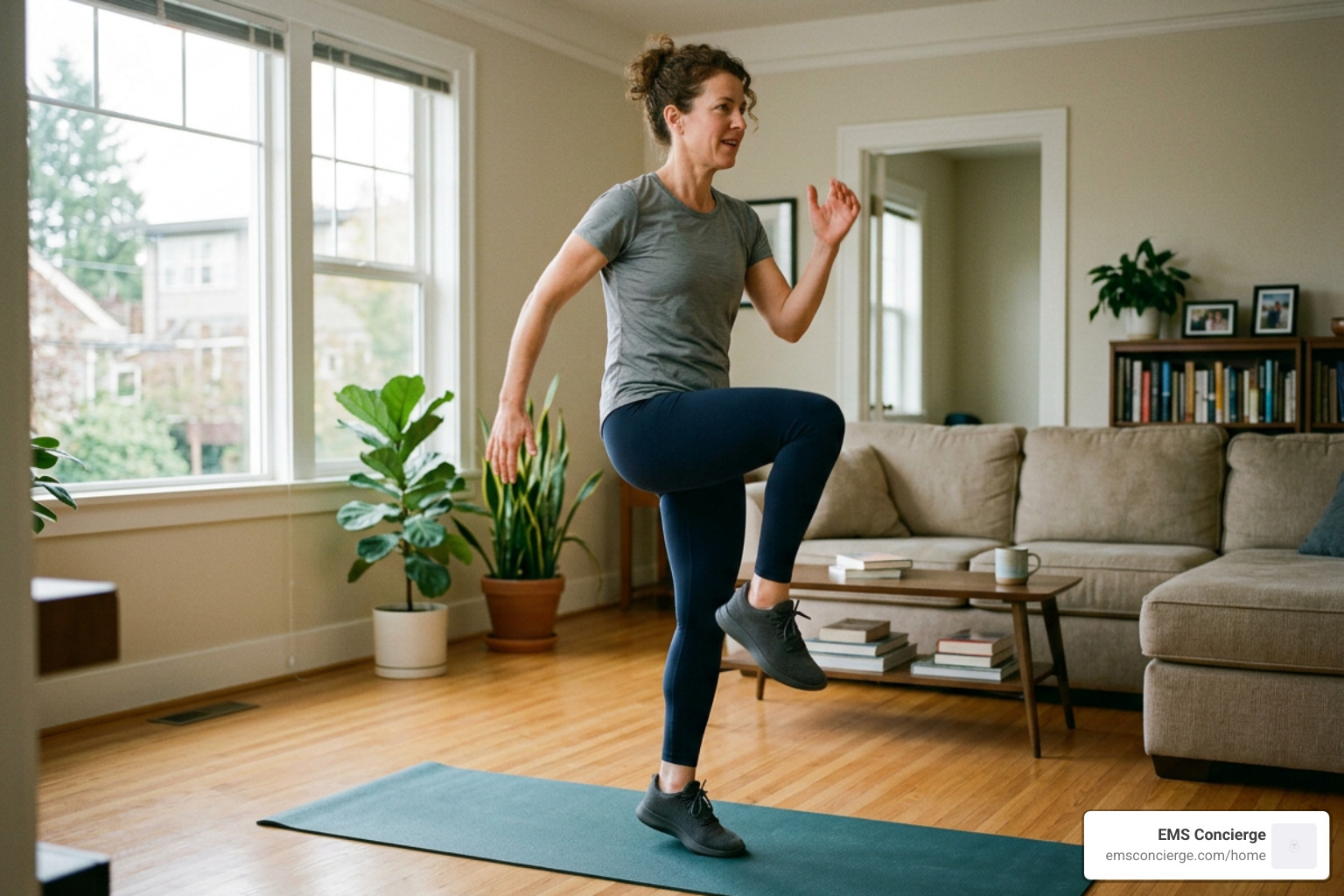
At-home cardio training can be simple, effective, and easy on the joints. Start with 10 to 30 minutes of low-impact moves such as marching in place, step-ups, side steps, air squats, and shadow boxing. Work at a pace where you can speak in short sentences, then build intensity over time with faster intervals or more challenging movements.
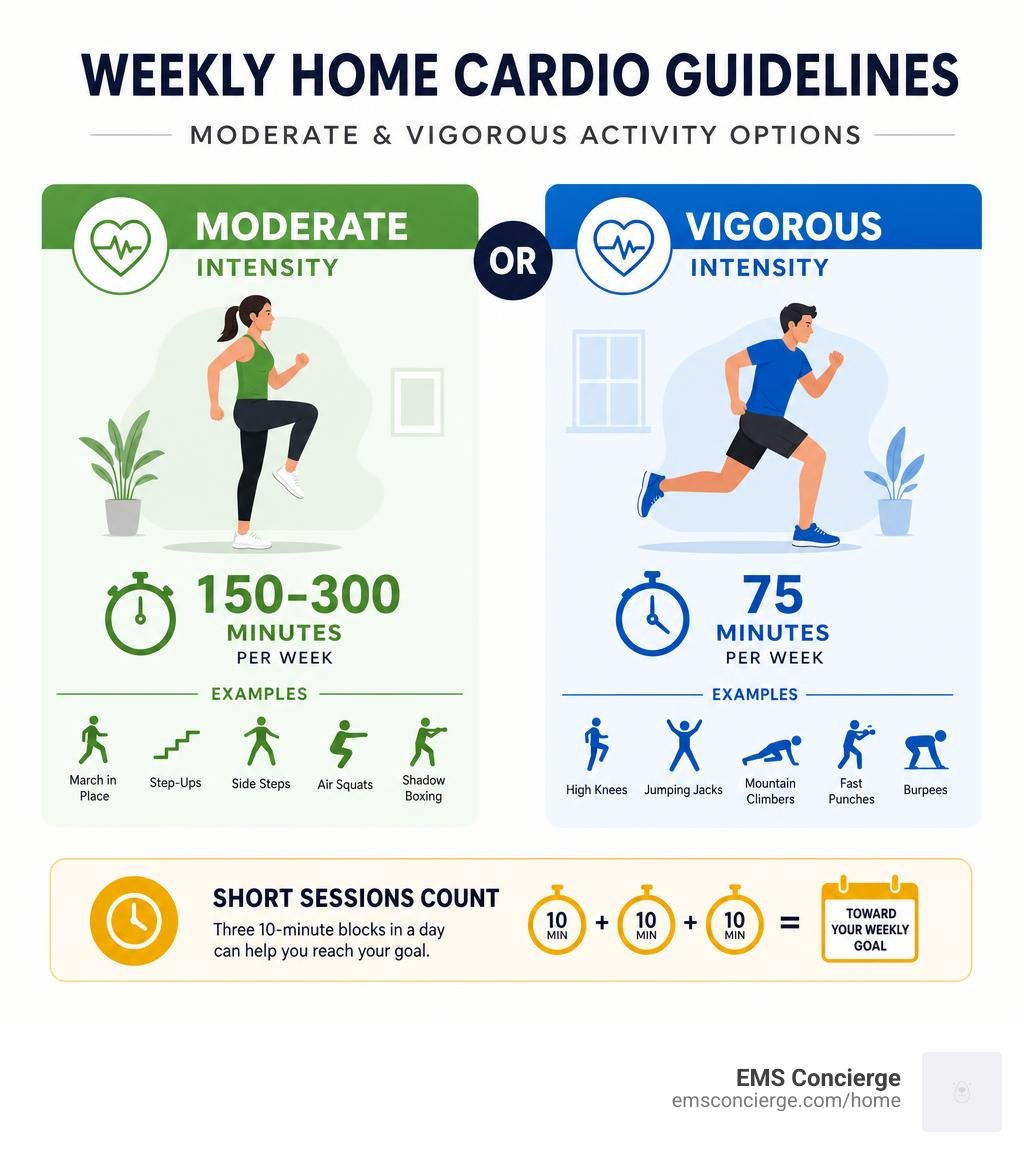
For general health, adults should aim for 150 to 300 minutes of moderate aerobic activity each week, or 75 minutes of vigorous activity. Short sessions count, so three 10-minute blocks in a day can be a practical starting point.
Home cardio removes the commute, crowded gym floor, and equipment wait times. With a little clear space and a repeatable routine, you can improve cardiovascular fitness, support mood and sleep, and build a habit that works around your calendar.
The Science and Health Benefits of At Home Cardio Training
When we perform cardiovascular exercise, we challenge our heart and lungs to deliver oxygenated blood to working muscles more efficiently. Regular aerobic training reduces resting blood pressure, strengthens the myocardium, improves insulin sensitivity, and lowers the risk of chronic conditions like type 2 diabetes and cardiovascular disease. A 2022 study highlighted that consistent cardio training plays a measurable role in improving cardiorespiratory fitness and extending overall life expectancy.
Cardio also provides immediate cognitive and psychological benefits. Research by Columbia University’s Irving Medical Center shows that aerobic exercise sharpens executive function—improving our ability to plan, reason, and problem-solve. Aerobic movement triggers the release of endorphins and neurotransmitters like serotonin and dopamine. Walking for one hour or running for 15 minutes each day has been shown to lower the risk of major depression.
| Aerobic Intensity Zone | Target Effort (% Max Heart Rate) | Weekly Guideline Target | Talk Test Indicator | Primary Physiological Adaptation |
|---|---|---|---|---|
| Moderate-Intensity | 64% – 76% HRmax | 150 – 300 minutes | Can speak in full sentences, cannot sing | Capillary density, fat oxidation, endurance base |
| Vigorous-Intensity (HIIT) | 77% – 95%+ HRmax | 75 – 150 minutes | Can only utter a few words at a time | Stroke volume, VO2 max, EPOC (afterburn) |
For body composition and fat loss, cardiovascular conditioning creates a caloric deficit while driving excess post-exercise oxygen consumption (EPOC). High-intensity intervals force the body to consume elevated levels of oxygen for hours after the session ends, burning extra calories at rest. Clinical data shows that combining structured exercise with a balanced diet makes individuals 17.5 times more likely to lose weight compared to making no lifestyle adjustments.
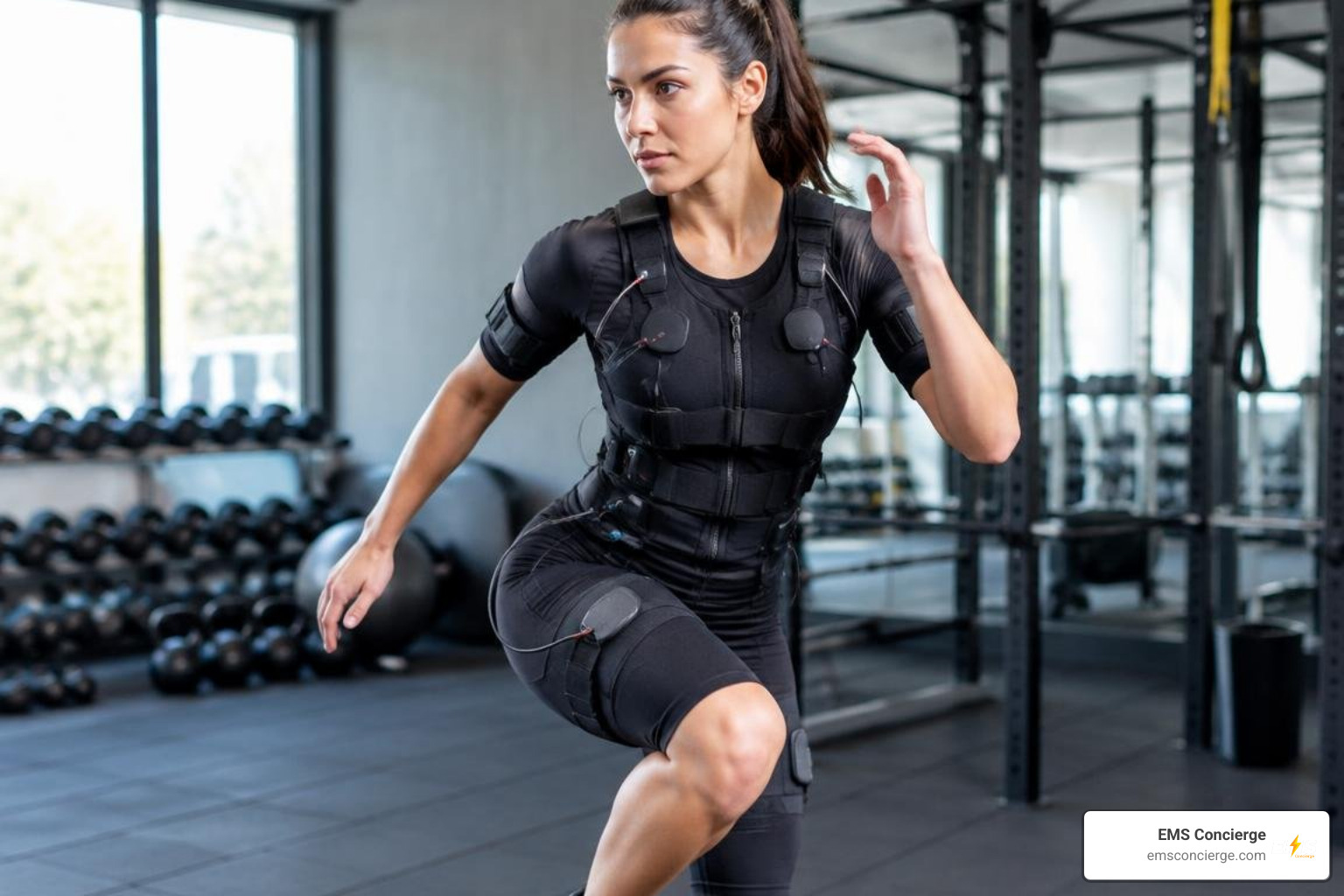
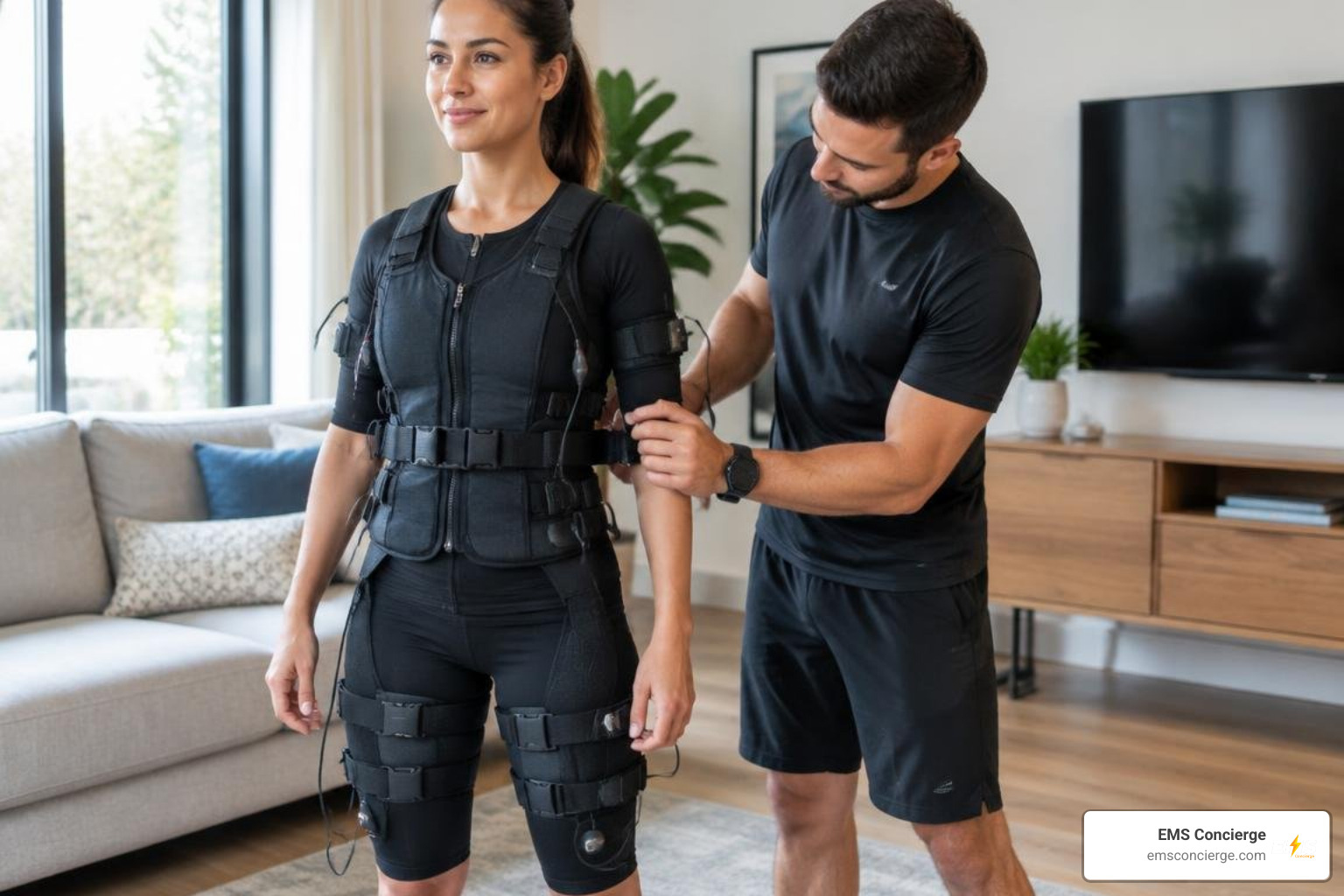
Cardio doesn't require a dedicated fitness studio or endless machines. If you are comparing training options to fit a demanding routine, exploring in-home fitness alternatives can show you how to blend traditional bodyweight routines with cutting-edge modalities for maximum efficiency.
Essential Moves: From Low-Impact Beginner to High-Intensity Intervals

A safe workout starts with an intentional warm-up and ends with an active cool-down.
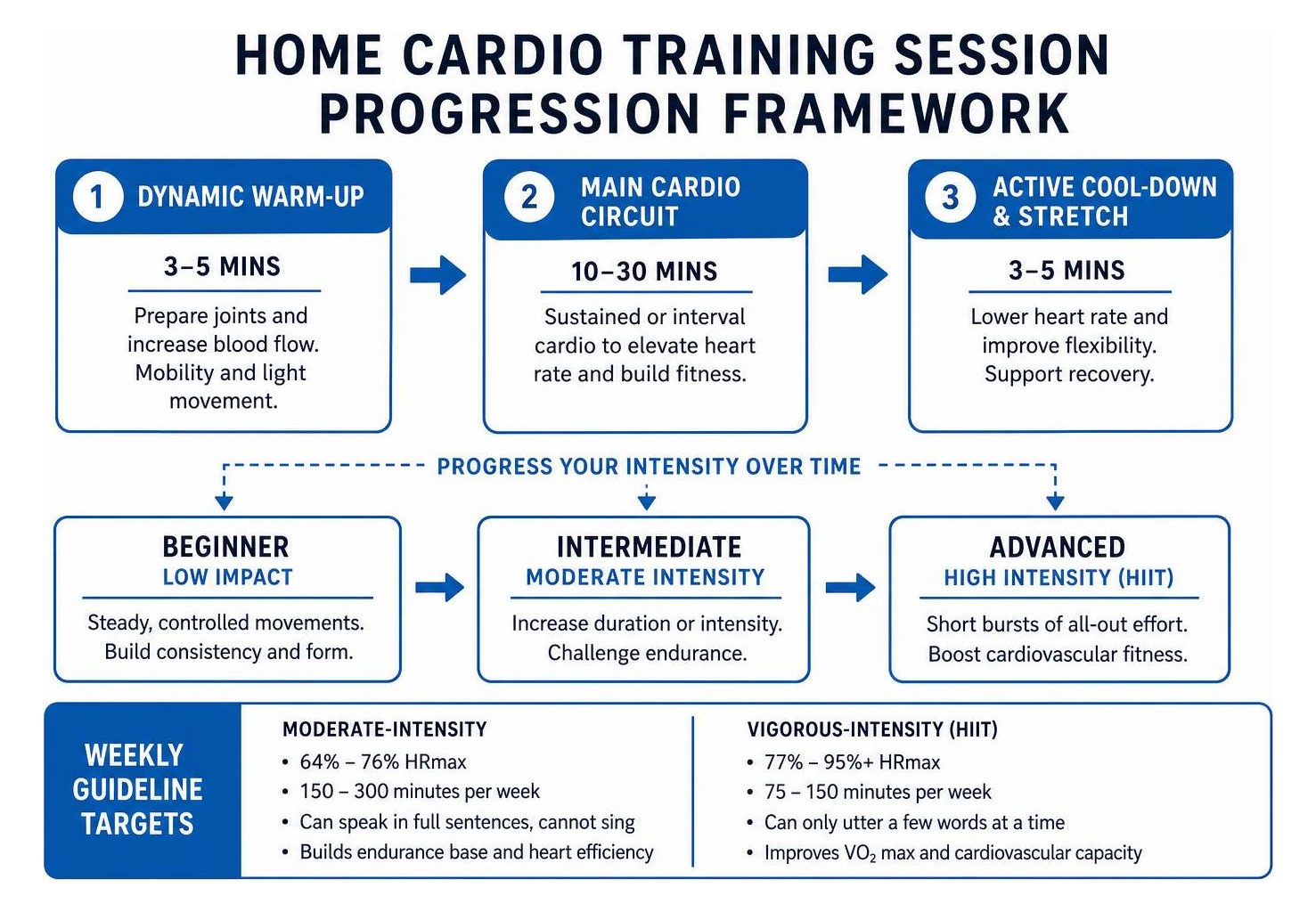
Spend 3 to 5 minutes preparing your joints with shoulder rolls, hip openers, arm circles, and gentle bodyweight squats. After finishing your cardio session, spend 3 to 5 minutes lowering your heart rate with slow walking, hamstring stretches, quad pulls, and child’s pose.
Beginner Moves for At Home Cardio Training
Beginner cardio focuses on fluid, continuous movement that elevates the heart rate without placing excessive impact on ankles, knees, or the lower back:
- Marching or Jogging in Place: Stand tall, engage your core, and drive your knees upward toward hip height while pumping your arms in rhythm. Keep your foot strikes soft.
- Low-Impact Jumping Jacks (Step Jacks): Step your right foot out to the side while raising both arms overhead, return to center, and repeat on the left side. This eliminates joint impact while keeping the shoulders and calves working.
- Air Squats: Stand with feet shoulder-width apart, sit your hips back and down as if lowering into a chair, drive through your heels to stand, and squeeze your glutes at the top.
- Arm Circles & Trunk Rotations: Keep your lower body stable while rotating your torso gently from side to side, or perform forward and backward arm circles to elevate the heart rate and mobilize the thoracic spine.
- Lateral Steps with Overhead Reach: Step side-to-side across your mat, extending your arms diagonally overhead with each step to challenge your lateral stabilizers and core.
Intermediate and Advanced High-Intensity Exercises
When you are ready to progress, plyometric and multi-joint movements rapidly elevate your heart rate, recruiting fast-twitch muscle fibers for increased power:
- Squat Jumps: Lower into a standard squat, then explosively push through your midfoot to jump straight up. Land quietly with soft knees and transition smoothly into the next repetition.
- Mountain Climbers: Assume a solid high plank position with your hands stacked directly under your shoulders. Drive one knee toward your chest, quickly switch legs in a running motion, and maintain a flat back.
- Burpees: From a standing position, drop your hands to the floor, jump or step your feet back into a push-up plank, drop your chest to the floor (optional), jump your feet back toward your hands, and leap into the air with arms extended.
- Speed Skaters: Bound laterally from your right foot to your left foot, sweeping your trailing leg behind you like a speed skater. Engage your obliques and swing your arms across your body for momentum.
- "Screamer" Lunges: Step back into a reverse lunge, then drive the rear knee explosively upward while hopping off your front foot. Land softly back in the lunge position before switching sides.
Ready-to-Use 10-, 20-, and 30-Minute Home Cardio Workouts
Structure your workouts around set work-to-rest intervals to keep yourself accountable and maintain the right intensity.

10-Minute Rapid Cardio Blast
Structure: 10 exercises, 45 seconds work, 15 seconds rest. No extended breaks.
- Minute 1: Marching in place with high knees
- Minute 2: Step jacks or low-impact jumping jacks
- Minute 3: Air squats
- Minute 4: Lateral shuffles (staying low in an athletic stance)
- Minute 5: Plank shoulder taps
- Minute 6: Butt kicks (jogging or marching)
- Minute 7: Standing cross-body knee-to-elbow drives
- Minute 8: Inchworms with a reach at the top
- Minute 9: Shadow boxing (jab, cross, hook combinations)
- Minute 10: Alternating reverse lunges with an overhead reach
20-Minute HIIT Fat-Burn Circuit
Structure: 5 exercises. Perform each exercise for 40 seconds, rest 20 seconds. Complete 4 total rounds, taking a 1-minute rest between rounds.
- Exercise 1: Squat Jumps (or rapid air squats)
- Exercise 2: Mountain Climbers
- Exercise 3: Speed Skaters
- Exercise 4: Plank Jacks or Bear Plank Shoulder Taps
- Exercise 5: Burpees (or modified step-back burpees)
30-Minute Endurance and Stamina Builder
Structure: 6 exercises focused on pacing and sustained aerobic output. Work for 45 seconds, rest for 15 seconds. Complete 4 full rounds with a 90-second active recovery walk between rounds.
- Exercise 1: Touchdown Squats (tap the floor, stand/hop up)
- Exercise 2: Mountain Climber Crosses (knee to opposite elbow)
- Exercise 3: Alternating Jump Lunges (or alternating step-back lunges)
- Exercise 4: Push-Up to Downward Dog
- Exercise 5: Lateral Skater Bounds
- Exercise 6: Air Jump Rope (or rapid lateral line hops)
Maximizing Intensity, Safety, and Minimal Equipment
To get the most out of home cardio workouts, monitor your exertion without relying entirely on electronic devices. The Rate of Perceived Exertion (RPE) scale runs from 1 to 10:
- RPE 1–3 (Light): Effort feels easy; breathing is normal; you can talk and sing without pauses.
- RPE 4–6 (Moderate): Breathing speeds up; you break a light sweat; you can converse in complete sentences but cannot sing.
- RPE 7–8 (Vigorous): Deep, heavy breathing; you can speak only a couple of words between breaths.
- RPE 9–10 (Maximum/All-Out): Full sprint effort; unsustainable for more than 20 to 60 seconds; unable to speak.
Always prioritize safety. Clear a workout space at least the size of a yoga mat (6x4 feet), ensure your flooring is dry and stable, wear supportive athletic shoes with non-skid outsoles, and keep a water bottle nearby.
Minimal Equipment Options for At Home Cardio Training
While bodyweight movement is effective, simple fitness tools can add variety and challenge your endurance:
- Jump Ropes: An inexpensive tool for building foot speed, coordination, and calf endurance. If ceiling clearance is tight, use cordless digital jump ropes. For specialized multi-directional agility routines, tools like the HupSix Cardio Training System offer guided resistance-based movement packages.
- Aerobic Step Platforms: Stepping increases your vertical workload. Clinical studies show that step aerobics can improve cardiovascular endurance by 12–15% and lower-body muscle tone by 18–22% within 4 to 6 weeks. A non-slip bench like the Terra Wellness Aerobic Step Bench lets you adjust height levels to scale step-ups, box jumps, and elevated planks.
- Compact Stair Steppers: If you prefer continuous, joint-friendly climbing mechanics without taking up a whole room, compact vertical climbers like the Stamina Stair Climber or the smart app-connected Sunny Health & Fitness Premium Smart Stepper provide controlled, low-impact lower-body resistance.
- Kettlebells: Adding light-to-moderate kettlebell swings creates a hybrid conditioning effect, building posterior chain power while driving your heart rate into high-intensity zones.
Frequently Asked Questions About Home Cardio
How many minutes of cardio do I need per week?
Under federal physical activity guidelines, adults should accumulate at least 150 to 300 minutes of moderate-intensity aerobic exercise, or 75 to 150 minutes of vigorous-intensity aerobic exercise weekly. By incorporating high-intensity interval training (HIIT), you can effectively cut your necessary workout time in half while enjoying comparable cardiovascular benefits.
How do I measure exercise intensity without a monitor?
Use the Talk Test or the RPE Scale (1–10). During moderate-intensity sessions, you should be able to maintain a conversation in short sentences. If you can only speak one or two words before needing to inhale, you are in a vigorous aerobic zone (RPE 7–8). If you can easily sing a song, increase your pace.
What is the best way to do home cardio with joint sensitivity?
Focus on low-impact, non-jumping variations where one foot remains anchored to the floor at all times. Replace jumping jacks with step jacks, squat jumps with rapid air squats or calf raises, and burpees with elevated step-back hands-on-chair burpees. Exercising on shock-absorbing surfaces (like a rubber mat or carpet) further minimizes stress on the hips, knees, and ankles.
Conclusion
Consistency is the foundation of cardiovascular health. You don't need complicated machines or extensive gym setups to build stamina, support cognitive clarity, and burn calories. By rotating between low-impact bodyweight moves, structured HIIT circuits, and simple equipment progressions, you can maintain an effective cardio habit right in your living room.
If you want to maximize your training efficiency and achieve complete muscular stimulation alongside your cardio goals, consider our full-body cardio program. At EMS Concierge, our certified personal trainers bring professional-grade Miha Bodytec equipment directly to your home, delivering a customized, joint-friendly 20-minute workout that activates up to 90% of your muscle fibers simultaneously.