Is EMS Training Safe? The Straight Answer
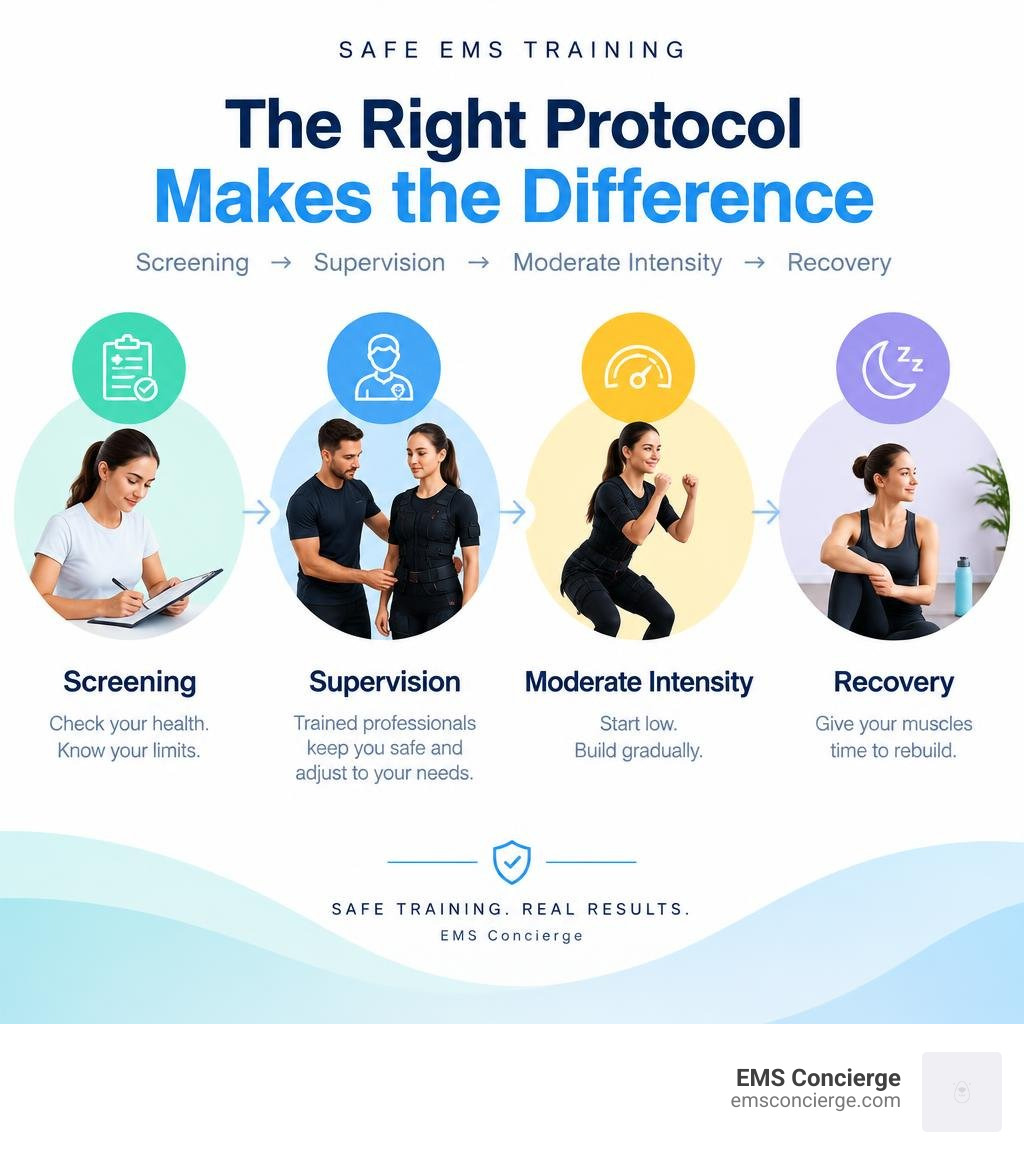
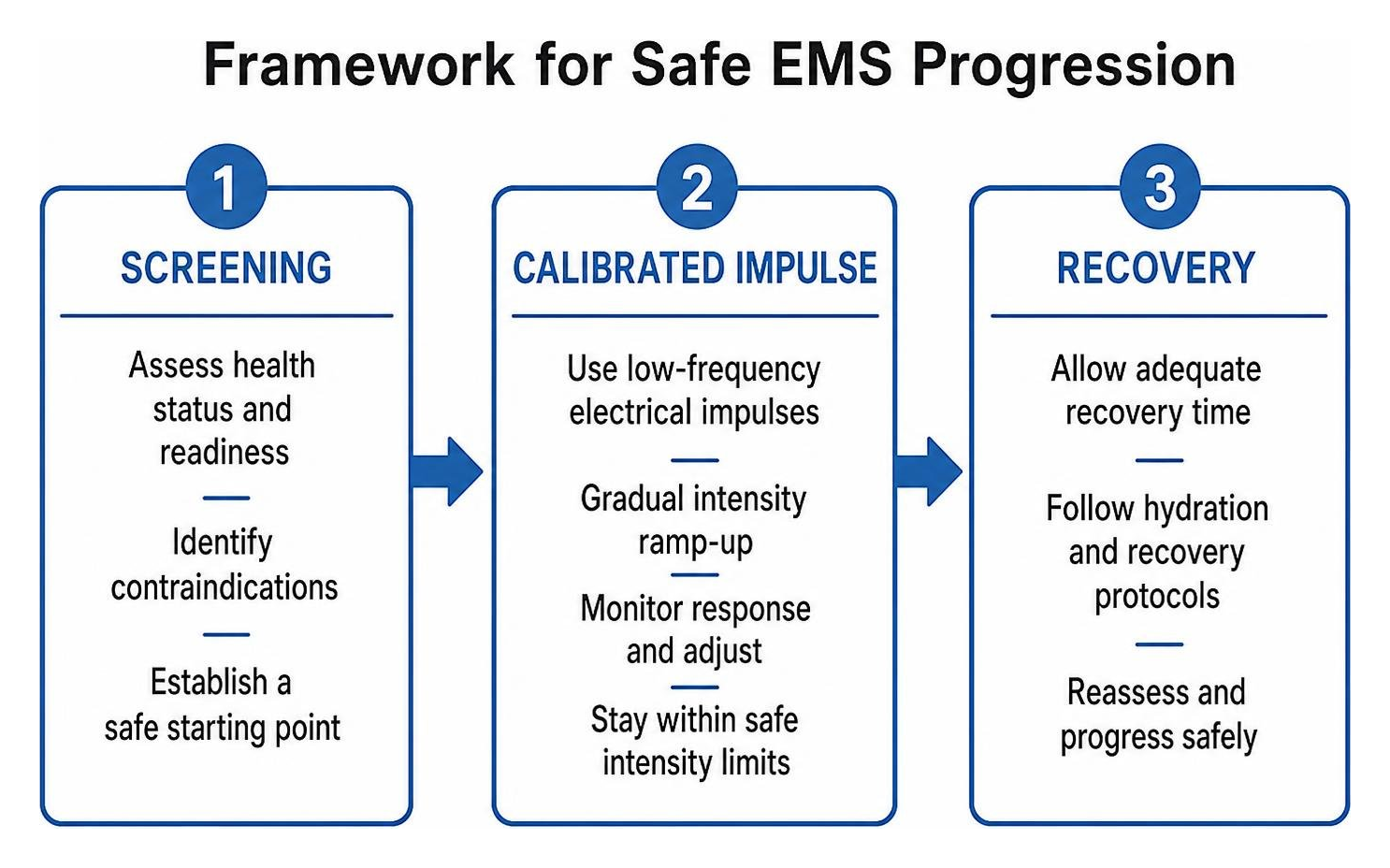
Whole-body EMS training can be safe for most healthy adults when it is delivered by a qualified trainer, with appropriate equipment, medical screening, conservative intensity, and enough recovery time. It is not a shortcut you should push to the limit.
The real risk is not the electrical impulse alone. Problems tend to arise when people use intensity that is too high, train too often, skip screening, or treat EMS like a normal workout. That can lead to severe muscle soreness, strains, and, in rare cases, rhabdomyolysis: dangerous muscle breakdown that needs urgent medical care.
For a safer session:
- Complete an honest health screening first.
- Start at a low, tolerable intensity.
- Use a trained professional who can adjust each muscle group.
- Leave adequate recovery time between sessions.
- Avoid whole-body EMS if you have a contraindication, such as an implanted electronic medical device, unless a clinician specifically clears it.
For busy people who want a joint-friendly workout, EMS can be a useful tool. But the unfiltered truth is simple: safe results depend far more on protocol and supervision than on the suit itself.
What Science Really Says: Is EMS Training Safe for Your Body?
When people first encounter whole-body electro-muscle stimulation, they often wonder if sending external electrical currents into their muscles is biologically natural or inherently hazardous. To understand whether whole-body workouts are genuinely secure, we must look at how the technology interacts with human physiology. In traditional resistance exercise, your central nervous system sends voluntary action potentials down motor neurons to trigger muscle fiber contractions. Whole-body EMS uses external low-frequency electrical impulses to replicate this exact neuromuscular response, bypassing the brain’s voluntary signal to contract targeted skeletal muscle groups directly.
Because the electrical impulses work directly on motor units, what EMS training is and how it works comes down to controlled, low-frequency current parameters. Professional whole-body devices operate at low frequencies—typically between 7 Hz and 85 Hz—with pulse widths measured in microseconds. These parameters are chosen because they safely depolarize motor nerves without disrupting autonomic nervous functions or penetrating deeper internal organs.
However, knowledge without disciplined application creates vulnerability. In professional risk analysis, studies evaluating occupational hazard awareness and safety-related knowledge demonstrate that having theoretical knowledge does not automatically protect individuals from harm; strict adherence to behavioral protocols is what ensures safety. In whole-body fitness, understanding current parameters is meaningless if intensity limits are ignored. When calibrated correctly, the metabolic response mimics high-intensity resistance training without placing mechanical shear forces on your skeletal frame.
Electrical Impulse Intensity and Cardiovascular Response
A major concern among newcomers is how electrical current affects the cardiovascular system. Skeletal muscle and cardiac muscle operate on distinct physiological mechanisms. Skeletal muscle tissue responds readily to low-frequency external impulses, whereas the human myocardium (heart muscle) is shielded by intrinsic electrical pathways and separated by the chest wall. Regulated whole-body devices keep impulse depths strictly limited to superficial and deep skeletal muscle layers.
Studies evaluating heart rate variability and blood pressure regulation during low-frequency stimulation demonstrate that cardiovascular strain remains modest. Your heart rate rises primarily due to the metabolic demand of multiple large muscle groups contracting simultaneously, rather than from the electrical stimulus itself. To ensure these electrical parameters remain within safe boundaries, why FDA approval matters in EMS equipment is evident: certified medical-grade machinery prevents rogue power surges, regulates waveform delivery, and protects your vascular system.
Rhabdomyolysis and Muscle Strain Risk Mitigation
The most serious physiological risk associated with improper electro-muscle stimulation is exertional rhabdomyolysis. This condition occurs when skeletal muscle tissue breaks down excessively, releasing high concentrations of myoglobin and creatine kinase (CK) into the bloodstream, which can overwhelm the kidneys.
Because whole-body stimulation recruits up to 90% of motor units simultaneously—including deep stabilizing fibers that are difficult to reach in conventional training—it is surprisingly easy for an untrained person to overtax their muscles without feeling the immediate fatigue of heavy weights. This risk is entirely preventable when coaches use conservative ramp-up periods, strict hydration protocols, and structured recovery intervals.
| Safety Factor | Whole-Body EMS Training | Traditional Heavy Weightlifting |
|---|---|---|
| Primary Muscle Risk | Excessive deep muscle fiber breakdown if overstimulated | Acute muscle tears, tendon avulsions, sprains |
| Joint & Spinal Loading | Zero axial loading; virtually no compressive joint strain | High axial spinal compression and joint shear force |
| Risk Mitigation Method | Conservative impulse scaling, hydration, certified trainer | Spotters, strict lifting biomechanics, load limits |
| Typical Recovery Window | 48 to 72 hours between targeted sessions | 24 to 48 hours per targeted muscle group |
Key Risk Factors: Why Equipment Standards and Supervision Matter
The difference between an exceptional, muscle-toning workout and a harmful session lies in equipment engineering and professional oversight. In recent years, the market has seen a flood of unregulated consumer gadgets and wearable toning belts promising effortless fitness. These direct-to-consumer gadgets lack the sophisticated impulse modulation, balanced biphasic current, and individual channel controls necessary to protect human physiology.

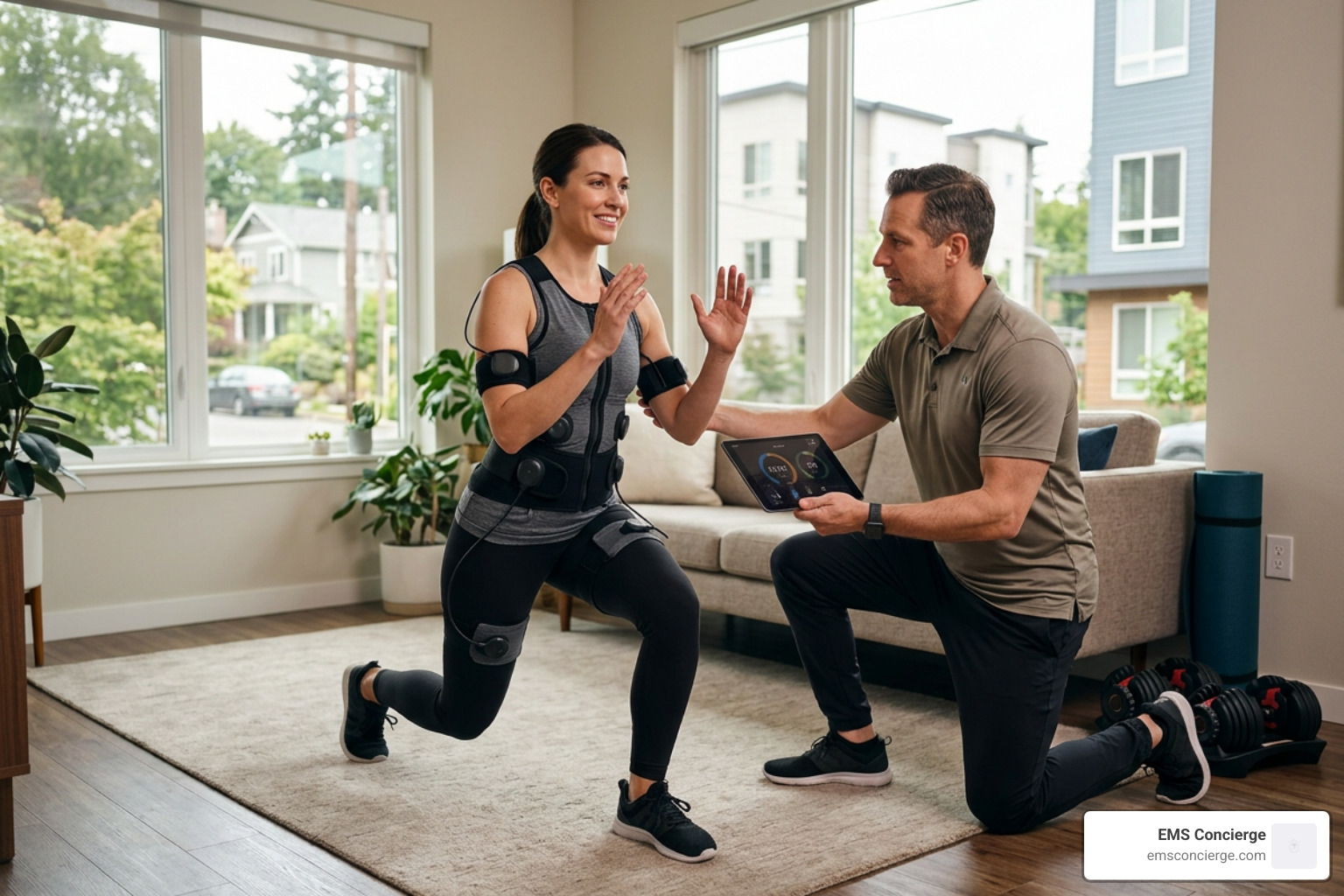
Professional whole-body systems, such as the German-engineered Miha Bodytec consoles we utilize at EMS Concierge, allow trained practitioners to adjust impulse intensities for each individual muscle group independently. This granular calibration prevents overstimulating smaller, sensitive muscle groups like the pectorals or abdominals while delivering adequate tension to larger muscles like the glutes and quadriceps.
Understanding the difference between commercial-grade EMS equipment and consumer gadgets is essential for anyone evaluating safety. Research examining safety standards, including a national examination of occupational hazards and mitigation, underscores that proper equipment and standardized protocols substantially reduce physical injury rates. Just as ergonomic lifting policies protect physical health in high-risk professions, calibrated commercial consoles protect fitness clients from unmitigated strain.
Certified Trainer Oversight: Why Is EMS Training Safe Only Under Expert Supervision?
Self-administering whole-body electrical stimulation without professional guidance is like stepping into an unfamiliar sports car and instantly redlining the engine. When asking is ems training safe, the answer hinges on expert human supervision. A certified trainer acts as your biofeedback loop, continuously assessing movement quality, monitoring fatigue, and fine-tuning individual electrode channels.
During a structured step-by-step EMS session, our certified trainers never leave your side. We begin with a controlled impulse calibration phase, ensuring each muscle group experiences a balanced contraction without causing joint locking or breath-holding. Your trainer guides you through isometric and functional movements that synchronize with the impulse cycle, correcting posture and ensuring you never exceed safe physiological thresholds.
Contraindications and Who Should Avoid Whole-Body Stimulation
While whole-body stimulation delivers remarkable benefits for a wide range of individuals, it is not suitable for everyone. Honest pre-exercise medical screening is a mandatory safety barrier.
Primary absolute contraindications for whole-body electrical stimulation include:
- Cardiac Pacemakers and Implanted Defibrillators: Electrical impulses can disrupt the sensitive rhythm-monitoring circuitry of implanted electronic cardiac devices.
- Pregnancy: Whole-body stimulation should never be applied across the abdominal, pelvic, or lower back regions during pregnancy.
- Epilepsy and Seizure Disorders: Uncontrolled electrical frequencies may trigger nervous system disturbances in individuals diagnosed with seizure conditions.
- Active Cancer or Malignant Tumors: Current flows could theoretically stimulate cellular metabolic pathways in active tumor zones.
- Acute Fevers, Severe Bacterial Infections, or Circulatory Thrombosis: Intense systemic muscular contractions increase circulatory loads, which is contraindicated during acute systemic illness or active blood clot risks.
Individuals with severe neurological conditions, hernias, or advanced cardiovascular disease must obtain formal clearance from their physician before beginning any whole-body regimen.
How Modern EMS Protocols Protect Joints and Prevent Overuse Injuries
For decades, traditional strength training has required people to lift heavy iron to generate meaningful mechanical tension. While lifting builds muscle, the accompanying axial load places substantial compressive forces across the lumbar spine, knees, hips, and shoulders. For mature adults, busy executives, and individuals managing past injuries, heavy barbell loading can eventually lead to joint wear, tendon inflammation, and chronic back pain.
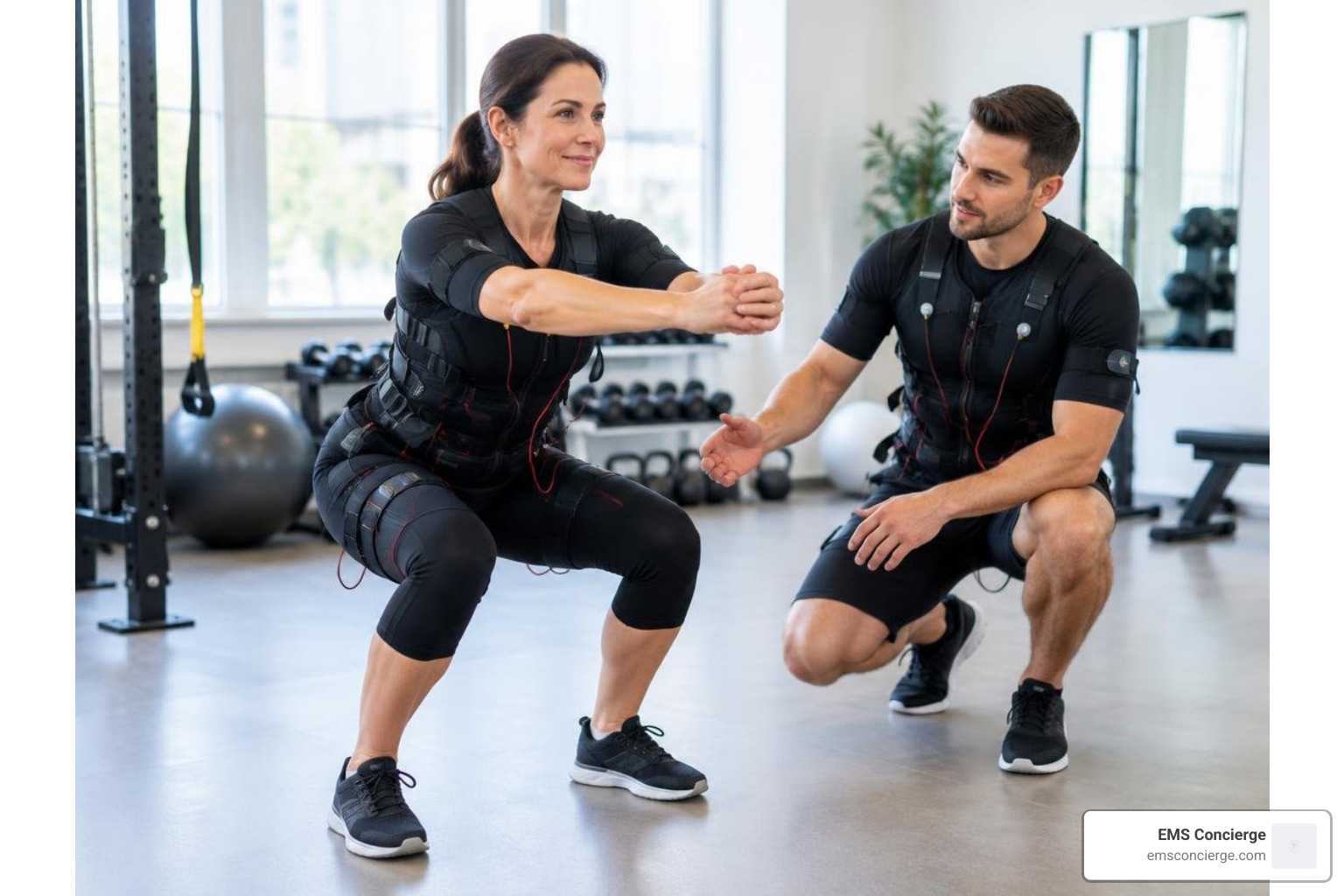
Whole-body EMS completely changes this equation. By generating internal muscular tension through electrical stimulation rather than external iron loads, you achieve deep, high-threshold motor unit recruitment without placing compressive weight on your skeletal joints. When comparing EMS mechanics against traditional high-impact workouts, electro-muscle stimulation provides an effective avenue for building strength while preserving joint cartilage and tendon health.
Joint-Friendly Conditioning vs Heavy Axial Loading
During a standard heavy back squat, your spine must support hundreds of pounds of axial compressive force to adequately fatigue your quadriceps and glutes. If your core stabilizer muscles fatigue before your prime movers, your spinal alignment collapses, increasing the risk of lumbar disc herniation.
With whole-body EMS, you achieve equivalent or superior muscle activation while performing simple, unweighted bodyweight squats or standing isometric contractions. There is zero spinal compression, no shear strain on knee ligaments, and no axial force loading the hip capsule. This makes utilizing EMS training for joint-friendly injury recovery an ideal strategy for rebuilding physical capacity without aggravating pre-existing orthopaedic damage.
Progressive Load Management for Injury Recovery and Postpartum Health
Safety in exercise is ultimately about managing load progression. When returning to fitness after an extended layoff, orthopedic surgery, or childbirth, standard gym exercises often present too high of an entry barrier. Stabilizing muscles may have atrophied, making traditional compound movements precarious.
Our trainers use micro-adjustable current channels to wake up dormant muscle groups gently. For new mothers rebuilding core stability, safe postpartum recovery through targeted EMS protocols allows for gentle, controlled activation of the pelvic floor and deep transverse abdominis muscles without intra-abdominal strain. By gradually scaling current intensity over several weeks, we ensure connective tissues adapt safely alongside growing muscular strength.
Frequently Asked Questions About Whole-Body EMS Safety
Clients frequently come to us with questions regarding safety standards, certifications, and operational protocols. You can find comprehensive answers on our dedicated EMS frequently asked questions page, and we have outlined the most critical considerations below.
Is EMS training safe for complete fitness beginners?
Yes, provided the initial sessions prioritize gradual acclimatization over high intensity. When beginners begin their journey using our practical beginner's guide to EMS training safely, trainers start with low-intensity impulses to familiarize the neuromuscular system with the sensation. Because you do not need complex weightlifting technique to get started, beginners often experience fewer acute lifting injuries than they would in a crowded weight room.
Can whole-body electrical stimulation cause heart problems?
In healthy individuals screened for contraindications, commercial low-frequency EMS does not cause heart problems. The current delivered by medical-grade devices travels horizontally through skeletal muscle fibers and skin tissue rather than penetrating into the thoracic cavity or affecting the intrinsic pacing of the sinoatrial node. However, individuals with pre-existing cardiac arrhythmias or implanted electronic pacemakers must avoid whole-body stimulation unless cleared by a medical specialist.
How many times per week is it safe to do EMS workouts?
Because whole-body EMS stimulates deep muscle fibers across multiple muscle groups simultaneously, your body requires adequate rest to repair muscle tissue and manage metabolic waste. We strictly recommend limiting whole-body EMS strength sessions to one or two 20-minute workouts per week, leaving a mandatory 48- to 72-hour rest window between appointments. Doing EMS every day is counterproductive and increases the risk of overtraining and rhabdomyolysis.
Conclusion: The Verdict on Safe, High-Efficiency Strength Training
Whole-body electro-muscle stimulation is a proven, evidence-based modality that provides maximum muscular activation with minimal joint impact. When conducted using certified, medical-grade equipment under the watchful eye of an expert trainer, it provides a time-efficient alternative to conventional gym workouts.
The safety of EMS is defined by protocol discipline: rigorous medical screening, conservative current scaling, zero external spinal loading, and strict adherence to recovery intervals. At EMS Concierge, we bring certified trainers and industry-leading Miha Bodytec equipment directly into the privacy of your home, ensuring your workouts remain safe, effective, and tailored to your body.
Ready to experience a joint-friendly, 20-minute workout built entirely around your personal wellness goals? Schedule your professional full-body EMS training session with our certified concierge team today.