Why EMS Electrical Muscle Stimulation Fits Modern Fitness
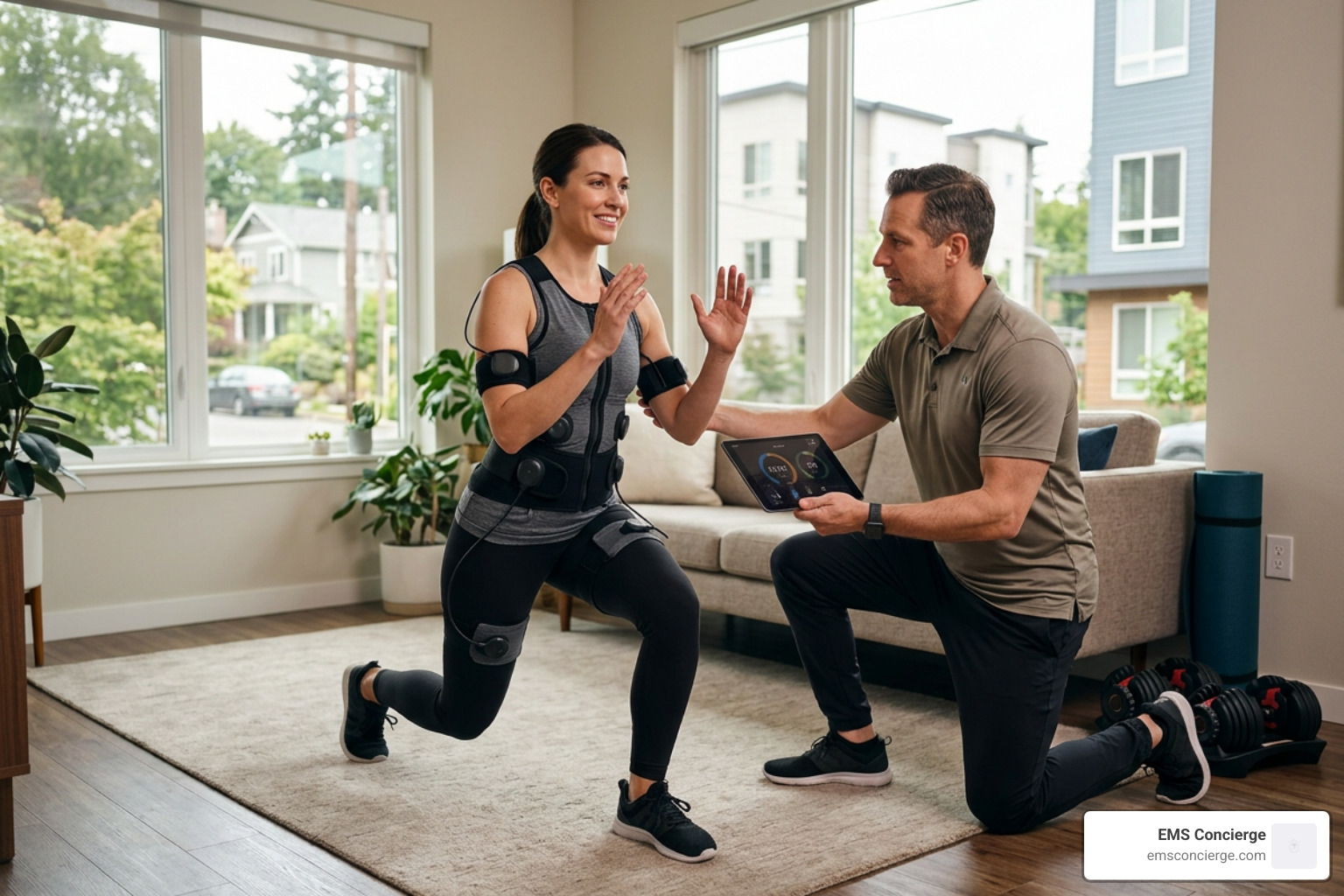
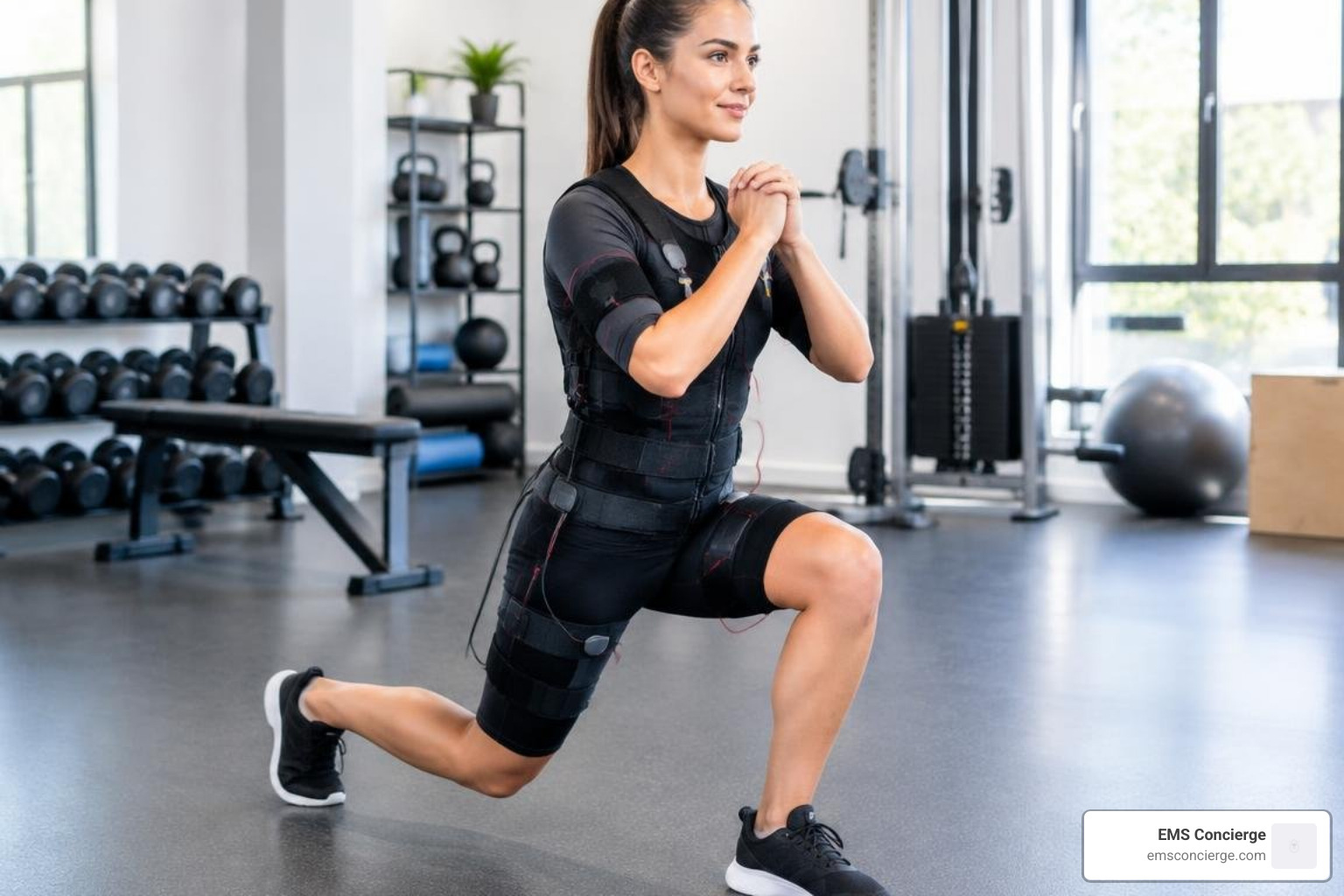
EMS electrical muscle stimulation uses controlled electrical impulses to make your muscles contract while you perform simple, low-impact movements. In a guided workout, the intensity is adjusted to your comfort and ability, helping you work major muscle groups without heavy weights, long gym sessions, or high joint impact.
For busy professionals, the appeal is straightforward:
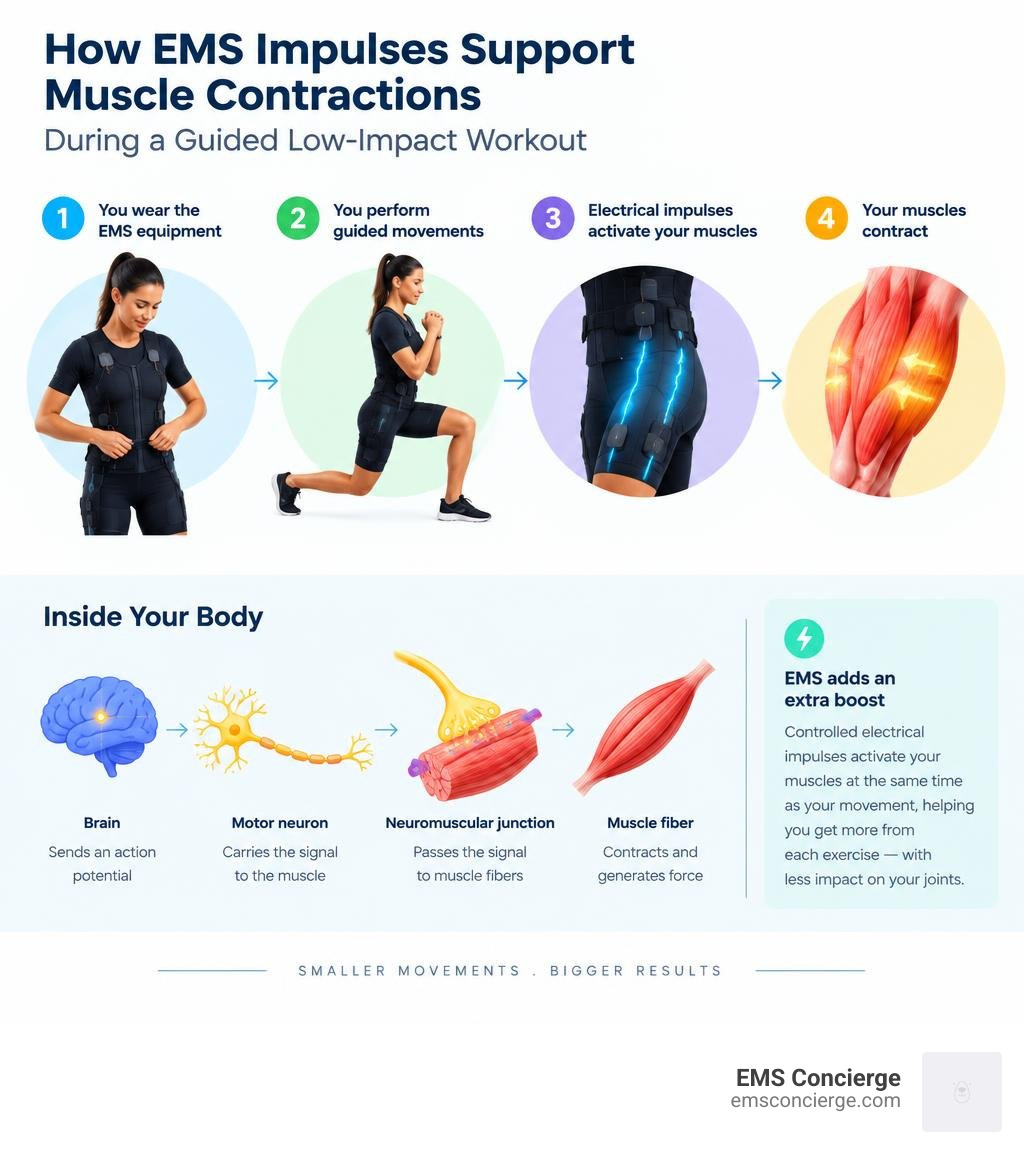
- Wear the EMS equipment and complete guided functional movements.
- Electrical impulses add muscle activation during each movement.
- Keep sessions focused, progressive, and spaced to allow recovery.
EMS is not a shortcut that replaces sound training, nutrition, or recovery. It is a training tool that can complement them. The technology has roots in rehabilitation, where neuromuscular electrical stimulation is used to support muscle re-education and help limit disuse atrophy. Today, supervised fitness EMS applies the same basic principle to efficient strength and conditioning sessions.
This guide explains what EMS does, what the research supports, how it differs from TENS pain-relief devices, and how to use it safely.
The Science Behind EMS Electrical Muscle Stimulation
To appreciate how modern electro-stimulation works, we need to look at how muscles fire naturally. In a standard voluntary contraction, your brain generates an action potential that travels down the central nervous system through motor neurons to the neuromuscular junction. This signal prompts your muscle fibers to shorten and generate force.
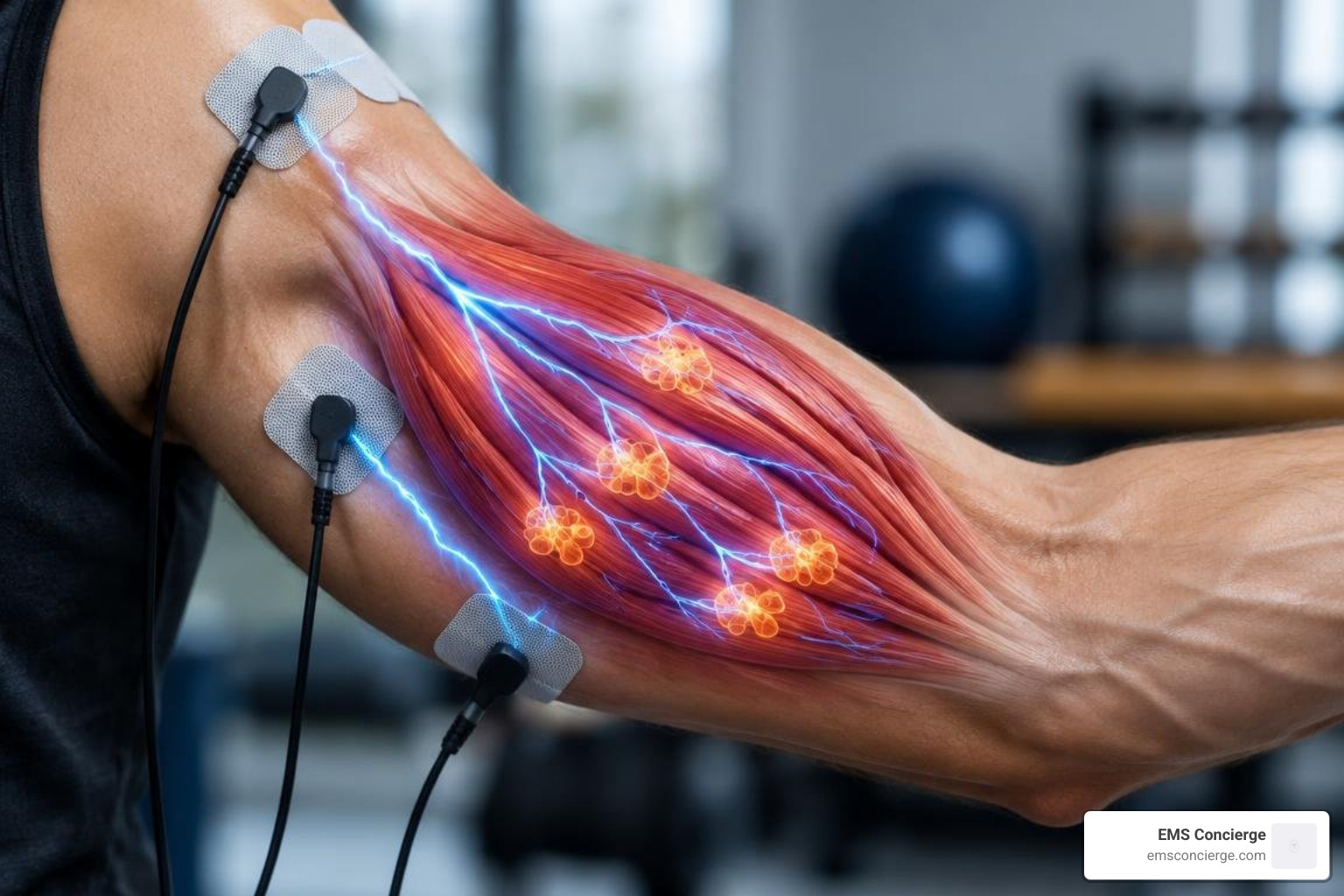
During an EMS session, external electrodes deliver targeted micro-current impulses directly through the skin surface. These impulses bypass the brain's initial pathway and depolarize the motor nerve axons underneath, triggering muscle contractions directly. If you want a deeper dive into these physiological mechanisms, our guide to EMS basics and physiology explains the core neurology in simple terms.
Research documented throughout the scientific history of Electrical muscle stimulation shows that EMS engages peripheral nerves while activating corticomotor pathways in the brain. This dual peripheral-and-central activation produces meaningful neuromuscular adaptations without overloading your structural joints.
Historical Evolution from Soviet Sports Science to Modern Workouts
The roots of electrical stimulation trace back centuries. In 1761, Italian physician Luigi Galvani discovered bioelectricity when an electrical spark caused a dissected frog's leg to twitch.
By the 1960s and 1970s, sports scientists in the Soviet Union began applying electrical stimulation to elite athletes, documenting force gains of up to 40% in targeted muscle groups. While those early experiments proved the raw capability of the technology, the machines were bulky, uncomfortable, and reserved almost exclusively for Olympic training camps and clinical rehabilitation wards.
Over the past two decades, hardware advances, precise frequency calibration, and ergonomic full-body suits have turned this clinical science into an accessible, comfortable fitness modality used across the globe.
How EMS Electrical Muscle Stimulation Activates Deep Muscle Fibers
In traditional strength training, your body recruits muscle fibers according to the Henneman Size Principle:
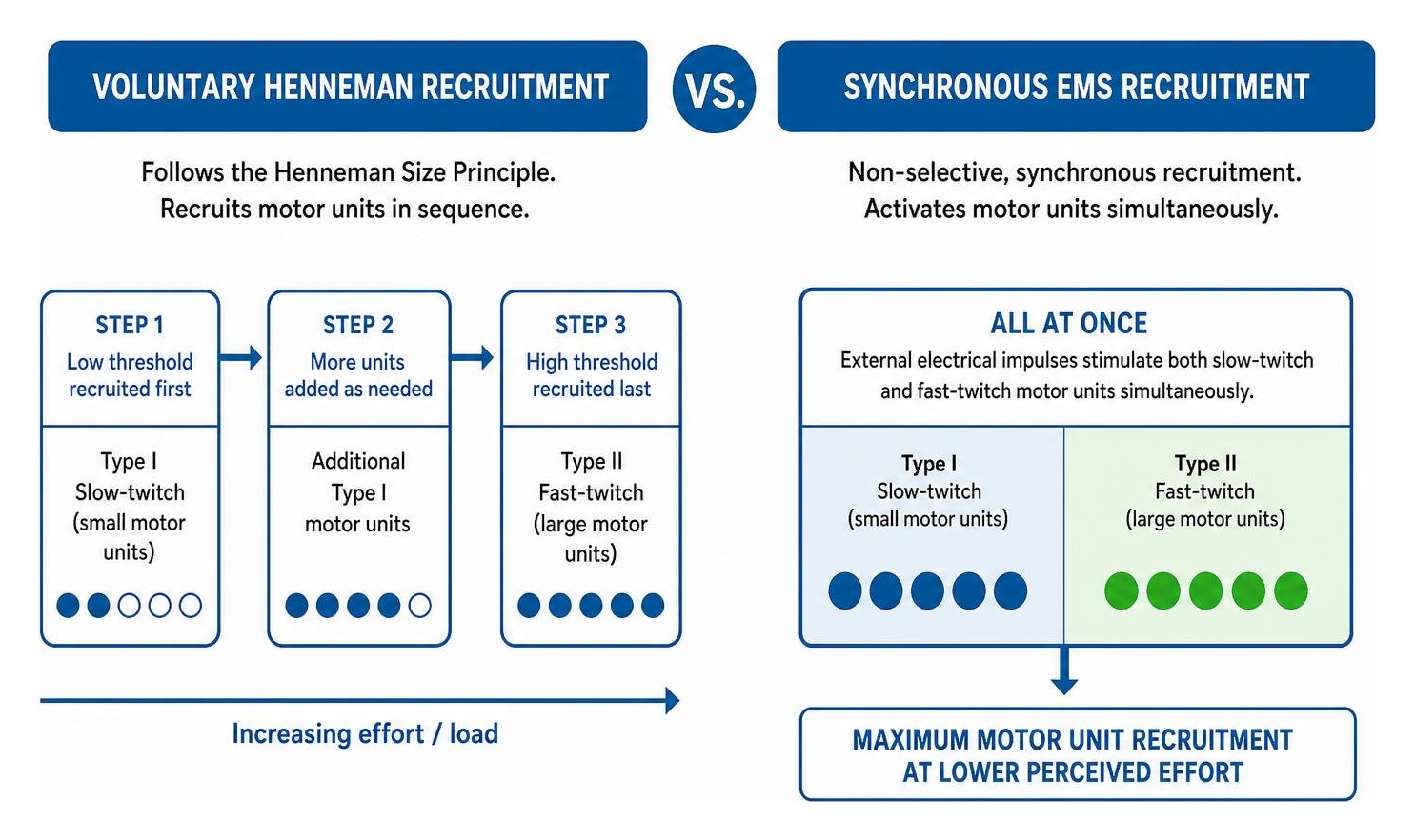
Under normal conditions, your central nervous system recruits small, fatigue-resistant Type I (slow-twitch) fibers first. It only calls upon large, powerful Type II (fast-twitch) fibers when loads become exceptionally heavy or movements become explosive.
EMS operates differently:
- Non-selective, synchronous recruitment: External electrical impulses stimulate both slow-twitch and fast-twitch motor units simultaneously, even at lower perceived effort levels.
- Deeper postural engagement: Hard-to-reach stabilizer muscles (such as deep core musculature and pelvic floor stabilizers) contract alongside superficial muscle groups.
- Enhanced neural drive: Repeated external stimulation trains your nervous system to activate a higher percentage of motor units during future voluntary workouts.
Core Fitness Applications of EMS Technology
Modern electro-muscle stimulation serves distinct training goals depending on how frequency, pulse width, and functional exercises are combined.
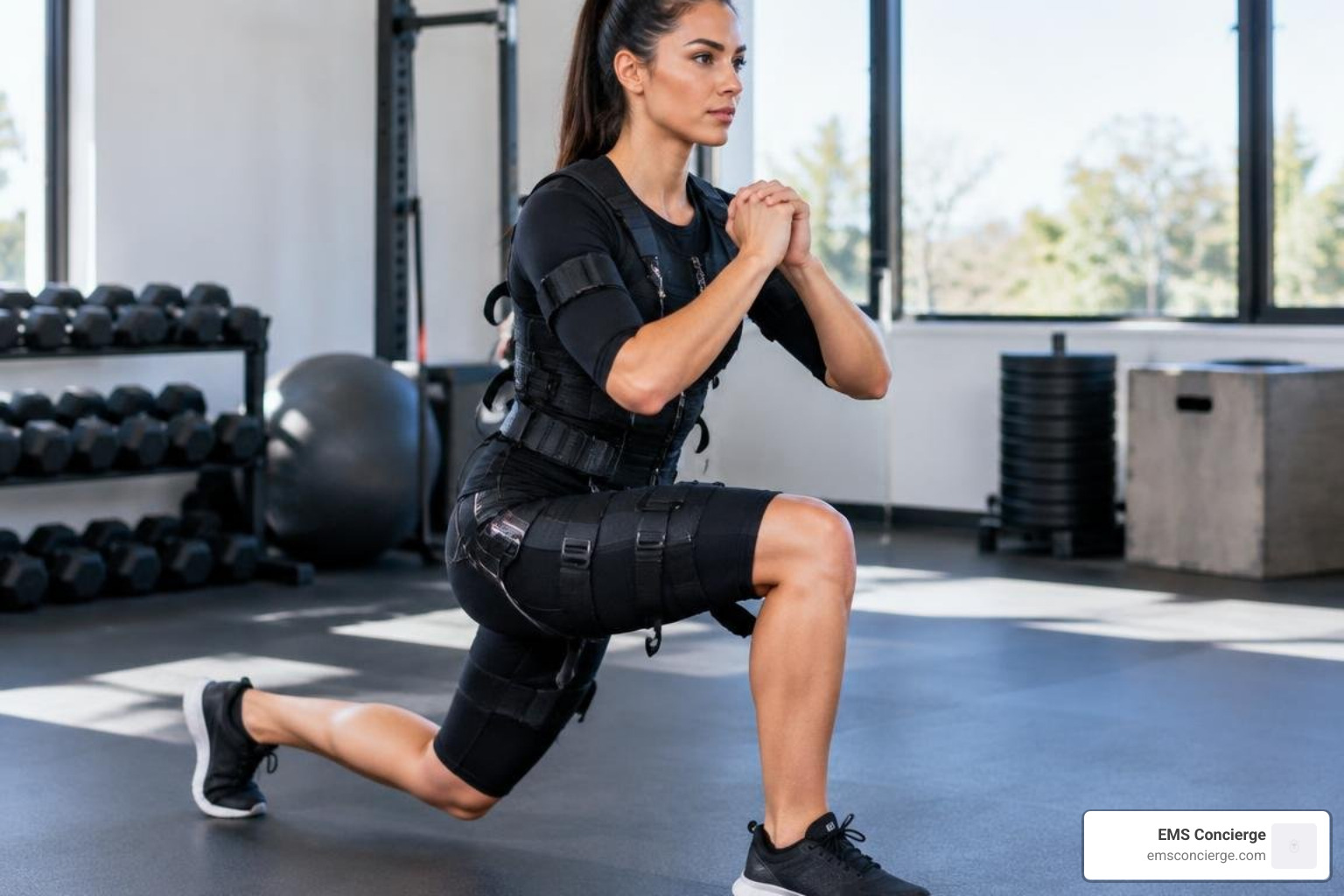
Athletic Performance, Strength Gains, and Active Recovery
High-performance athletes use targeted stimulation to build explosive strength, improve sprint mechanics, and accelerate tissue recovery. A 2011 systematic review published in the Journal of Strength and Conditioning Research confirmed that EMS can produce strength and power improvements comparable to traditional resistance training.
We frequently program specialized protocols for different training phases:
- Maximal Strength & Hypertrophy: Higher frequencies (70 Hz – 100 Hz) with short duty cycles trigger intense muscular contractions, recruiting fast-twitch fibers to increase structural density.
- Capillarisation & Endurance: Lower frequencies (10 Hz – 35 Hz) stimulate localized blood flow and capillary density without muscular exhaustion.
- Active Recovery & Regeneration: Ultra-low frequencies (1 Hz – 8 Hz) act as a rhythmic muscular pump. This enhances venous return, flushes metabolic waste, and reduces perceived delayed onset muscle soreness (DOMS).
For athletes looking to maximize power output while managing cumulative fatigue, exploring targeted EMS training for athletes and high performers offers an effective edge.
Joint-Friendly Conditioning and Muscle Disuse Atrophy Prevention
For time-pressed executives, older adults, or individuals recovering from joint strain, EMS offers high-yield muscle activation without orthopedic wear and tear.
Because resistance is created through electrical impulses rather than heavy external loads, your spine, knees, and shoulders experience zero compressive stress. Clinical evaluations—including a 2016 Cochrane review on neuromuscular electrical stimulation—highlight its value in maintaining quadriceps strength and overall functional capacity when physical limitations prevent heavy lifting.
For professionals balancing intense work schedules, customized EMS training for busy professionals delivers full-body conditioning in a fraction of the time required by conventional gym routines.
EMS Electrical Muscle Stimulation and Fitness Training: Understanding the Differences
A frequent point of confusion is how fitness EMS relates to everyday medical devices like TENS units or traditional gym training.
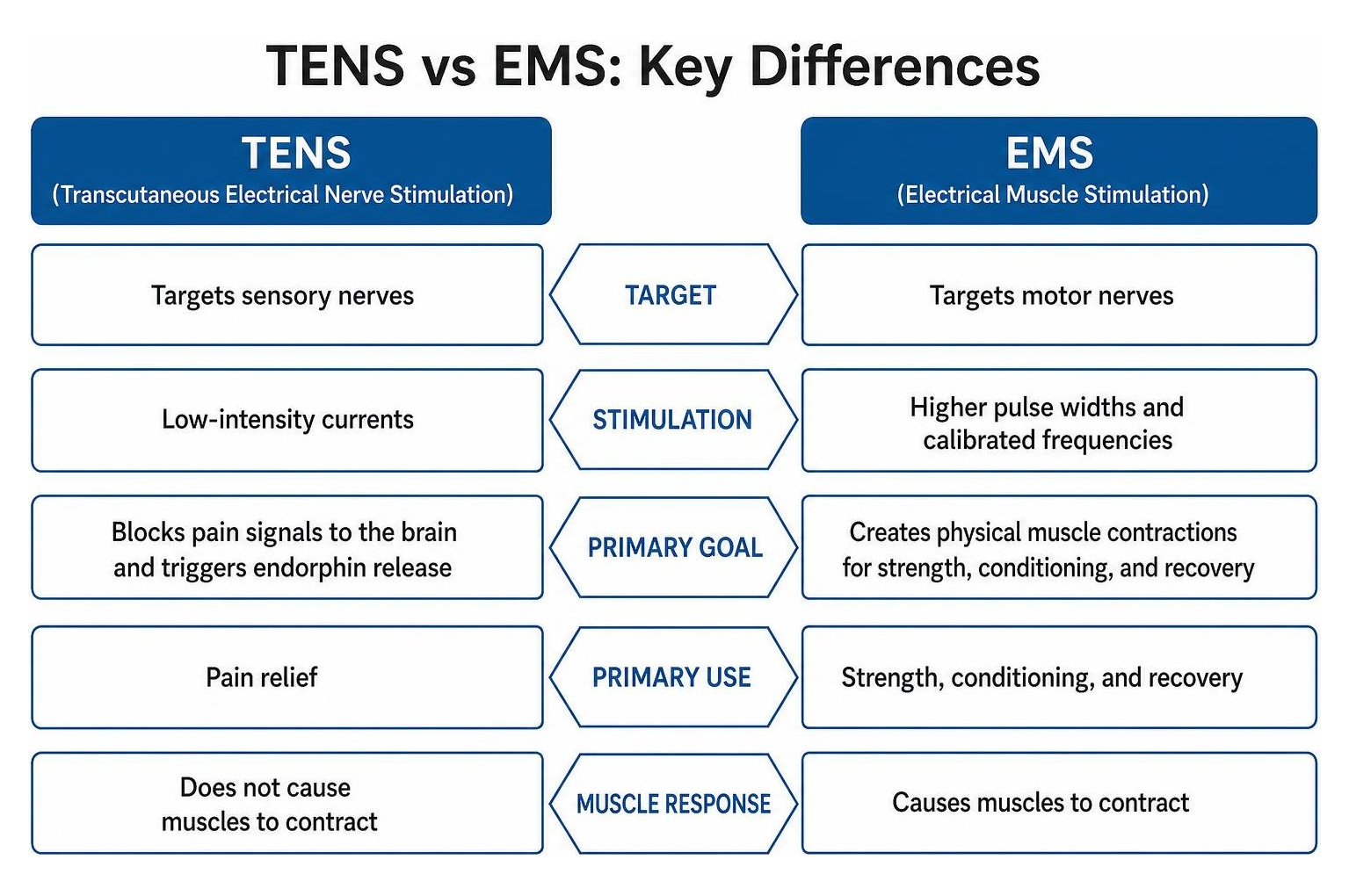
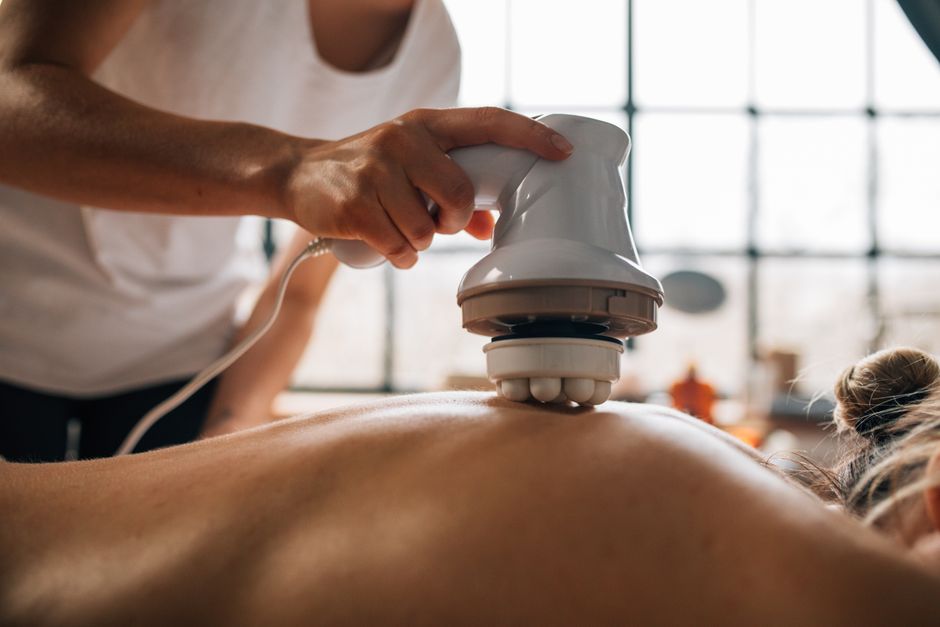
- TENS (Transcutaneous Electrical Nerve Stimulation): Targets sensory nerves using low-intensity currents. Its primary goal is blocking pain signals traveling to the brain and triggering endorphin release. It does not cause muscles to contract.
- EMS (Electrical Muscle Stimulation): Targets motor nerves using higher pulse widths and calibrated frequencies to create physical muscle contractions for strength, conditioning, and recovery.
To see how these modalities compare side by side:
| Feature / Metric | TENS Therapy | Localized Consumer EMS | Full-Body Supervised EMS |
|---|---|---|---|
| Primary Goal | Pain management | Spot muscle activation / recovery | Comprehensive full-body strength & conditioning |
| Nerve Target | Sensory nerve fibers | Motor nerve fibers | Motor nerve fibers across 10+ muscle zones |
| Physical Sensation | Tingling, buzzing sensation | Visible localized twitch / contraction | Synchronized full-body contraction with active movement |
| Typical Frequency | 80 Hz – 150 Hz | 1 Hz – 120 Hz | 7 Hz (recovery) to 85 Hz (strength) |
| Joint Load | None | None | Minimal / Bodyweight only |
| Session Format | 15–60 min passive wear | 15–30 min spot application | 20 min guided functional workout |
Understanding how EMS compares to traditional workouts highlights why full-body electro-stimulation serves as an efficient complement to conventional fitness routines.
Best Practices, Safety Protocols, and Session Guidelines
To get the most out of your training, safety, proper equipment handling, and qualified coaching are essential.
Optimizing Your EMS Electrical Muscle Stimulation Routine
Every effective workout follows a structured process:
- Hydration & Preparation: Drink 16–20 oz of water roughly 30 minutes before training. Muscle tissue contains over 70% water; proper hydration ensures efficient electrical conductivity and reduces muscle fatigue.
- Electrode Calibration: Ensure electrode pads are clean, well-damped, and placed directly over primary motor points.
- Progressive Intensity Scaling: Start each movement channel at a baseline setting and ramp up the impulse depth gradually as your muscles adapt.
- Structured Recovery: Leave at least 48 to 72 hours between intense strength-focused EMS sessions to allow muscle tissue to repair and rebuild.
If you are stepping into a session for the first time, our beginner's guide to EMS training sessions outlines what to wear, what sensations to expect, and how to prepare. For a closer look at our mobile, trainer-guided service, read how a typical guided EMS session works.
FDA Regulations, Contraindications, and Device Safety Standards
The U.S. Food and Drug Administration (FDA) regulates electrical muscle stimulators carefully. Over-the-counter (OTC) devices are cleared specifically for muscle toning and conditioning, while clinical devices require medical oversight for conditions like muscle re-education or venous thrombosis prevention. Reviewing the importance of FDA-cleared EMS equipment helps ensure you are using certified, professional-grade technology.
Core Contraindications:
- Cardiac pacemakers, defibrillators, or implanted electrical devices
- Pregnancy
- Active epilepsy or seizure disorders
- Severe circulatory disorders or active deep vein thrombosis (DVT)
- Acute bacterial infections, fever, or open skin lesions in the electrode contact area
Frequently Asked Questions About EMS Fitness
Can EMS provide a complete workout?
Yes. When guided by a certified trainer, a 20-minute full-body EMS session engages over 350 muscles simultaneously—including the quadriceps, hamstrings, glutes, core, lats, and chest. Pairing controlled electrical impulses with functional movements (such as squats, lunges, and core rotations) creates a complete strength and conditioning stimulus without requiring heavy free weights.
How many times per week should you do EMS workouts?
We recommend 1 to 2 sessions per week. Because EMS recruits deep fast-twitch muscle fibers synchronously across multiple muscle groups, the systemic recovery demand is similar to an intense heavy lifting session. Spacing your workouts 3 to 4 days apart gives your central nervous system and muscle tissue adequate time to adapt and grow stronger.
Is electrical muscle stimulation safe for beginners?
Yes, provided the session is supervised by a certified trainer who calibrates the impulse intensity to your personal fitness level. Beginners start with gentle pulse depths and simple isometric holds, allowing the body to adapt progressively with zero joint impact.
Conclusion
EMS electrical muscle stimulation bridges the gap between sports science, physical rehabilitation, and modern fitness. By activating deep motor units without joint strain, it provides an efficient, accessible way to build functional strength, support recovery, and stay consistent.
At EMS Concierge, we bring this training right to your door. Our mobile fitness service delivers 20-minute, trainer-guided workouts using professional-grade Miha Bodytec equipment in the comfort of your home or office.
Ready to experience high-efficiency strength training tailored to your lifestyle? Book your session and experience professional EMS training in Santa Monica today.