Why Exercise Recovery Drives Strength, Performance, and Injury Prevention
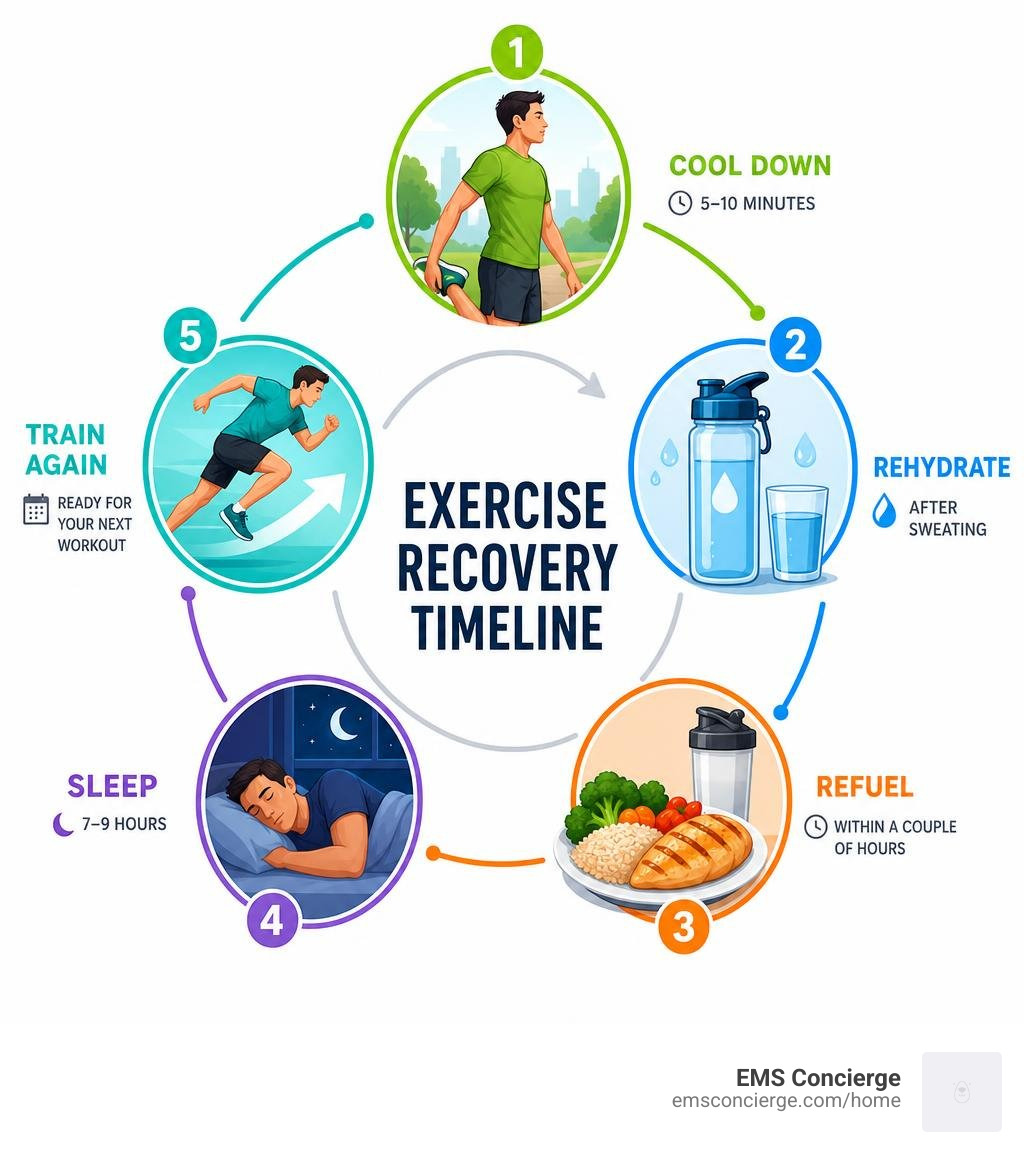
Exercise recovery is the work you do after training to help your body repair, refuel, and prepare for the next session. Start with a short cool-down, drink enough fluid, eat a protein-and-carbohydrate meal, and protect 7-9 hours of sleep. Then adjust your next workout based on soreness, energy, and performance.
For a busy professional, the goal is not to spend hours chasing recovery hacks. Focus on the basics that deliver the most value:
- Cool down with 5-10 minutes of easy movement.
- Rehydrate and replace electrolytes after heavy sweating.
- Eat 20-40 grams of high-quality protein with carbohydrates within the next couple of hours.
- Sleep consistently.
- Take lighter or full rest days before fatigue becomes chronic.
Hard exercise creates temporary muscle damage, uses stored carbohydrate energy called glycogen, and stresses the nervous system. Recovery is when muscle tissue rebuilds and adapts. Without it, workouts can feel harder, results can stall, and injury risk can rise.
The good news: effective recovery does not need to be complicated. This guide separates proven fundamentals from optional tools, so you can recover well while keeping your training efficient and joint-friendly.
The Physiology of Exercise Recovery and Muscle Repair
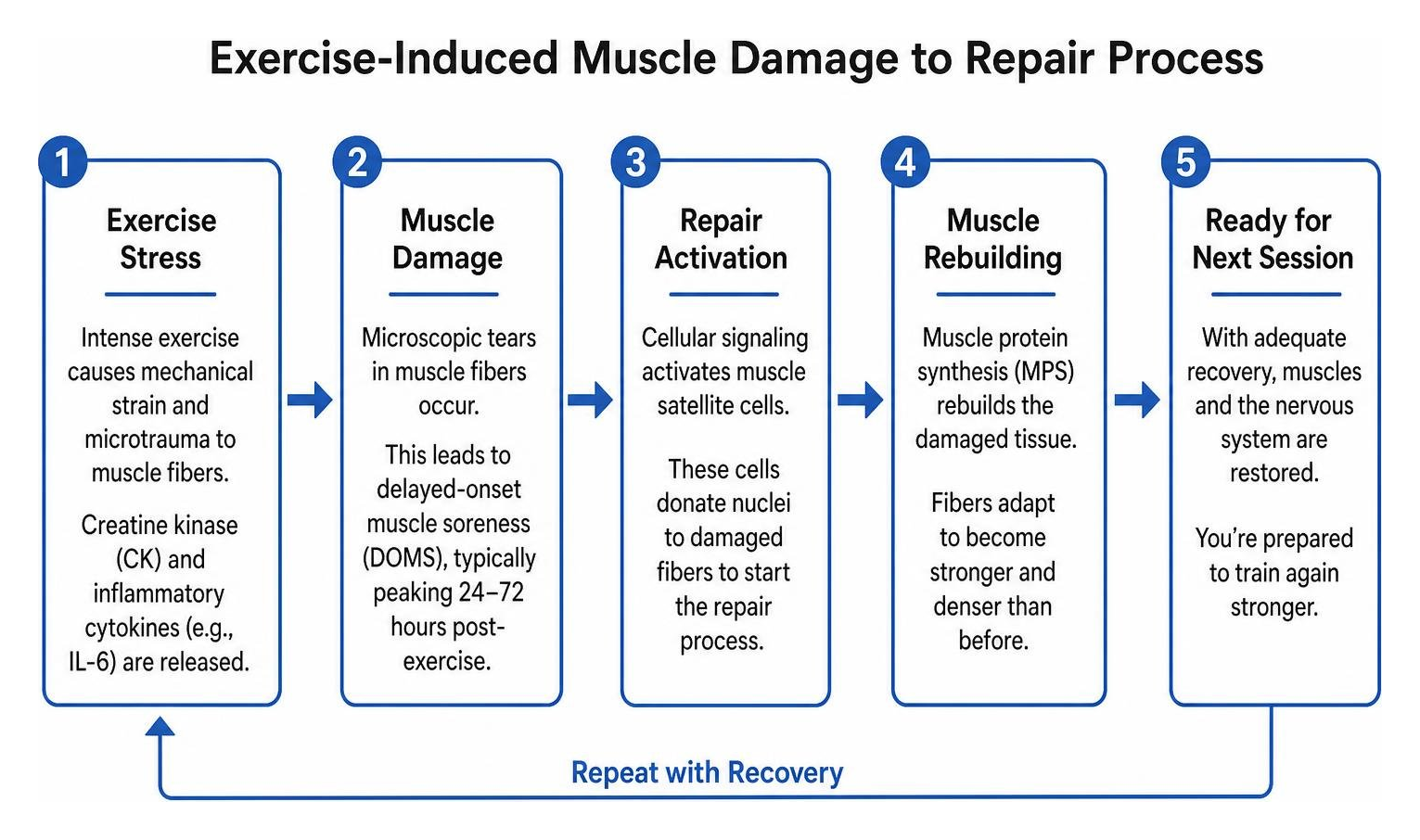
When we push through an intense session, our muscles experience structural stress. This process begins with mechanical strain and microtrauma to muscle fibers, especially during eccentric contractions (such as the lowering phase of a squat or bicep curl). This damage triggers an influx of biochemical markers into the bloodstream, notably creatine kinase (CK) and inflammatory cytokines such as interleukin-6 (IL-6).
These microscopic tears lead to delayed-onset muscle soreness (DOMS), which typically peaks between 24 and 72 hours post-exercise. While soreness can feel inconvenient, it signals the start of the repair cycle. Cellular signaling activates muscle satellite cells—specialized stem cells that donate nuclei to damaged fibers, allowing muscle protein synthesis (MPS) to rebuild the tissue stronger and denser than before.
Managing your overall physiological stress—known as allostatic load—ensures this adaptation occurs efficiently. Recovery is not a passive waiting game; it is an active biological repair cascade that requires specific physiological inputs at defined windows.
Immediate Post-Workout Steps and the Cool-Down Phase
Stopping abruptly after strenuous activity can leave blood pooled in the extremities and cause sudden shifts in blood pressure. An active cool-down lasting 5 to 10 minutes helps transition your body back toward homeostasis:
- Heart rate deceleration: Light aerobic movement gently lowers cardiac output.
- Metabolic waste removal: Gentle muscular contractions assist venous return, speeding the clearance of metabolic byproducts from muscle beds.
- Dynamic movement: Incorporating light mobility and dynamic stretching helps maintain functional range of motion while muscles remain warm.
Static stretching can be relaxing, but research shows dynamic stretching provides light compression that supports circulation without overstretching irritated tissues.
Sleep Architecture and Hormonal Regulation in Exercise Recovery
Sleep is the ultimate physiological reset button. During slow-wave sleep (the deepest non-REM stages), the pituitary gland secretes human growth hormone (HGH). HGH stimulates amino acid uptake and cellular repair throughout the musculoskeletal system.
At the same time, deep sleep facilitates cortisol suppression. Elevated cortisol is catabolic, breaking down proteins and interfering with tissue reconstruction. Most adults need between 7 and 9 hours of quality sleep nightly to support this endocrine balance.
To optimize your sleep environment:
- Keep the room dark and cool (around 65–68°F / 18–20°C).
- Avoid blue-light screens 60 minutes before bed.
- Practice slow, diaphragmatic breathing to activate parasympathetic signaling.
Nutritional Strategies and Hydration for Accelerated Muscle Healing
Proper recovery nutrition provides the substrate for tissue regeneration. An effective blueprint is The 4R’s Framework of Nutritional Strategies for Post-Exercise Recovery, which structures post-workout fueling into four distinct pillars:
- Rehydrate: Restore fluid and electrolyte balance.
- Refuel: Replenish depleted glycogen stores with targeted carbohydrates.
- Repair: Supply high-quality protein to support muscle protein synthesis (Bonilla et al., 2020).
- Rest: Protect sleep architecture and minimize systemic stress.
Rehydration, Electrolyte Balance, and Fluid Retention
Sweat rates vary widely based on genetics, ambient temperature, and exercise intensity—ranging from 0.3 liters to over 2.4 liters per hour. Rehydrating effectively requires replacing 125% to 150% of the total fluid lost during exercise over the subsequent 2 to 4 hours.
Drinking plain water alone in large quantities can dilute blood sodium, triggering increased urination and reducing fluid retention. Replacing sodium (at 20–30 mEq/L) and potassium ensures that intracellular and extracellular fluid compartments rebalance.
A clinical trial evaluating dairy milk versus carbohydrate-electrolyte recovery drinks demonstrated that dairy milk achieved superior fluid retention (82.1% vs. 74.3%) due to its natural blend of sodium, potassium, and slow-digesting proteins. Milk-based solutions have a higher Beverage Hydration Index (BHI) than plain water, keeping fluids in your system longer.
Protein Synthesis and Targeted Carbohydrate Timing
Consuming protein promptly initiates muscle remodeling. To maximize muscle protein synthesis, aim for 20 to 40 grams of protein containing approximately 2.5 to 3 grams of leucine (the amino acid that triggers the mTOR pathway). Research indicates that a total daily protein intake of roughly 1.6 to 2.2 grams per kilogram of body weight is optimal for maximizing muscle adaptation.
Carbohydrates are equally critical. Glycogen resynthesis occurs rapidly during the first few hours post-workout:
- For rapid refueling between sessions spaced less than 24 hours apart, ingest 1.0 to 1.2 grams of carbohydrate per kilogram of body weight per hour for the first 4 hours.
- A 2:1 glucose-to-fructose co-ingestion strategy optimizes dual-transporter carbohydrate uptake in the intestines and replenishes both liver and muscle glycogen.
A comprehensive review of the timing of nutritional supplements on post-exercise fatigue recovery confirms that ingesting combined protein and carbohydrates immediately or within two hours accelerates glycogen storage and lessens perceived fatigue (Cheng et al., 2025). Furthermore, evidence outlined in Nutritional Strategies to Improve Post-exercise Recovery and Subsequent Exercise Performance highlights that consuming 30 to 40 grams of slow-digesting protein (like casein) before bed sustains muscle protein synthesis throughout the night.
Functional Foods and Micronutrient Compounds
Beyond basic macronutrients, functional foods offer natural anti-inflammatory and antioxidant properties that help manage secondary exercise-induced damage.
A detailed overview of functional foods in post-exercise recovery nutrition and evidence in Nutritional Compounds to Improve Post-Exercise Recovery highlight two standout dietary additions (O'Connor et al., 2022):
- Tart Cherry Juice: Rich in anthocyanins and polyphenols, consuming ~30 mL of concentrate twice daily for several days surrounding intense training blunts inflammatory cascades, reducing DOMS by up to 15–20%.
- Omega-3 Fatty Acids: Consuming 2 grams daily of EPA/DHA helps regulate the secondary inflammatory phase, speeding recovery of force generation after heavy eccentric loading.
- Bioavailable Curcumin: At doses around 400 mg daily, curcumin helps lower circulating TNF-α and inflammatory markers without blunting normal training adaptations.
Comparative Analysis of Popular Physical Recovery Modalities

Many athletes turn to physical modalities to relieve soreness and manage fatigue. However, their scientific efficacy varies.
A meta-analysis evaluated the comparative impact of several popular techniques across clinical trials:
| Recovery Technique | Effect Size on DOMS (Hedges' g) | Effect Size on Perceived Fatigue (Hedges' g) | Optimal Application Protocol |
|---|---|---|---|
| Sports Massage | -2.26 (Large) | -2.55 (Large) | 20–30 min session applied within 2 hours post-workout |
| Cold Water Immersion (CWI) | -0.62 (Moderate) | -0.45 (Small-Moderate) | 10–15 min immersion at 11–15°C (52–59°F) |
| Compression Garments | -0.44 (Moderate) | -0.38 (Small-Moderate) | Continuous wear for 12–24 hours post-workout |
| Active Recovery (Light Cardio) | -0.35 (Small) | -0.12 (Negligible) | 10–15 min cycling or walking at <40% VO2 max |
| Cryotherapy Chambers | -0.31 (Small) | -0.20 (Small) | 2–3 min exposure at -110°C to -140°C |
| Passive Stretching Alone | -0.10 (Negligible) | -0.05 (Negligible) | Gentle static holds post-session |
Active vs. Passive Modalities in Exercise Recovery
Active recovery involves low-intensity, non-fatiguing movement (such as light walking, swimming, or easy cycling at less than 40% of VO2 max). It boosts local blood flow, accelerates metabolite transport, and reduces sensations of muscle stiffness without adding mechanical stress.
Passive recovery means full rest. It is critical for central nervous system (CNS) restoration and parasympathetic nervous system activation. When allostatic load from work, life, and intense training accumulates, passive rest days allow systemic hormonal and immune pathways to reset.
Evidence-Based Recovery Modalities: Massage, Immersion, and EMS
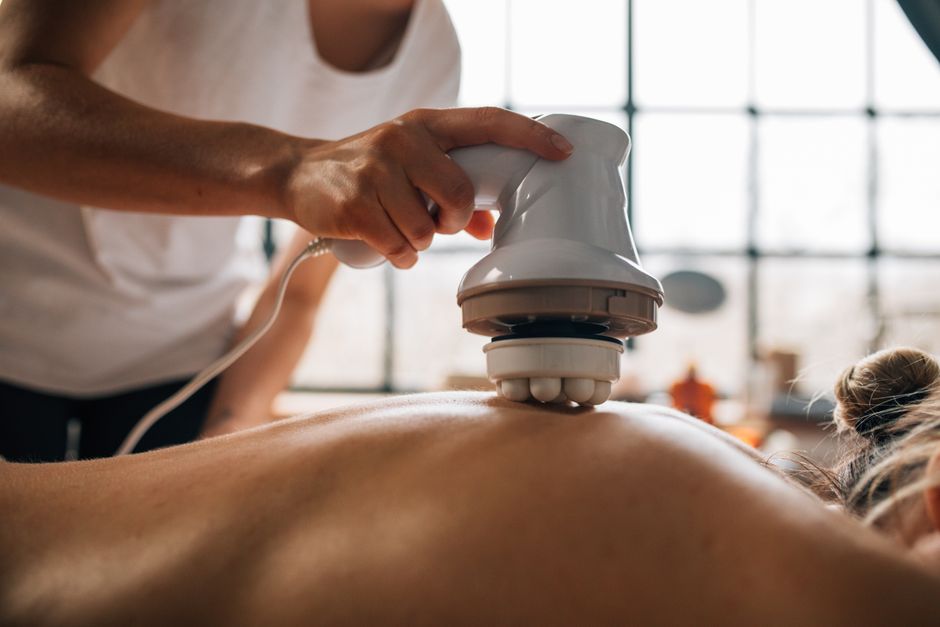
- Sports Massage: Research shows that massage is the most potent intervention for reducing DOMS (g = -2.26) and fatigue (g = -2.55) (Dupuy et al., 2018). It aids mechanotransduction, eases muscle tension, and stimulates beta-endorphin release.
- Cold Water Immersion (CWI): CWI induces vasoconstriction, which blunts acute local edema and dulls pain perception. While useful during tournaments or high-frequency competitions, avoid frequent CWI directly after hypertrophy-focused resistance training, as it can blunt anabolic signaling pathways.
- Pneumatic Compression Garments: These provide mechanical pressure that reduces interstitial fluid pooling, offering modest relief from heaviness and soreness.
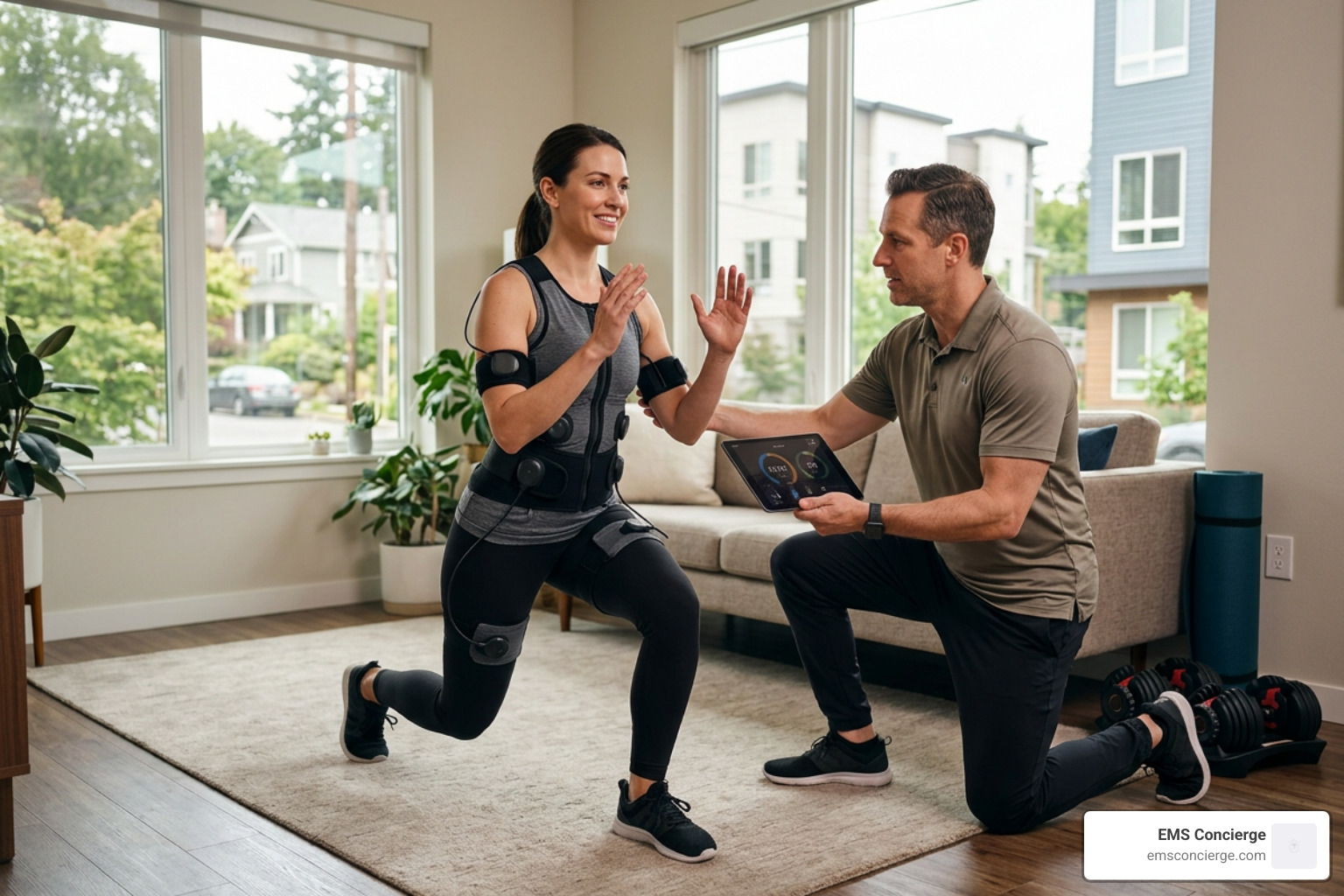
- Electro-Muscle Stimulation (EMS): Low-frequency electro-stimulation contracts muscle fibers without loading tendons or joints. It acts as an active muscular pump that enhances localized microcirculation. At EMS Concierge, we integrate low-frequency recovery programs alongside our mobile, 20-minute workout sessions. For clients comparing fitness methods, our guide on in-home EMS training explains how targeted muscle activation delivers deep muscular stimulation while sparing joint stress.
Preventing Overtraining Syndrome and Building a Sustainable Weekly Schedule

When hard training outpaces recovery over extended periods, athletes risk entering non-functional overreaching and, ultimately, overtraining syndrome (OTS). Studies indicate that overtraining syndrome affects roughly 60% of elite athletes and up to 30% of non-elite endurance athletes during their careers.
OTS disrupts the autonomic nervous system, blunts athletic performance, and impairs endocrine function.
Identifying Warning Signs of Systemic Fatigue
Catching overtraining early prevents long-term burnout. Key physiological and psychological warning signs include:
- Unexplained performance drops: Inability to match typical workloads or output.
- Autonomic imbalance: Elevated resting heart rate upon waking or depressed heart rate variability (HRV).
- Sleep disturbances: Difficulty falling asleep despite feeling physically exhausted.
- Persistent musculoskeletal pain: Aches that do not subside within 72 hours.
- Mood changes: Irritability, low motivation, and elevated perceived exertion during routine efforts.
- Frequent minor illnesses: Suppressed mucosal immunity leading to upper respiratory tract infections.
When surveyed, competitive athletes consistently report general fatigue, persistent aches, and sudden performance drops as their primary signals to schedule an immediate rest day.
Periodization and Population-Specific Recovery Adjustments
A structured weekly schedule should balance high-intensity sessions with lighter recovery days. The American Council on Exercise (ACE) recommends scheduling a full rest day every 7 to 10 days for individuals performing high-intensity exercise.
Adjustments for Master Athletes (Ages 50+)
As we age, basal muscle protein synthesis slows, total body water decreases, and collagen tissues lose elasticity. Athletes over 50 benefit from:
- Increasing protein intake to 1.2–1.5 g/kg/day to overcome anabolic resistance.
- Spacing intense bouts with 48 to 72 hours of recovery for the same muscle groups.
- Integrating low-impact modalities (like swimming or EMS) to stimulate muscles without excessive joint wear.
Adjustments for Youth and Adolescent Athletes
Younger athletes undergo growth spurts that alter lever lengths and neuromuscular coordination. They need:
- At least 8 to 10 hours of nightly sleep.
- Periodic rest weeks built into seasonal sports schedules to avoid overuse injuries at growth plates.
- Strict avoidance of sport specialization without dedicated cross-training and recovery intervals.
Frequently Asked Questions About Muscle Recovery
How long does muscle recovery take between workouts?
For moderate workouts, soft tissues typically recover within 24 to 48 hours. Following high-intensity resistance training, heavy eccentric loading, or novel movements, full tissue repair and glycogen replenishment can take 48 to 72 hours. Larger muscle groups (such as the quadriceps and back) generally require longer rest intervals than smaller muscles (like deltoids or calves).
Can you work out with sore muscles?
Light active recovery—such as walking, swimming, or mobility work—is safe with mild delayed-onset muscle soreness and often helps relieve stiffness. However, if you experience sharp, localized, or joint-adjacent pain, or if soreness alters your movement mechanics, take a rest day or train an unaffected muscle group to prevent compensatory injuries.
What is the most effective recovery technique for reducing muscle soreness?
Clinical meta-analyses show that sports massage produces the largest reduction in DOMS (Hedges' g = -2.26) and perceived fatigue (g = -2.55) (Dupuy et al., 2018). Cold water immersion (11–15°C for 10–15 minutes) and pneumatic compression garments are also effective non-invasive alternatives.
Conclusion
Maximizing progress from your fitness routine requires matching the effort of your training with the quality of your recovery. By pairing structured training cycles with proper sleep hygiene, targeted protein and carbohydrate fueling, dynamic cool-downs, and effective physical recovery tools, you protect your body from burnout while building lasting strength.
At EMS Concierge, we believe recovery is a cornerstone of performance. Alongside our private, in-home EMS strength training, we provide targeted recovery stimulation programs using professional Miha Bodytec technology. These sessions enhance blood flow, relieve muscle stiffness, and support recovery in the comfort of your home.
Scientific References
Dupuy O, Douzi W, Theurot D, Bosquet L, Dugué B. "An Evidence-Based Approach for Choosing Post-exercise Recovery Techniques to Reduce Markers of Muscle Damage, Soreness, Fatigue, and Inflammation: A Systematic Review With Meta-Analysis.." Frontiers in physiology, 2018. PMCID PMC5932411. Bonilla DA, Pérez-Idárraga A, Odriozola-Martínez A, Kreider RB. "The 4R's Framework of Nutritional Strategies for Post-Exercise Recovery: A Review with Emphasis on New Generation of Carbohydrates.." International journal of environmental research and public health, 2020. PMCID PMC7796021. O'Connor E, Mündel T, Barnes MJ. "Nutritional Compounds to Improve Post-Exercise Recovery.." Nutrients, 2022. PMCID PMC9736198. Cheng G, Zhang Z, Shi Z, Qiu Y. "An investigation into how the timing of nutritional supplements affects the recovery from post-exercise fatigue: a systematic review and meta-analysis.." Frontiers in nutrition, 2025. PMCID PMC12061868.