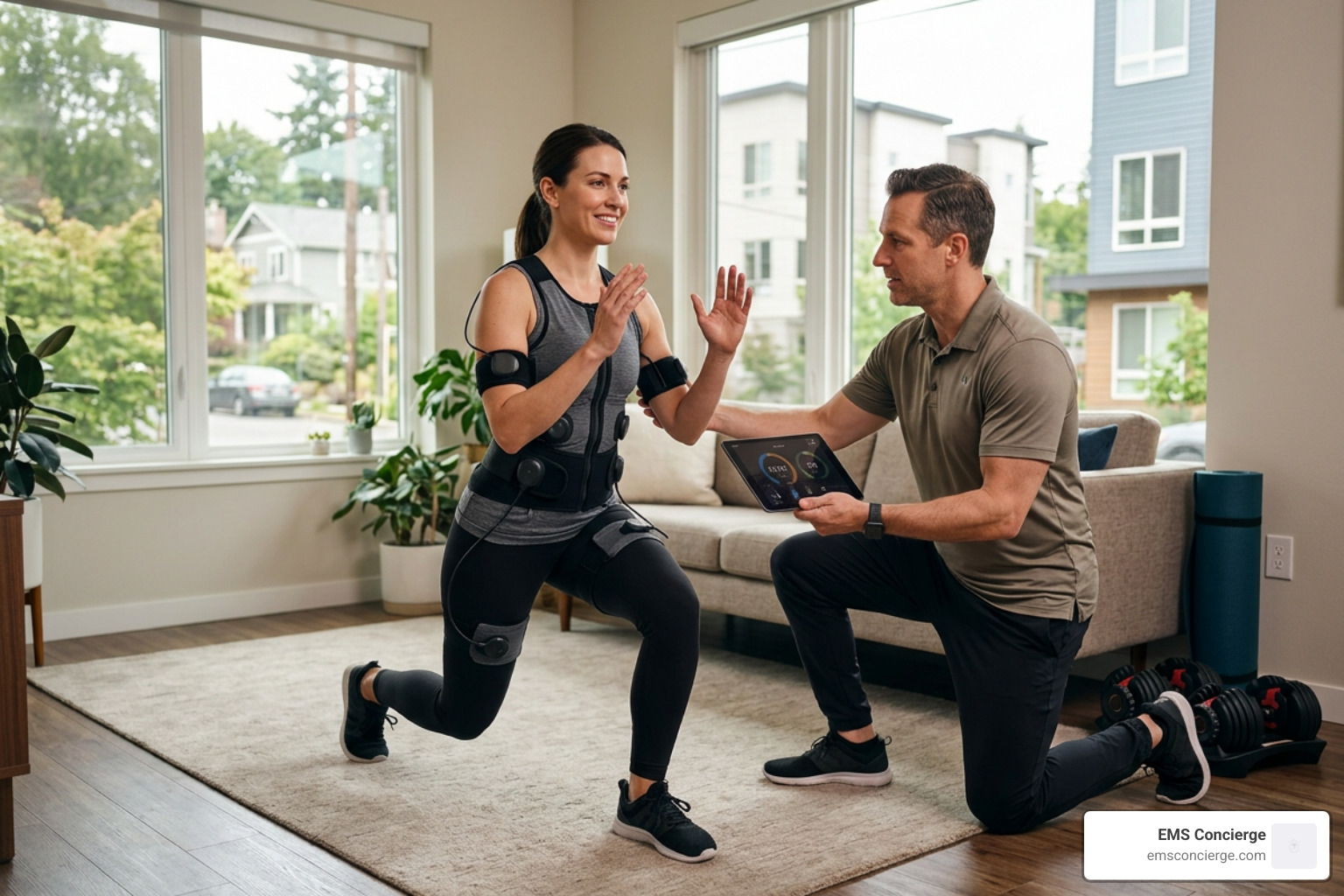
The Science and Mechanisms of In-Home EMS Training
In-home EMS training is a low-impact, highly efficient exercise modality that uses wearable electrode suits to deliver targeted electrical impulses directly to major muscle groups. By activating agonist and antagonist muscles simultaneously without requiring heavy weights, in-home EMS provides a full-body strength and conditioning workout in just 20 minutes while protecting sensitive joints and the spine from mechanical strain.
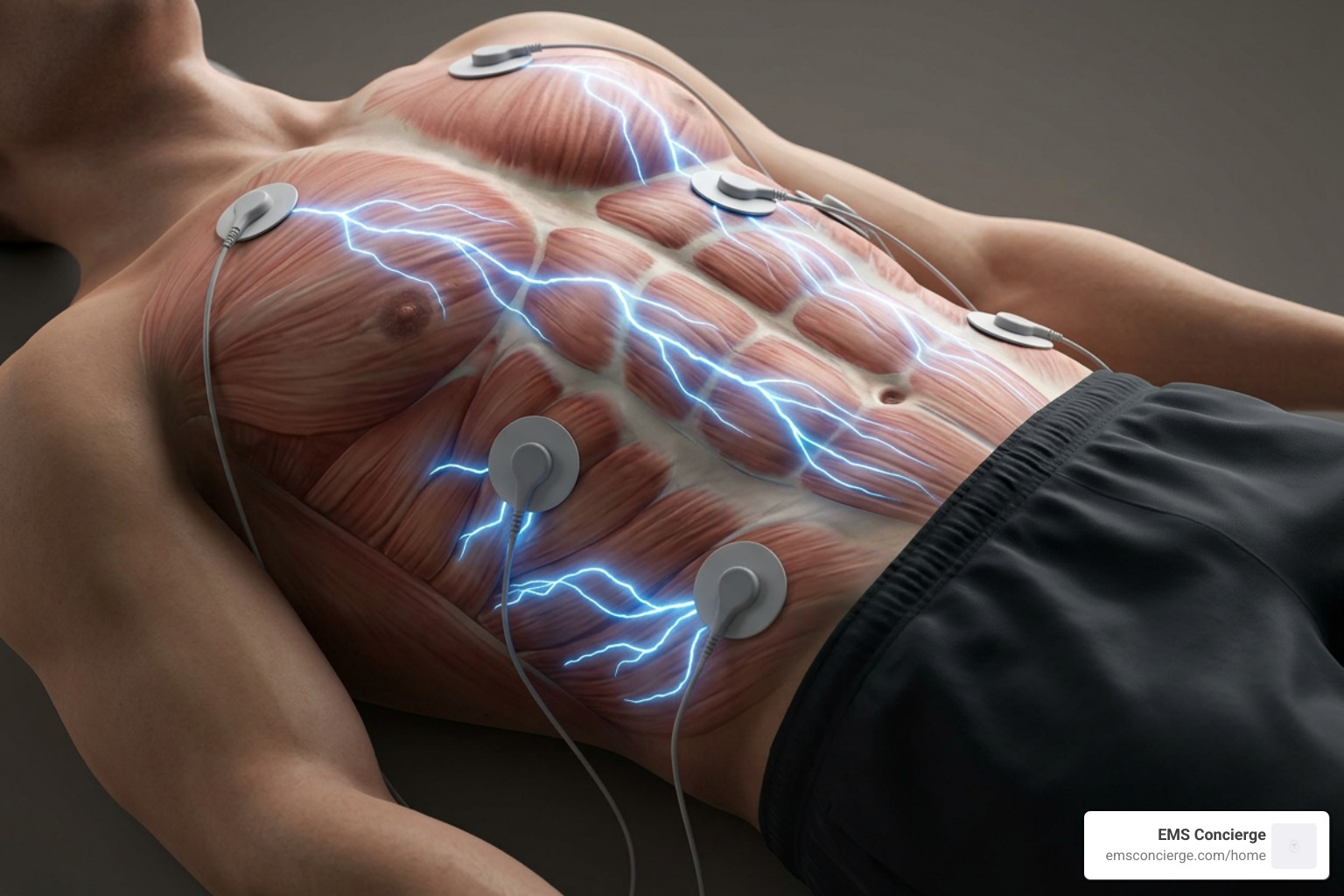
When we move our bodies during conventional exercise, our central nervous system sends electrical action potentials down the spinal cord to our peripheral nerves, which command motor units to contract. Electrical muscle stimulation (EMS) bypasses this central pathway. By applying external electrical impulses directly over targeted muscle bellies, EMS excites the motor neurons beneath the skin, creating involuntary, synchronized contractions.
This direct activation allows us to recruit deep postural stabilizers and peripheral muscle fibers simultaneously. Because the electrical impulse acts directly on the neuromuscular junction, it does not rely on heavy axial loads—such as barbell squats or deadlifts—to create mechanical tension. We achieve profound motor unit recruitment while sparing sensitive joints, spinal discs, and connective tissues from excessive mechanical wear.
How In-Home EMS Training Drives Muscle Hypertrophy and Recovery
In traditional strength workouts, our bodies follow Henneman's size principle, recruiting smaller, slow-twitch (Type-I) muscle fibers first, only tapping into larger, powerful fast-twitch (Type-II) fibers under heavy loads or near muscular exhaustion. EMS alters this recruitment pattern by activating fast-twitch fibers at much lower perceived exertion and without heavy external loads.
Type-II fibers possess the highest potential for muscle hypertrophy and power output. By engaging them directly, we create substantial metabolic demand in a fraction of the time. When programmed at lower frequencies and intensities, EMS shifts from a strength stimulus into an active recovery modality. Gentle rhythmic impulses increase localized blood flow, enhance lymphatic drainage, and flush out metabolic waste products without inducing further micro-tears in the muscle tissue.
Neuromuscular Stimulation: Motor Contraction vs. Sensory Activation
A common point of confusion is the difference between Transcutaneous Electrical Nerve Stimulation (TENS) and Electrical Muscle Stimulation (EMS or NMES). While both use electrical impulses, their mechanisms and goals are distinct.
| Feature | TENS (Sensory Stimulation) | EMS / NMES (Motor Recruitment) |
|---|---|---|
| Primary Target | Sensory nerve fibers (A-beta) | Motor nerve fibers (alpha motor neurons) |
| Main Objective | Pain modulation and symptomatic relief | Muscle recruitment, strength, and active recovery |
| Contraction Type | Minimal to none (tingling sensation) | Visible, robust muscle contractions |
| Frequency Range | Typically 80–150 Hz | Typically 1–100 Hz (customized to strength/recovery) |
| Typical Application | Chronic joint pain, acute injury comfort | Hypertrophy, endurance, rehabilitation, core conditioning |
TENS operates on the "Pain Gate Theory," sending non-painful sensory signals to the spinal cord to block pain signals from reaching the brain. EMS, by contrast, targets motor nerves to cause mechanical muscle work, making it the proper technology for strength building, neuromuscular re-education, and physical conditioning.
In-Home EMS vs. Traditional Strength Training and Alternatives
Conventional resistance training relies on gravity and external loads—dumbbells, kettlebells, and machines—to generate tension across joints. While highly effective, traditional lifting places continuous compressive and shearing forces on the spine, knees, and shoulders.

In-home EMS training provides an alternative by decoupling muscular effort from joint loading. Rather than lifting a 200-pound barbell to fatigue your quadriceps and glutes, calibrated electrical impulses stimulate those same muscle fibers while you perform gentle, bodyweight movement patterns. This approach dramatically reduces the risk of acute strain or chronic overuse injuries while matching the metabolic and muscular stimulus of a conventional gym session.
Workout Duration and Time Efficiency
A standard gym routine requires 45 to 75 minutes of lifting, resting between sets, and rotating across multiple machines to hit every major muscle group. In contrast, whole-body EMS stimulates agonist and antagonist muscle groups simultaneously—such as the quadriceps and hamstrings, or chest and upper back—across the entire body.
Because every major muscle group contracts in unison during each impulse cycle, a complete workout takes just 20 minutes. This level of time efficiency allows busy individuals to achieve comprehensive weekly volume, progressive overload, and high metabolic conditioning without spending hours commuting to and navigating a gym.
Joint Impact and Pain Management
For individuals managing chronic back pain, sciatica, or joint stiffness, traditional gym environments can be intimidating and counterproductive. In-home EMS provides zero axial loading, meaning there is no heavy weight resting on your spine or shoulders.
By strengthening the deep core musculature—including the transversus abdominis and multifidus—EMS helps stabilize the lumbar spine, taking pressure off irritated nerve roots. It also enables targeted strengthening around unstable shoulders, hips, and knees, supporting long-term rehabilitation and functional comfort during daily activities.
Professional Equipment Standards and Technology Considerations
Consumer EMS units range from small, battery-operated two-pad devices to medical-grade, multi-channel whole-body systems. Compact units can be helpful for localized recovery or targeted physical therapy, but full-body fitness transformations require professional-grade technology.
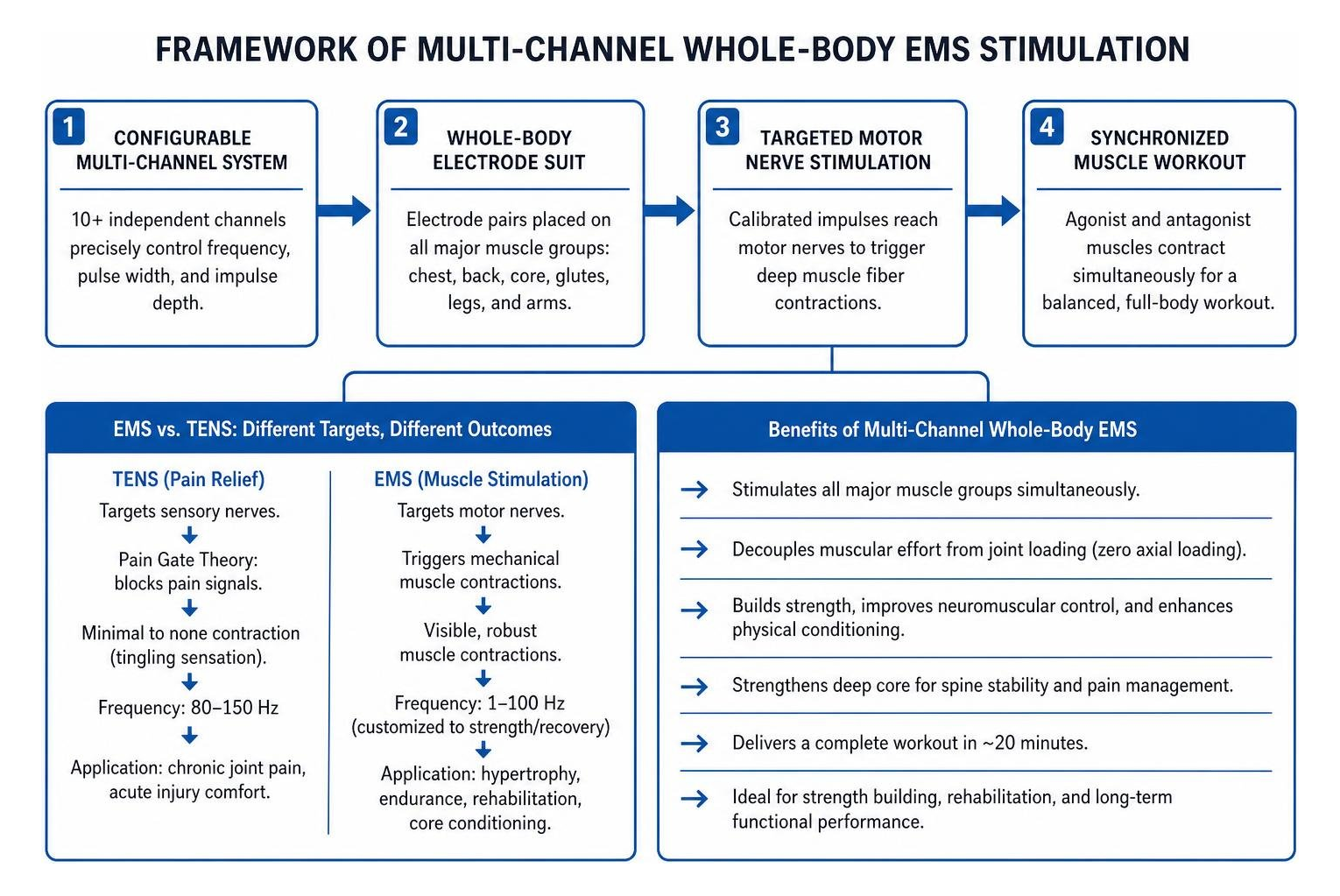
Professional equipment allows for precise control over pulse width, impulse depth, and frequency across 10 or more independent muscle channels. This multi-channel capability ensures balanced stimulation across the upper body, core, and lower limbs, preventing compensation patterns and delivering a synchronized workout.
Whole-Body EMS Systems and Multi-Channel Technology
Whole-body EMS suits feature integrated electrode pairs covering all major muscle groups: chest, lats, upper back, lower back, abdominals, glutes, quadriceps, and hamstrings. Working with professional systems, such as Miha Bodytec equipment, ensures that impulses penetrate deeply into muscle tissue with medical-grade precision.
Certified calibration allows trainers to adjust the impulse intensity for each muscle group independently. For example, if you require gentler stimulation on your lower back due to sensitivity, but need a stronger stimulus on your glutes for athletic power, the channels can be tailored to your body's exact requirements in real time.
The In-Home Training Setup and Session Preparation
Getting the most out of your training at home requires thoughtful preparation. A certified trainer ensures electrodes are placed accurately and calibrated safely for your body.
- Hydrate Well: Drink 16–20 ounces of water 30 to 45 minutes before your workout, as well-hydrated muscle tissue conducts electrical impulses more efficiently.
- Wear Dedicated Base Layers: Put on a clean, moisture-wicking cotton undergarment designed to transfer electrical impulses evenly from the suit electrodes to your skin.
- Clear an Ergonomic Space: Ensure you have a 6x6-foot open area free of obstacles for bodyweight movements, dynamic stretches, and balance exercises.
- Complete a Guided Warm-Up: Spend 3 to 5 minutes performing dynamic mobility exercises to prepare your joints and nervous system for the session.
Optimal Protocols, Safety Precautions, and Best Practices
EMS is a potent training stimulus, and more is not always better. Because electrical stimulation recruits a large percentage of muscle fibers without the natural protective fatigue feedback of traditional lifting, adhering to structured safety protocols is essential.
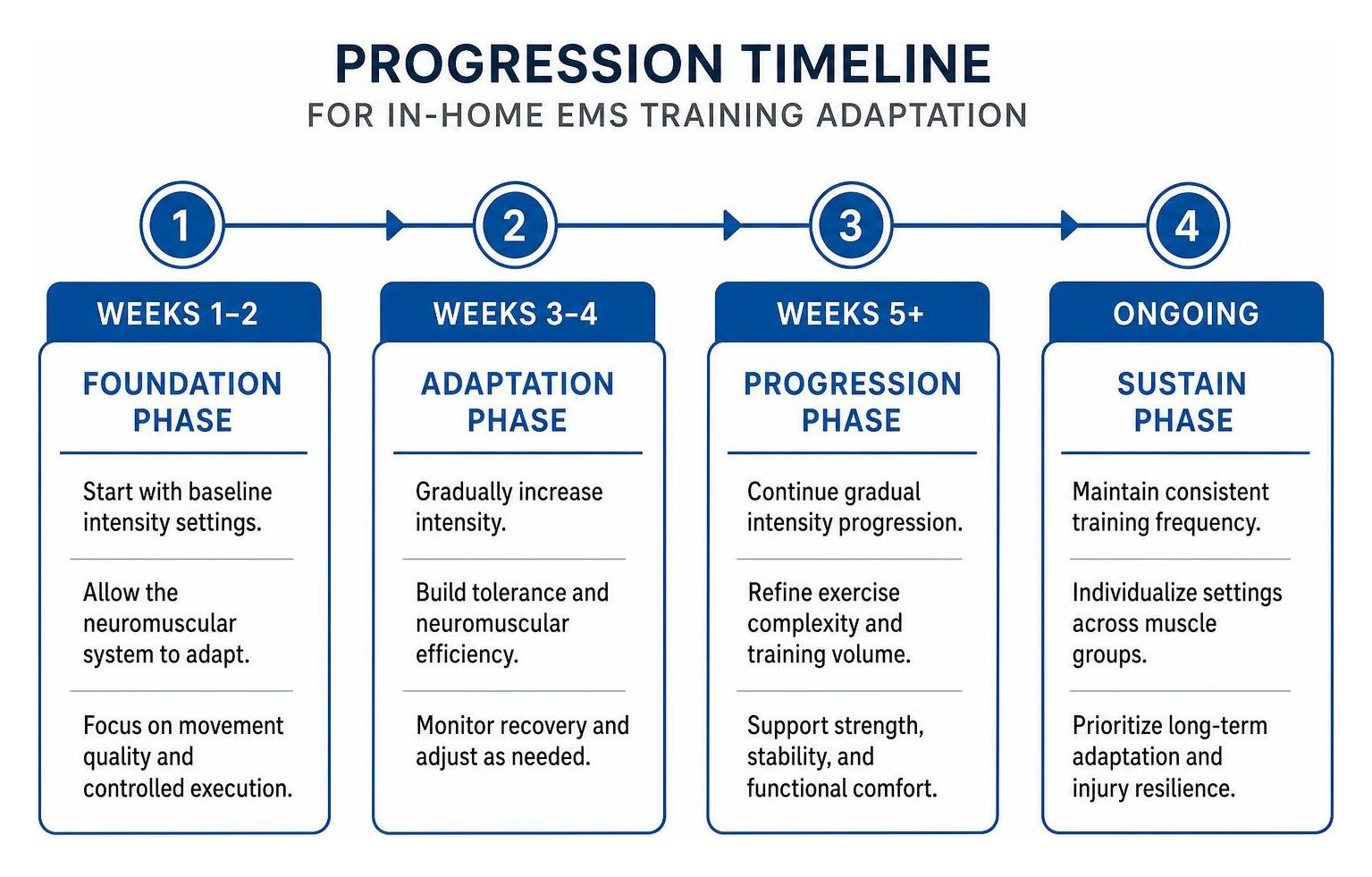
Beginners should always start with baseline intensity settings, allowing their neuromuscular system to adapt over the first three to four weeks. Gradual progression prevents excessive delayed-onset muscle soreness (DOMS) and supports sustainable tissue adaptation.
Safety Guidelines and Best Protocols for In-Home EMS Training
While EMS is safe for most healthy adults, specific contraindications require careful screening:
- Cardiac Devices: Individuals with cardiac pacemakers, defibrillators, or serious arrhythmias must avoid EMS training.
- Pregnancy: Whole-body EMS is contraindicated during pregnancy.
- Epilepsy and Neurological Conditions: Individuals with seizure disorders should not use electrical stimulation without medical clearance.
- Skin Integrity: Electrodes should never be placed over open wounds, active rashes, or areas with acute inflammation.
Always allow certified professionals to manage intensity levels. Avoid training to the point of pain; the impulse should feel firm, deep, and challenging, but never sharp or uncomfortable.
Frequency, Duration, and Measurable Results
For optimal muscle adaptation and recovery, we recommend 1 to 2 sessions per week, lasting 15 to 20 minutes each. Because whole-body EMS creates deep muscular fatigue, your body requires 48 to 72 hours between intense sessions to repair muscle tissue and replenish energy stores.
Consistent training produces measurable improvements in core stability, postural alignment, and muscular endurance within 4 to 6 weeks. Over 8 to 12 weeks, participants routinely experience visible increases in muscle tone, improved body composition, and significant reductions in everyday aches and joint discomfort.
Frequently Asked Questions About In-Home EMS
Can in-home EMS replace traditional weightlifting entirely?
In-home EMS can serve as a standalone strength and conditioning program for individuals seeking functional fitness, muscle tone, core strength, and joint-friendly training. However, for those aiming for maximum absolute strength (such as powerlifting) or specific sport-specific mechanical loading, EMS works best as a powerful hybrid complement to conventional training.
How quickly can you see noticeable results from home EMS sessions?
Most people feel an immediate improvement in posture, core engagement, and muscle activation after their very first session. Noticeable improvements in muscle firmness, endurance, and general energy levels typically emerge within 3 to 4 weeks of consistent, weekly training, provided it is paired with balanced nutrition and proper hydration.
Are in-home EMS workouts safe for people with chronic back pain?
Yes, when guided by certified professionals. Because EMS activates deep spinal stabilizers (like the multifidus and transversus abdominis) without axial loading or heavy spinal compression, it is widely utilized for back rehabilitation. Strengthening these supporting muscles helps relieve pressure on the lumbar spine, improving functional movement and daily comfort.
Conclusion
In-home EMS training bridges the gap between high-performance physical conditioning and joint-conscious, time-efficient exercise. By harnessing calibrated electrical impulses to recruit deep muscle fibers without the strain of heavy weights, it offers a modern approach to building strength, improving mobility, and accelerating recovery.

At EMS Concierge, we bring this experience directly to your living room. Our certified trainers guide every session using professional-grade Miha Bodytec systems, customizing every impulse to match your fitness level and physical goals. If you are ready to elevate your routine with 20-minute, high-efficiency workouts in the comfort of your home, explore our professional full-body EMS training and experience the future of personalized fitness.